How long it takes to repipe a house depends on the size and layout of the property, how easily plumbers can access existing supply lines, the number of fixtures being served, the replacement material and the overall scope of work.
There is no responsible universal timeline for every house.
What homeowners should expect is a planned process that includes evaluating the existing plumbing, determining how new water lines will be routed, creating necessary access points, installing and connecting the replacement piping, testing the new system and completing any required inspections or related work.
If you are considering whole-house repiping in Marietta or elsewhere in Metro Atlanta, understanding that process before work begins can make the project much less intimidating.
What Happens When You Repipe a House?
Contents
- 1 What Happens When You Repipe a House?
- 2 What Affects How Long a Whole-House Repipe Takes?
- 3 Can You Stay in Your House During Repiping?
- 4 Will You Be Without Water During a Whole-House Repipe?
- 5 Does Repiping Require Removing Walls?
- 6 Do Plumbers Have to Remove the Old Pipes?
- 7 How Do You Prepare Your House for Repiping?
- 8 Should You Repipe Before Remodeling?
- 9 Is PEX Faster to Install Than Copper?
- 10 How Do You Know if Your House Needs Repiping?
- 11 Should You Repipe a House With Galvanized Pipes?
- 12 What If Your House Has Polybutylene Pipes?
- 13 Is Whole-House Repiping Worth It?
- 14 What Should Be Included in a Repiping Estimate?
- 15 What Questions Should You Ask a Repiping Plumber?
- 16 Schedule a Whole-House Repiping Assessment in Marietta, GA
Whole-house repiping replaces the water-supply piping included in the project’s scope.
It is different from repairing one leaking pipe.
Instead of addressing a single failure, the plumber plans new supply routes to serve the fixtures included in the repipe.
A typical project involves several stages.
1. Evaluate the Existing Plumbing
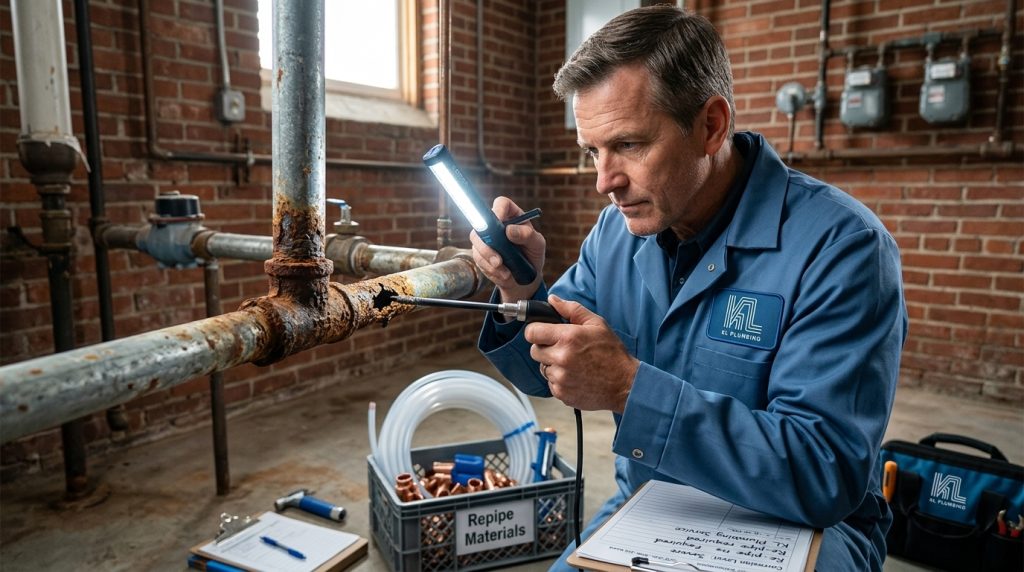
Before planning a repipe, the plumber needs to understand what is already in the house.
That can include evaluating:
- Existing pipe material
- Plumbing layout
- Locations of fixtures
- Accessible pipe routes
- Areas showing leaks or corrosion
- Water-pressure concerns
- Previous plumbing modifications
- Potential routes for replacement piping
This is also the stage where homeowners should ask whether a complete repipe is actually necessary.
If the problem is isolated, pipe repair may be the appropriate solution.
If failures are recurring or deterioration affects larger portions of the plumbing system, repiping may deserve consideration.
Read Should You Repair Old Pipes or Repipe Your House? if you are still deciding between those options.
2. Plan the New Pipe Routes
Existing houses were not built with future repiping projects in mind.
A plumber therefore needs to determine practical routes for the new water lines.
The objective is to supply the necessary fixtures while avoiding unnecessary disruption to the home.
The exact routing depends on the property’s construction and layout.
3. Create Necessary Access Points
Some piping is hidden behind finished surfaces.
Access openings may therefore be required to reach plumbing routes and make necessary connections.
The number and location of openings depend on the house.
Before work starts, ask which areas will need access and what restoration is included in the project scope.
4. Install the Replacement Piping
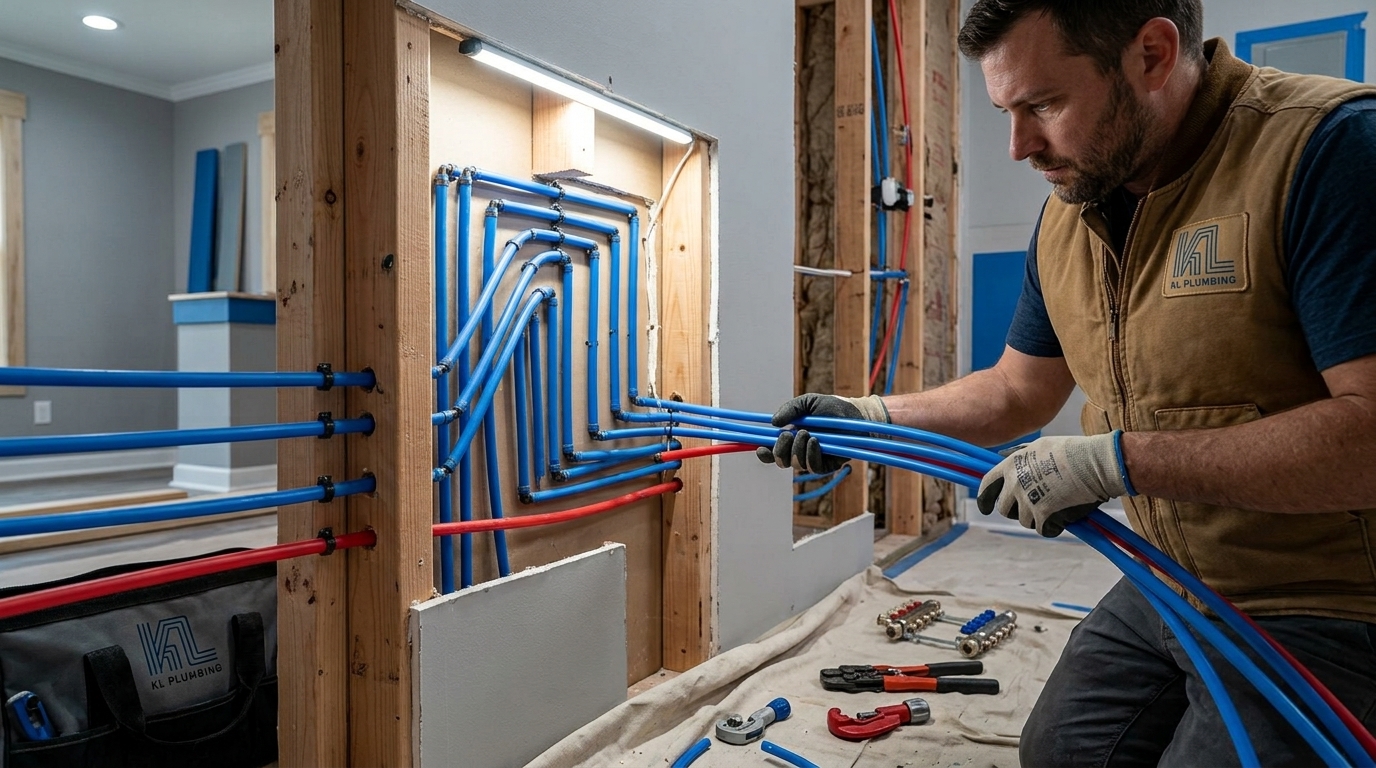
The new water lines are installed according to the planned routes.
Depending on the project, the replacement material may include PEX, copper or another code-compliant material appropriate for the installation.
K L Contractor Plumbing works with residential piping and repiping systems in Marietta and surrounding Metro Atlanta communities.
5. Connect Fixtures and Components
New supply lines must connect appropriately to the plumbing fixtures and components included in the scope.
This can involve connections serving areas such as:
- Kitchens
- Bathrooms
- Laundry areas
- Water heaters
- Exterior hose connections
- Other water-supplied fixtures
The actual scope depends on the home and repiping plan.
6. Test the Plumbing
The new system needs to be checked after installation.
The plumber should verify that the completed work is functioning properly and address issues identified during testing.
7. Complete Required Inspections and Finish Work
Permit and inspection requirements depend on the project and applicable local requirements.
Homeowners should ask what permits or inspections apply to their specific repiping project and what restoration work is included after plumbing access is complete.
What Affects How Long a Whole-House Repipe Takes?
Several factors can change the project timeline.
Size of the House
A larger house can have more plumbing fixtures and longer supply routes than a smaller property.
Square footage alone does not determine the timeline, but the overall plumbing scope matters.
Number of Plumbing Fixtures
A home with several bathrooms, multiple kitchens or additional water-supplied fixtures may involve more connections than a simpler plumbing layout.
Pipe Accessibility
Accessible plumbing can be easier to work with than piping located behind finished surfaces or in difficult-to-reach areas.
The construction of the home can therefore affect how the project proceeds.
Plumbing Layout
Two houses of similar size can have very different plumbing layouts.
Fixture locations, number of floors and the routes available for new piping all influence the scope.
Existing Pipe Material
The material and configuration of the existing plumbing can affect how replacement is planned.
Older homes may also contain plumbing modifications completed at different times, which can make the existing system more complex.
Replacement Material
PEX and copper have different installation characteristics.
The material selected for your home can influence how new supply lines are routed and installed.
Scope of Replacement
A partial repipe is different from replacing the supply piping throughout the house.
Make sure your estimate clearly identifies what is and is not included.
Can You Stay in Your House During Repiping?
Whether remaining in the home is practical depends on the project.
Repiping involves work inside the house, and water service may need to be interrupted during portions of the installation.
Ask the plumbing contractor before work begins:
- Which rooms will be affected?
- When will water be unavailable?
- How long are interruptions expected to last?
- Will bathrooms remain usable during portions of the work?
- What areas need to be cleared?
- Will workers need access to bedrooms, closets or cabinets?
- What should pets and children be kept away from?
Knowing the daily work plan can help you decide whether remaining at home is practical for your household.
Will You Be Without Water During a Whole-House Repipe?
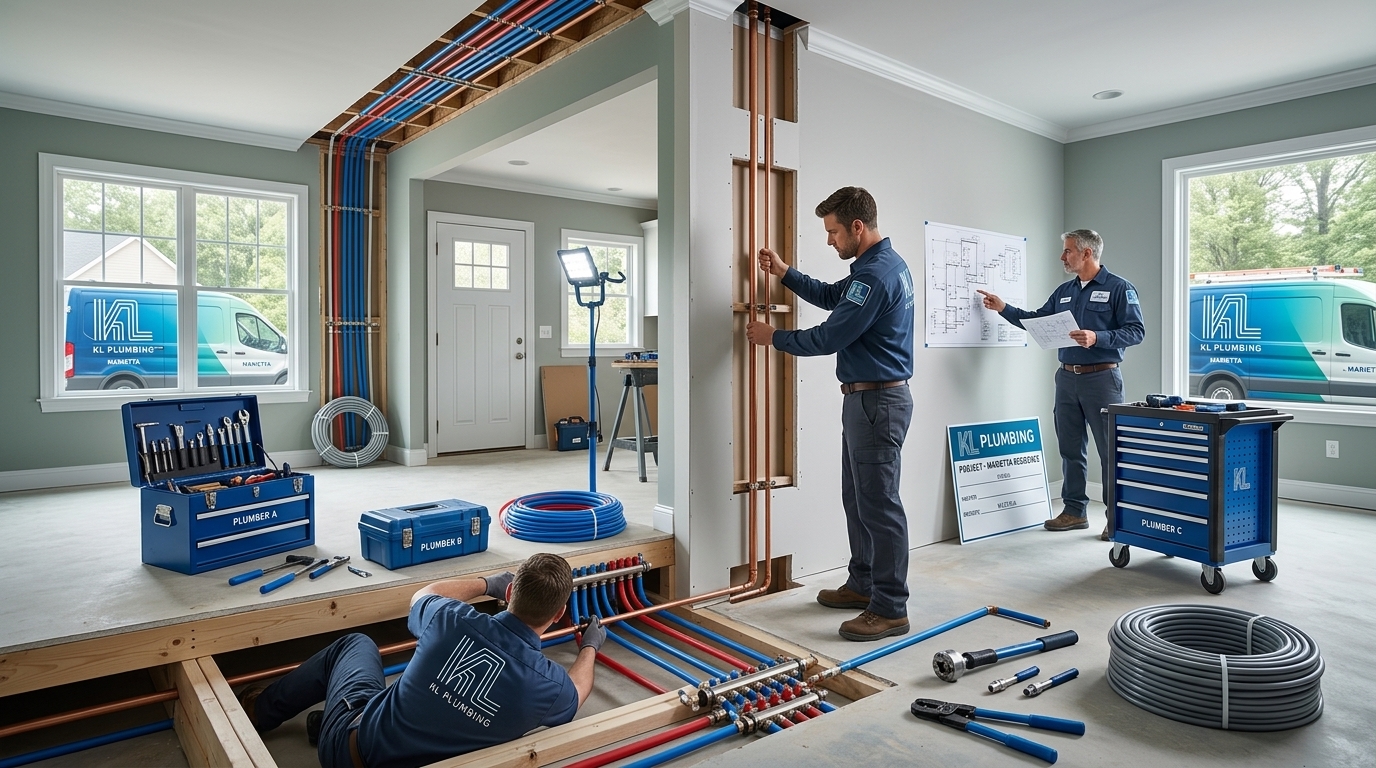
Water service will need to be interrupted during portions of a repiping project.
The exact timing depends on the installation sequence and the house.
Do not assume that water will either remain available throughout the entire project or be unavailable continuously.
Ask the plumber how water shutdowns will be handled for your specific repipe.
If your household has scheduling considerations that make water access particularly important, discuss those before work begins.
Does Repiping Require Removing Walls?
Repiping can require access through finished surfaces because much of a home’s plumbing is concealed.
That does not mean every wall needs to be removed.
A professional repiping plan should consider how to reach and route plumbing efficiently while limiting unnecessary access.
Before signing a proposal, ask:
- Where will openings be required?
- Approximately how many areas need access?
- Which finished surfaces will be affected?
- Who handles closing those openings?
- Is painting included?
- What restoration is specifically excluded?
Do not assume that “repiping” automatically includes every aspect of wall repair and finish restoration.
Get the scope in writing.
Do Plumbers Have to Remove the Old Pipes?
Not every inaccessible section of old piping necessarily has to be physically removed for replacement plumbing to function.
What happens to abandoned piping depends on the existing installation, accessibility and project design.
The important point is that piping no longer intended to supply the house should be properly addressed as part of the plumbing plan.
Ask the contractor what will happen to the existing pipes and which portions, if any, will remain physically in place.
How Do You Prepare Your House for Repiping?
Preparation can make it easier for plumbers to access the areas they need.
Before the project begins, ask the contractor exactly what should be moved.
Common preparation may include clearing access around:
- Sinks
- Vanities
- Plumbing fixtures
- Water heaters
- Utility areas
- Closets containing plumbing access
- Crawl-space or basement entrances
- Other identified work areas
Remove fragile or valuable items from areas where plumbing work will occur.
You should also discuss pets, parking, entry procedures and any household scheduling restrictions before the crew arrives.
Should You Repipe Before Remodeling?
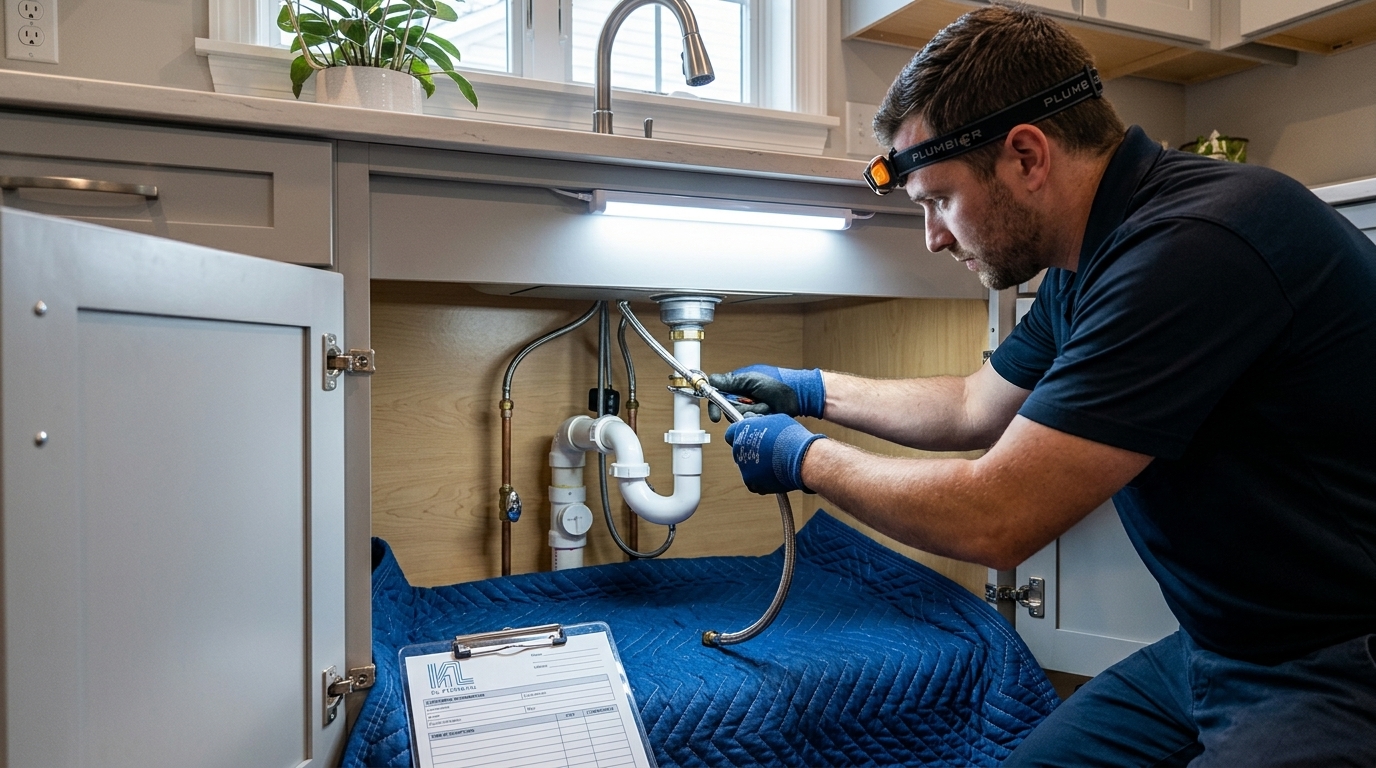
A planned renovation can be a useful time to evaluate older plumbing because walls or fixtures may already be accessible.
That does not mean every remodeling project requires repiping.
It means homeowners with aging or problematic supply lines should consider the plumbing before new finishes make future access more disruptive.
If you are planning a kitchen or bathroom renovation and already have concerns about old piping, ask a plumber to evaluate the system during the planning stage.
That gives you the opportunity to coordinate plumbing work with the renovation rather than discovering a larger pipe problem afterward.
Is PEX Faster to Install Than Copper?
PEX and copper have different installation characteristics.
PEX is flexible, which can allow it to be routed through some existing structures with fewer directional fittings than rigid piping.
Copper is rigid and requires different installation methods.
However, material alone does not determine how long your repipe will take.
House layout, accessibility, number of fixtures and project scope can have a substantial effect on the timeline.
The better question is:
Which material makes sense for this house, and how will it be installed?
For a broader comparison, read Galvanized vs. Copper vs. PEX Pipe Materials for Metro Atlanta Homes.
How Do You Know if Your House Needs Repiping?
Repiping should solve an actual plumbing problem, not simply be recommended because a house is older.
Reasons to have the system evaluated can include:
- Repeated pipe leaks
- Widespread corrosion
- Consistently poor water pressure
- Aging or problematic piping materials
- Discolored water associated with plumbing conditions
- Multiple previous pipe repairs
- Plumbing problems affecting different areas of the house
A plumber should evaluate the existing system before recommending replacement.
If low pressure is one of your main symptoms, K L Contractor Plumbing also provides water pressure diagnosis in Marietta.
Should You Repipe a House With Galvanized Pipes?
Galvanized steel piping can corrode internally as it ages.
That can contribute to restrictions in water flow and other plumbing problems.
However, finding galvanized plumbing does not by itself tell you the exact condition of every pipe.
A professional evaluation can look at the piping alongside symptoms such as:
- Recurring leaks
- Corrosion
- Low water pressure
- Restricted flow
- Discolored water
- Previous repairs
The decision to repair or replace should be based on the system’s condition and the problems you are actually experiencing.
What If Your House Has Polybutylene Pipes?
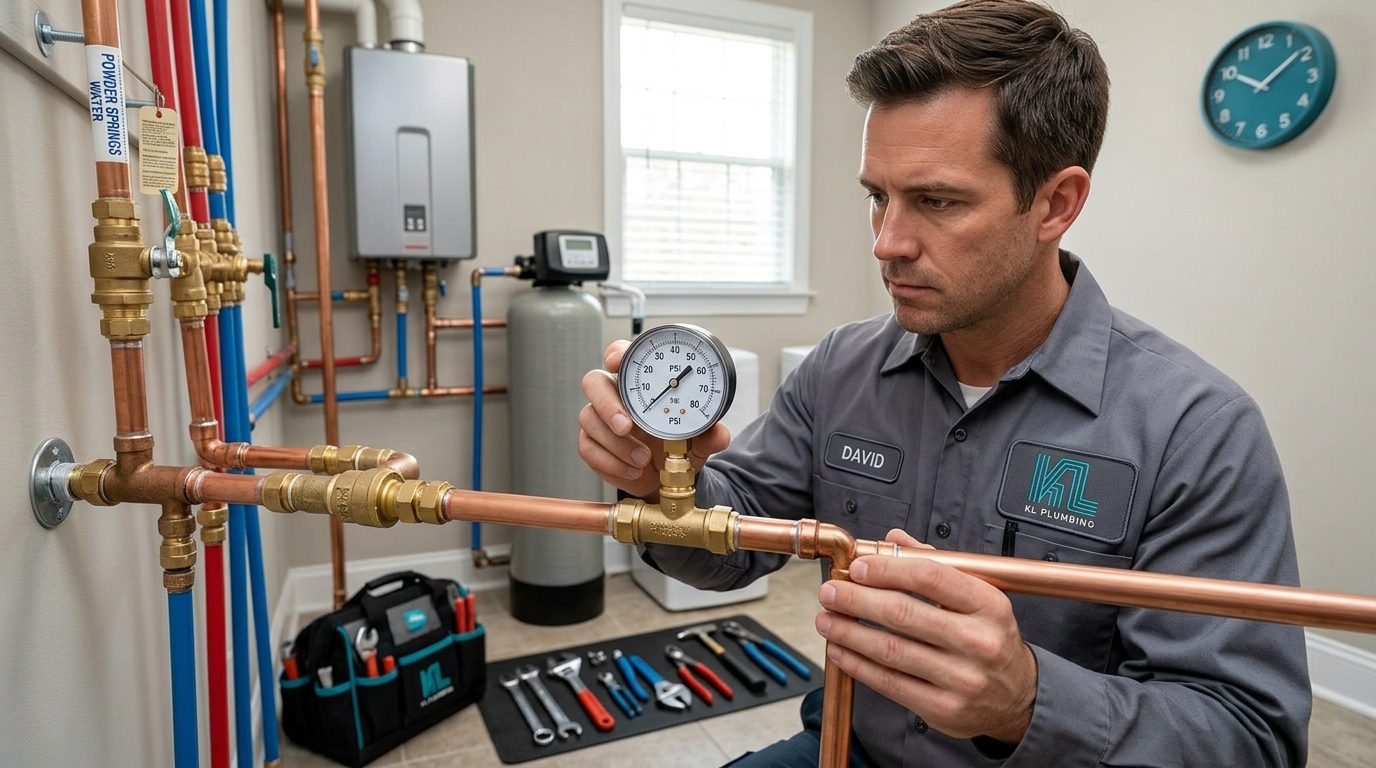
If your home contains polybutylene piping, it is worth identifying the material and discussing its condition with a plumber, especially when leaks or other plumbing problems are occurring.
K L Contractor Plumbing has an existing guide explaining what polybutylene pipe is and what homeowners should know.
If you are purchasing, renovating or already repairing a home with polybutylene, understanding the existing system before making larger investments can help you plan more effectively.
Is Whole-House Repiping Worth It?
Repiping is a major plumbing project, so the decision should be based on the condition of the system rather than a generic rule.
For a house with healthy plumbing and one isolated failure, a localized repair may make more sense.
For a house experiencing repeated leaks or broader deterioration, replacing the affected piping can address problems that individual repairs cannot.
Think about the decision in terms of system condition and future risk, not simply today’s repair bill.
Ask:
- Why did the current failure happen?
- Are other pipes showing the same problem?
- How many repairs have already been completed?
- Is water pressure affected throughout the house?
- What material is installed?
- What does the plumber see that supports repiping?
The answers should explain why the project is being recommended.
What Should Be Included in a Repiping Estimate?
A useful repiping proposal should make the scope understandable.
Before approving the work, ask for clarification about:
- Which piping will be replaced
- Which piping will remain
- Replacement material
- Fixtures included in the scope
- Planned routing
- Expected access points
- Water-service interruptions
- Expected project timeline
- Permit and inspection responsibilities
- Testing
- Wall or surface restoration
- Cleanup
- Anything specifically excluded from the proposal
A vague “whole-house repipe” price is difficult to evaluate if you do not know exactly what the contractor intends to do.
What Questions Should You Ask a Repiping Plumber?
Before hiring a plumber for a whole-house repipe, ask:
- Why do you recommend repiping instead of repairing the current problem?
- What condition are the existing pipes in?
- Which pipes will you replace?
- What replacement material do you recommend, and why?
- How will the new lines be routed?
- Where will you need access?
- How will water shutdowns be handled?
- What is the expected project schedule?
- What permits or inspections apply?
- What restoration is included?
- What is excluded from the proposal?
- What should we do to prepare the house?
Those questions help turn an unfamiliar plumbing project into a defined scope you can evaluate.
Schedule a Whole-House Repiping Assessment in Marietta, GA
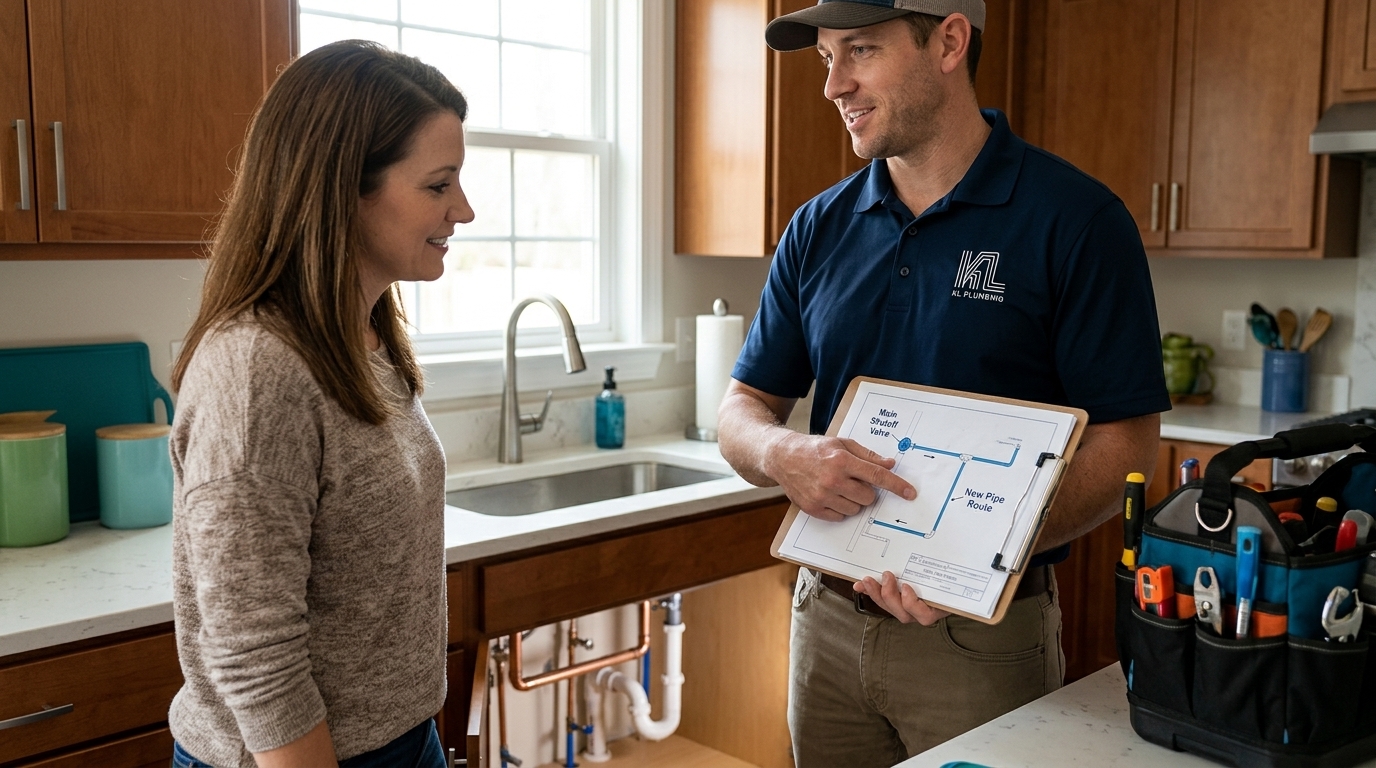
If repeated leaks, aging pipes, corrosion or widespread water-pressure problems have you considering repiping, start with an evaluation of the plumbing you actually have.
K L Contractor Plumbing Inc provides pipe repair and repiping services for homeowners in Marietta and nearby Metro Atlanta communities. The team can evaluate the existing system, explain whether localized repair or broader replacement makes sense, and discuss the scope of a potential repiping project.
You can also review our guide to what happens when you repipe your home for additional information before scheduling an assessment.
Call 404-637-2796 to discuss your home’s piping with K L Contractor Plumbing Inc.
We serve Marietta, Kennesaw, Roswell, Sandy Springs, Smyrna, Woodstock, Acworth, Holly Springs, Milton and nearby areas.
