K L Contractor Plumbing Inc

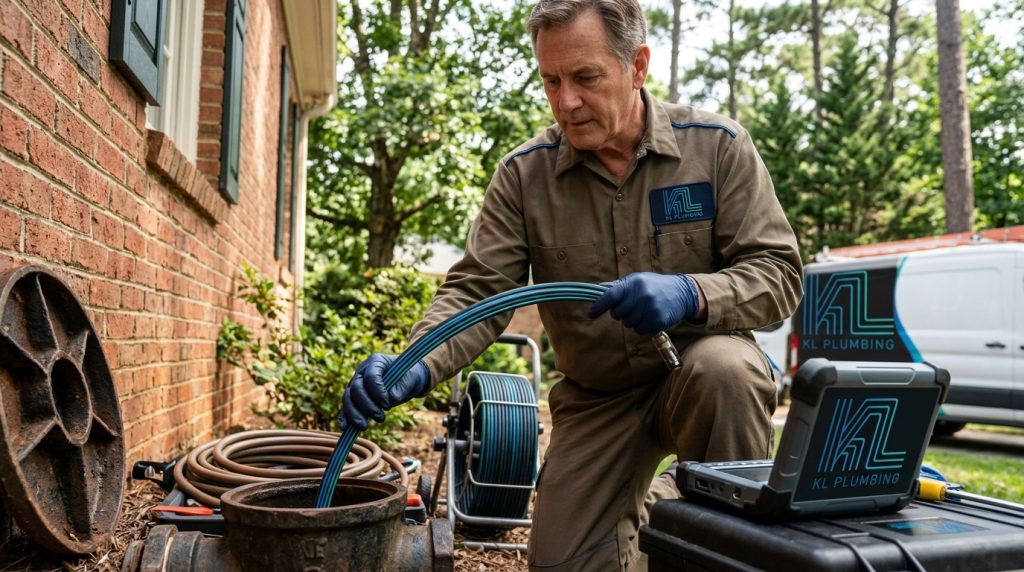
Plumber_using_sewer_camera_20260915232835

Sewer Line Repair in Sandy Springs: Why Aging Pipes Fail and What It Costs to Fix Them

Sandy Springs has some of the oldest residential plumbing infrastructure in metro Atlanta. Thousands of homes built between the early 1960s and late 1980s still have their original sewer lines in the ground: clay pipes, cast iron pipes, and in some cases Orangeburg pipe that has been underground for 40 to 60 years.

These pipes were not designed to last forever. Clay cracks at the joints. Cast iron corrodes from the inside out. And the mature trees that make Sandy Springs neighborhoods so appealing send roots directly into every weak spot. If your home was built before 1985 and you have never had the sewer line inspected, the question is not whether the pipe has problems. It is how far along those problems are.

K L Contractor Plumbing has been repairing and replacing sewer lines across north metro Atlanta since 1999. Here is what Sandy Springs homeowners should know.

Why Sandy Springs Has More Sewer Line Problems Than Most Suburbs

Sandy Springs was unincorporated Fulton County until 2005. Neighborhoods along Roswell Road, around Hammond Park, and in the Powers Ferry area were developed in the 1960s and 1970s when clay and cast iron were the standard materials for residential sewer laterals. Unlike newer suburbs built with PVC from the start, Sandy Springs has decades of aging pipe in the ground.

Three factors make the problem worse here:

Aging pipe materials on a large scale. With roughly 108,000 residents and a housing stock that skews older, the number of homes running on original sewer lines is significant. Many homes in established neighborhoods have never had the line replaced.

A mature tree canopy with aggressive root systems. Oaks, maples, and pines have had 40 to 60 years to develop expansive root networks. These roots seek out moisture, and a sewer line with deteriorating joints is an open invitation.

Chattahoochee River corridor soil conditions. Properties in the Riverside area and along the Chattahoochee have alluvial soil that shifts more readily and retains more moisture, accelerating pipe corrosion and root growth. Homes in these areas often see sewer problems develop faster.

Common Causes of Sewer Line Failure in Sandy Springs

Clay Pipe Deterioration

Clay was the default sewer pipe material for homes built from the 1950s through the early 1970s, and a large percentage of Sandy Springs homes fall in this range. Clay pipes are rigid and brittle. They do not flex when the ground shifts. The joints separate over time, creating gaps where roots enter and soil infiltrates the line. After 50 or more years in Georgia’s red clay, most have at least some joint separation.

Cast Iron Corrosion

Homes built from the late 1960s through the early 1980s often have cast iron sewer lines. Cast iron corrodes from the inside: hydrogen sulfide gas creates sulfuric acid that eats through the pipe wall over decades. In Sandy Springs’ older ranch homes, we regularly find cast iron lines severely corroded after 40 to 50 years.

Tree Root Intrusion

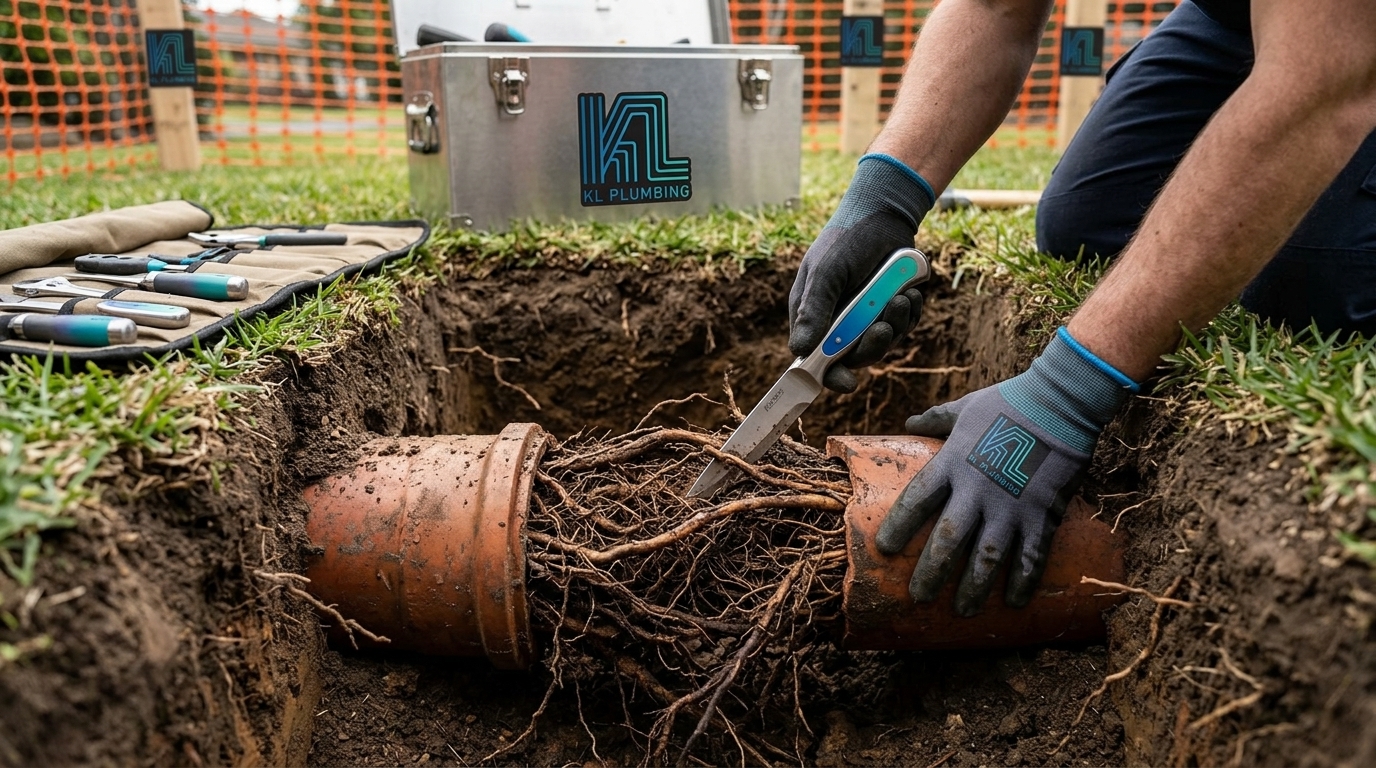
Root intrusion is the most common reason Sandy Springs homeowners call for sewer line repair. Laterals here are typically 30 to 80 feet, but the density of mature trees means roots are never far from the pipe. A single large oak or maple can fill a section with roots in a few years, especially once joints have begun to separate.

Ground Shifting

Georgia’s clay soil expands when wet and contracts when dry. Over decades, this cycle shifts pipes out of alignment. Sections that sag (“bellies”) collect waste and cause recurring slow drains. Properties near the Chattahoochee, where soil moisture fluctuates more, are especially prone to this.
Plumber_reviewing_sewer_camera

Warning Signs Your Sewer Line Needs Attention

Do not wait for a full sewage backup. These signs indicate a developing problem:

  • Multiple drains slowing down at the same time. When the kitchen, bathrooms, and laundry all slow together, the blockage is in the main sewer line, not a single fixture.
  • Gurgling sounds from toilets or drains when running water elsewhere in the house.
  • Sewage odor in the yard or near cleanout caps. If you smell sewer gas outside, the pipe has a crack or failed joint.
  • Wet or soft spots in the yard with no obvious water source, particularly along the path between the house and the street.
  • Recurring backups that return within weeks of being cleared. This usually means roots are re-entering the line or the pipe has structural damage.

If you notice two or more of these signs, call a plumber for a camera inspection before the situation becomes an emergency.
Plumbing_crew_excavating_sewer

Camera Inspection: The Right Starting Point

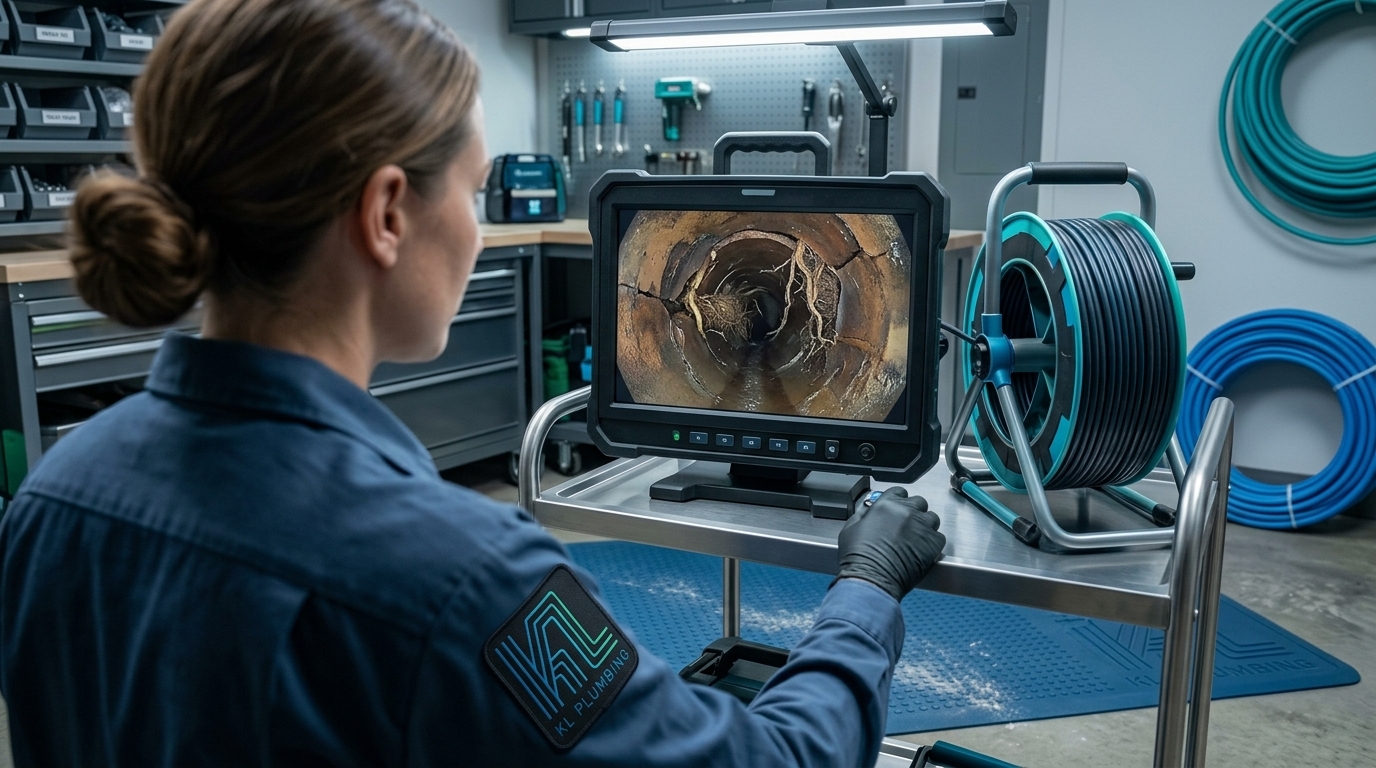
A sewer camera inspection is the only reliable way to diagnose what is happening inside the pipe. A waterproof camera is fed through the line, showing cracks, root intrusion, corrosion, bellies, and joint separation in real time, along with their exact locations.

Cost in Sandy Springs: $200 to $400. K L Plumbing applies this cost toward the repair if you move forward with the work.

If someone recommends sewer work without running a camera first, get a second opinion. A camera inspection tells you exactly what material your pipe is, where the problems are, and which repair method is appropriate.

Repair vs. Replacement: Options and 2026 Pricing

Once the camera inspection confirms the problem, there are four main approaches. Costs reflect 2026 pricing for Sandy Springs and the surrounding area.

  • Spot Repair: Excavate and replace one damaged section. $1,500 to $4,000. Best when one joint has failed but the rest of the line is sound. Usually one day.
  • Trenchless Pipe Lining (CIPP): A resin-coated liner is cured inside the existing pipe, creating a new pipe within the old one. $4,000 to $8,000. Best when the pipe has cracks or joint separations throughout but has not collapsed. Minimal yard disruption. One to two days.
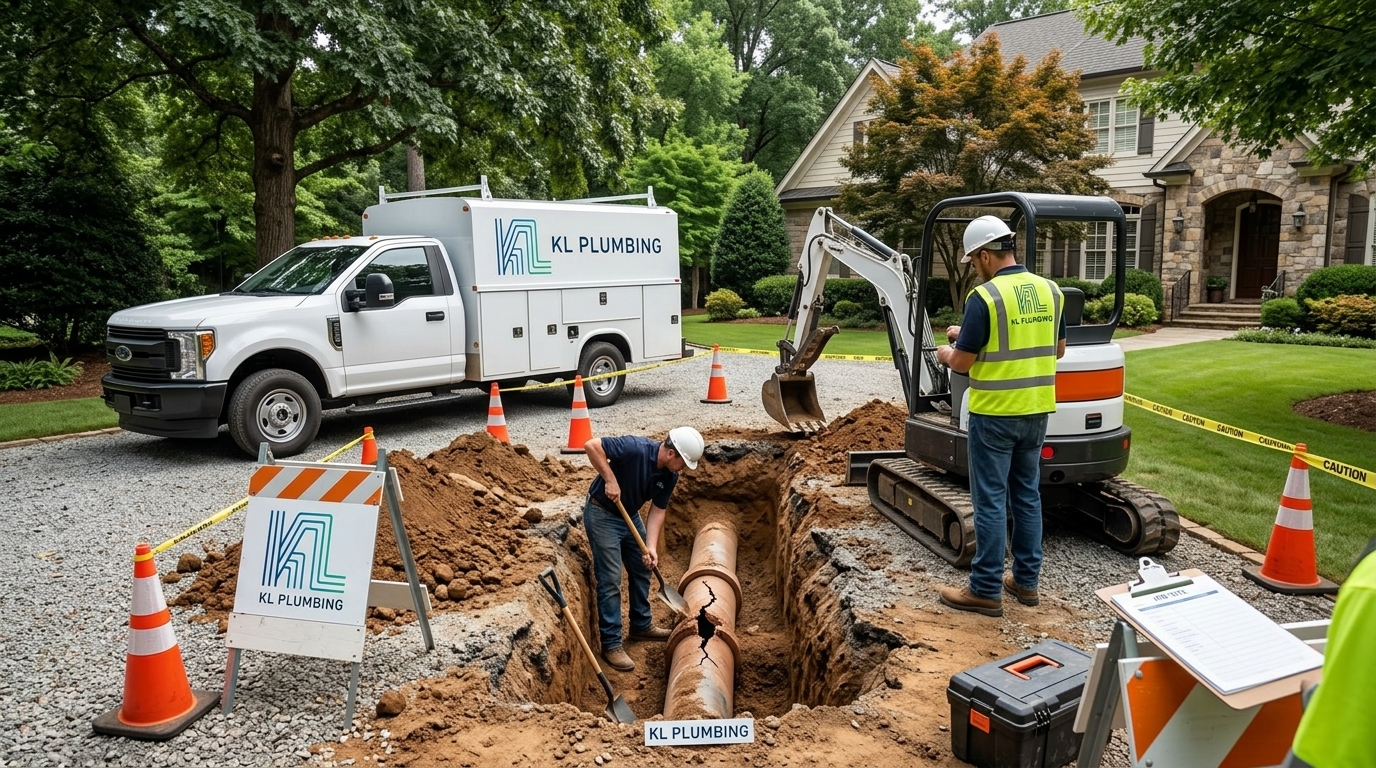
  • Traditional Replacement: Dig up the old pipe and install new PVC. $5,000 to $15,000 depending on length, depth, and obstacles (driveways, patios, landscaping). Necessary when the pipe has collapsed or is made of Orangeburg. Two to five days.
  • Pipe Bursting: A new pipe is pulled through the old one, breaking it apart from inside. $5,000 to $12,000. Less excavation than traditional replacement. One to two days.

In Sandy Springs, we frequently recommend a combination approach: spot repair on one badly damaged section and trenchless lining on the rest. This can save thousands compared to a full replacement.
Plumber_exposing_sewer_pipe

Need Sewer Line Repair in Sandy Springs? Call K L Plumbing.

K L Contractor Plumbing has been diagnosing and fixing sewer line problems across north metro Atlanta since 1999. We start every job with a camera inspection so you know exactly what is wrong before any work begins.

Whether your Sandy Springs home needs a spot repair, trenchless lining, or a full replacement, we provide straightforward options and honest pricing. We also handle drain cleaning and water line repair throughout Sandy Springs.

If you are dealing with slow drains, recurring backups, or sewage smells in your yard, do not wait for a complete failure. Call (404) 637-2796 to schedule a sewer camera inspection.

Frequently Asked Questions

How much does sewer line repair cost in Sandy Springs, GA?

Spot repairs run $1,500 to $4,000. Trenchless pipe lining costs $4,000 to $8,000. Full replacement ranges from $5,000 to $15,000 depending on length, depth, and obstacles. A camera inspection ($200 to $400) is the first step to determine what is needed.

How do I know if my Sandy Springs home has old clay or cast iron sewer pipes?

Homes built before the mid-1970s most likely have clay. Homes from the late 1960s through the early 1980s may have cast iron. Homes built after the mid-1980s typically have PVC. A sewer camera inspection is the only way to confirm the material and assess its current condition.

Can tree roots be cleared without replacing the sewer line?

Sometimes. If roots have entered through a single joint but the pipe is otherwise sound, a plumber can cut the roots and apply root-inhibiting treatment. But if roots have infiltrated multiple joints or the pipe has cracked, clearing is temporary. They will return within months. A camera inspection shows whether root clearing is a lasting solution or whether repair makes more sense.

Is trenchless sewer repair available for older Sandy Springs homes?

Yes. CIPP pipe lining and pipe bursting work for most residential sewer lines in Sandy Springs. The pipe must be intact enough to accept the liner (no full collapses) and cannot have sharp bends or major diameter changes. A camera inspection confirms whether trenchless repair is viable for your situation.

Who is responsible for the sewer line from my house to the street?

The homeowner is responsible for the sewer lateral: the pipe running from the house to the public sewer main (usually near the street or in an easement). Fulton County maintains the public mains. Problems with the lateral, including root intrusion, corrosion, or collapse, are the homeowner’s responsibility to repair, even if the damage is between the house and the street.

Mastodon