
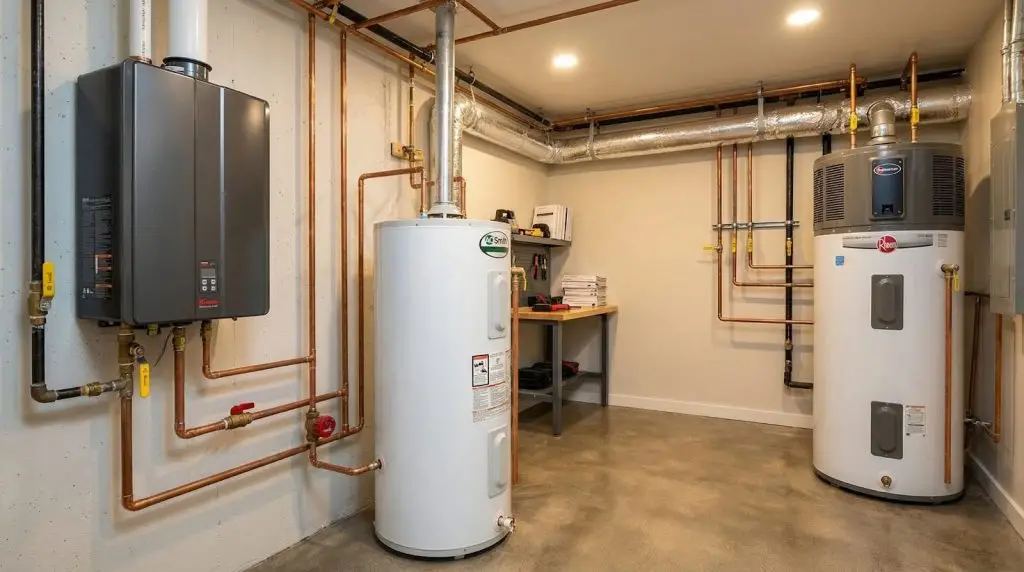
How This List Was Put Together
Instead of focusing on marketing claims, this list is based on how these units behave in real homes where people frequently run showers, laundry, and dishwashers.
Some important considerations:
- How long the tank or tankless unit actually lasts before problems start.
- How efficient the heater is, so you use less energy and keep utility bills reasonable.
- How easy it is to replace parts and do routine maintenance.
- Whether the warranty is clear, simple to use, and actually honored.
- How well different models fit various hot water demand levels and house sizes.
- How often professional plumbers choose that brand when their reputation is on the line.
With that in mind, let us look at the brands that consistently do well.

Rheem: The Everyday Workhorse
Rheem is one of the best water heater brands for everyday homes and shows up a lot in both new installs and replacements. You see Rheem offers gas models, electric water heaters, tankless units, and heat pump water heaters, so there is usually something that fits.
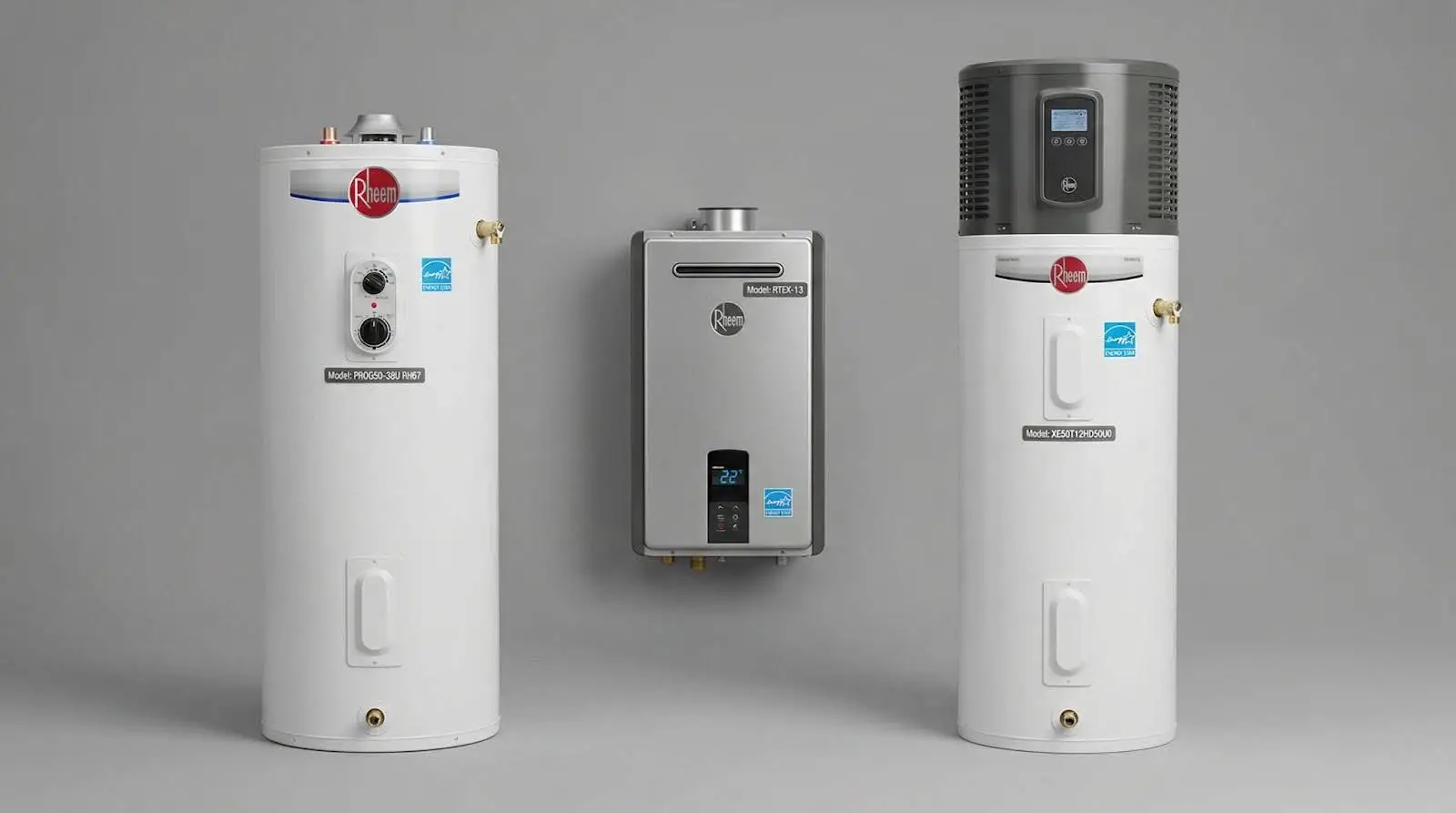
Why Rheem works for a lot of homes:
- Wide range of tank water heaters and tankless water heaters, including hybrid water heaters.
- Many efficient models that use less energy and help lower bills.
- Parts and support are easy to get, which makes repairs and maintenance faster.
- Different sizes and models for small spaces, basements, and larger homes.
Things to consider:
- The cheapest big box models are not built as heavy as the better Rheem lines.
- Like any new water heater, correct installation and maintenance are key to long life.
Best fit: Homeowners who want a reliable, efficient unit from a brand that plumbers trust and work with all the time.
A. O. Smith: Built for the Long Haul
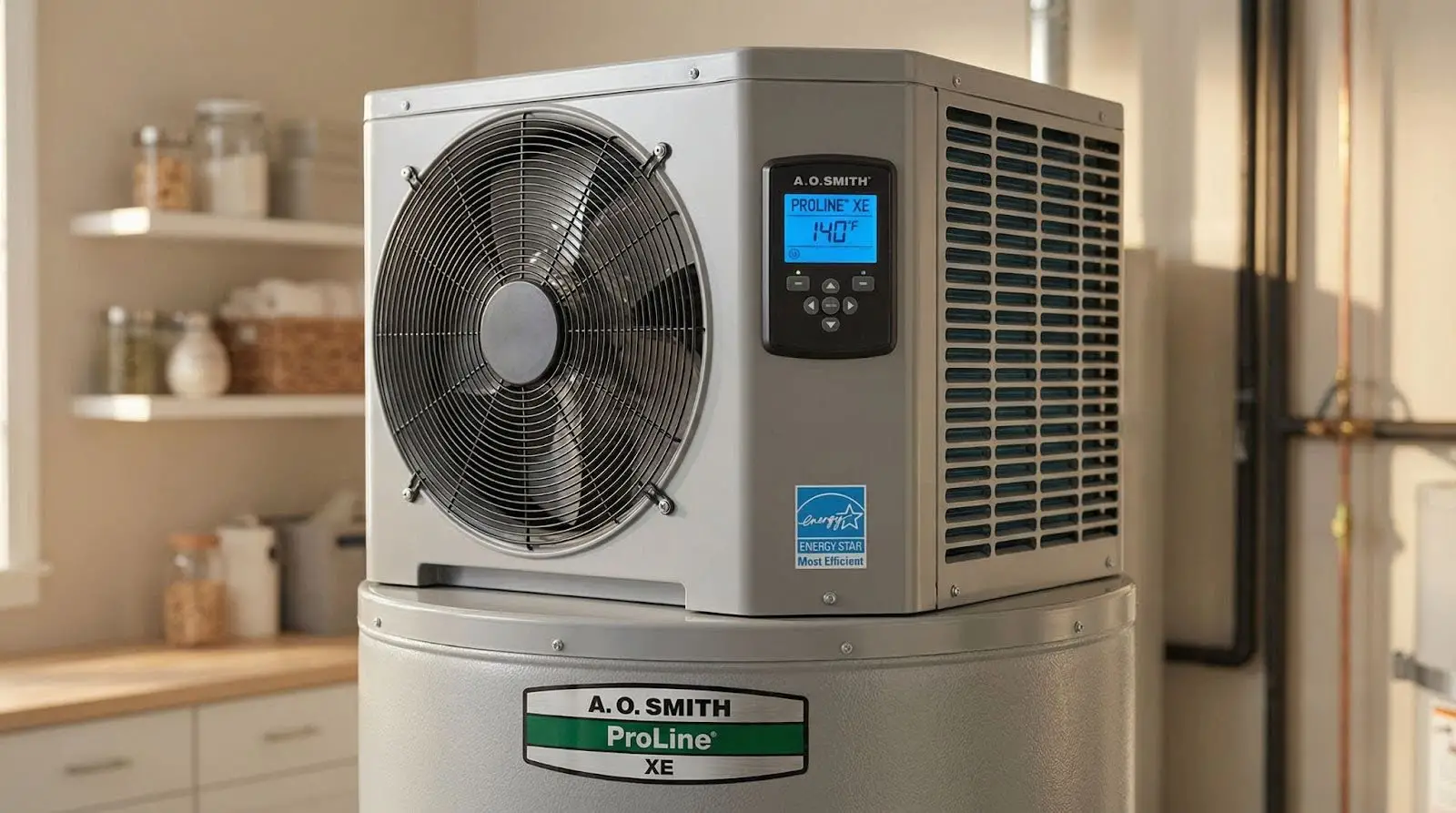
A. O. Smith is a strong name in both gas and electric water heaters and has many efficient and Energy Star certified models. They also make some of the more popular heat pump water heaters on the market.
Strengths:
- Good lineup of efficient electric tankless water heaters and heat pump water heater models.
- Many units carry strong warranty terms when properly installed.
- Hybrid water heaters that use a heat pump to move heat instead of only heating water with elements.
- Options that are a nice upgrade when you replace an older electric unit.
Considerations:
- Often costs more up front than basic brands, but uses less energy over time.
- Heat pump water models can be taller and need a bit more space and airflow.
Best fit: Homeowners planning to stay put for many years and who want a highly efficient system that uses less energy for heating water.
Bradford White: The Pro’s Choice
Bradford White is a name that comes up often when you ask professional plumbers what they install in their own homes. This brand focuses on solid tanks and reliable performance rather than flashy features.

Why plumbers like Bradford White:
- Tough glass lined tanks built to handle normal hot and cold water cycling.
- Many gas and electric tank water heaters that cover standard hot water needs.
- Design that makes service, anode rod checks, and maintenance more straightforward.
- A wide range of models that fit common natural gas and propane setups.
Considerations:
- Usually sold through suppliers instead of big box stores.
- You may pay a bit more, but you are buying pro grade equipment.
Best fit: Homeowners who want a hot water heater brand that pros stand behind and that is built for long term, reliable performance.
Bosch: Premium and Efficient
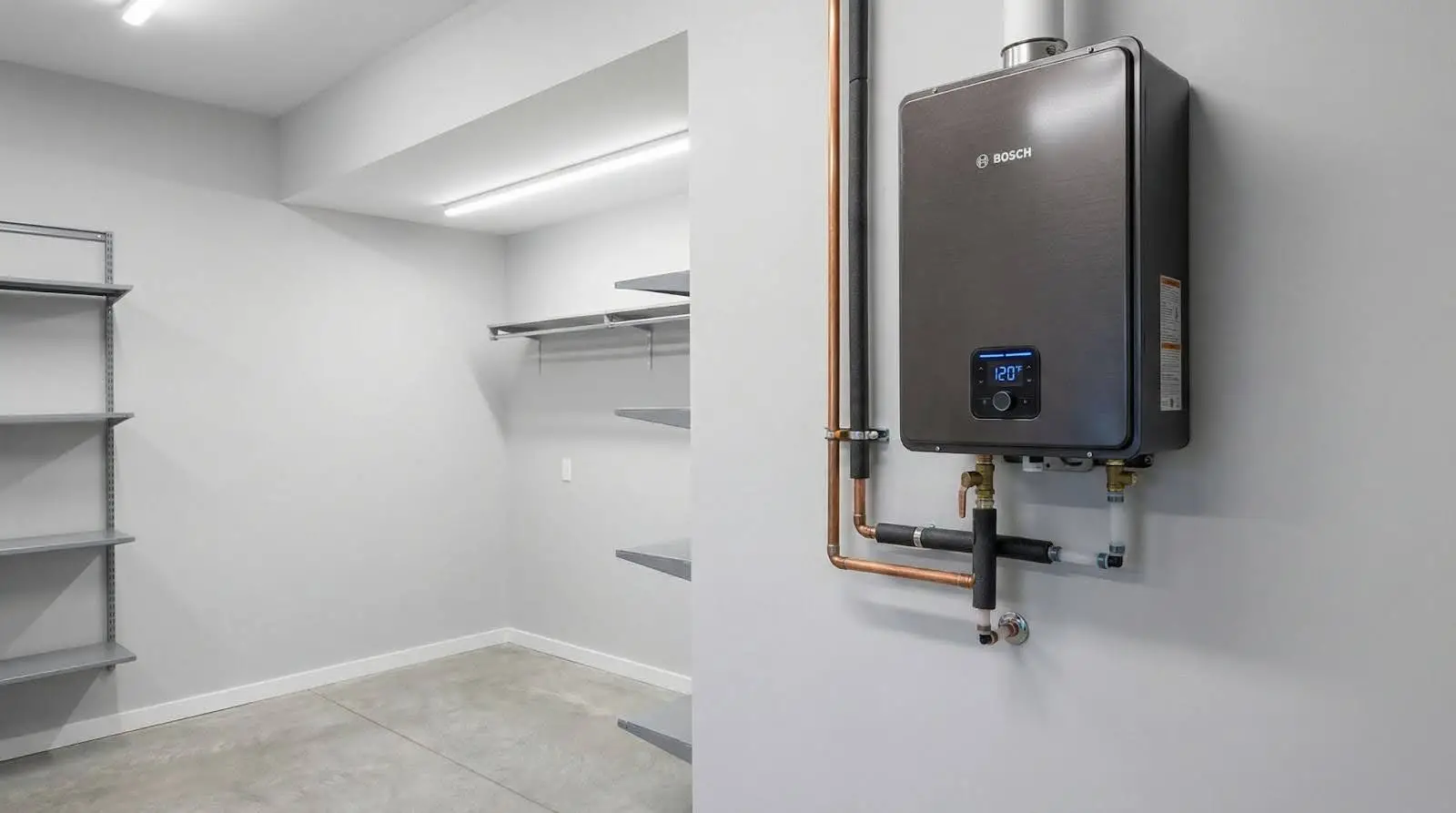
Bosch focuses heavily on efficient water heating, especially tankless models and advanced electric units. It is often chosen when someone wants a compact, highly efficient setup.
Strengths:
- Efficient tankless models that can provide a constant supply of hot water when sized correctly.
- Smaller wall mounted units that free up floor space.
- Good match for homes where water heating efficiency is a priority.
Considerations:
- Higher cost than many basic tank water heaters.
- Best installed and serviced by someone who has experience with the brand.
Best fit: Homeowners who want a premium, efficient system and are comfortable investing more at the start.
Whirlpool: Familiar and Straightforward
Whirlpool is a familiar name in home appliances, and their water heaters are common in basic gas and electric tank installations.
Strengths:
- Straightforward tank water heaters that handle typical hot water needs.
- Familiar brand that many people already trust for appliances.
- Easy to find standard replacement sizes for a failed tank.
Considerations:
- Less focus on high end efficiency or advanced features.
- Build quality, features, and energy efficiency vary by model, so check the details.
Best fit: Homeowners who want a simple, functional replacement without diving deep into more specialized brands.
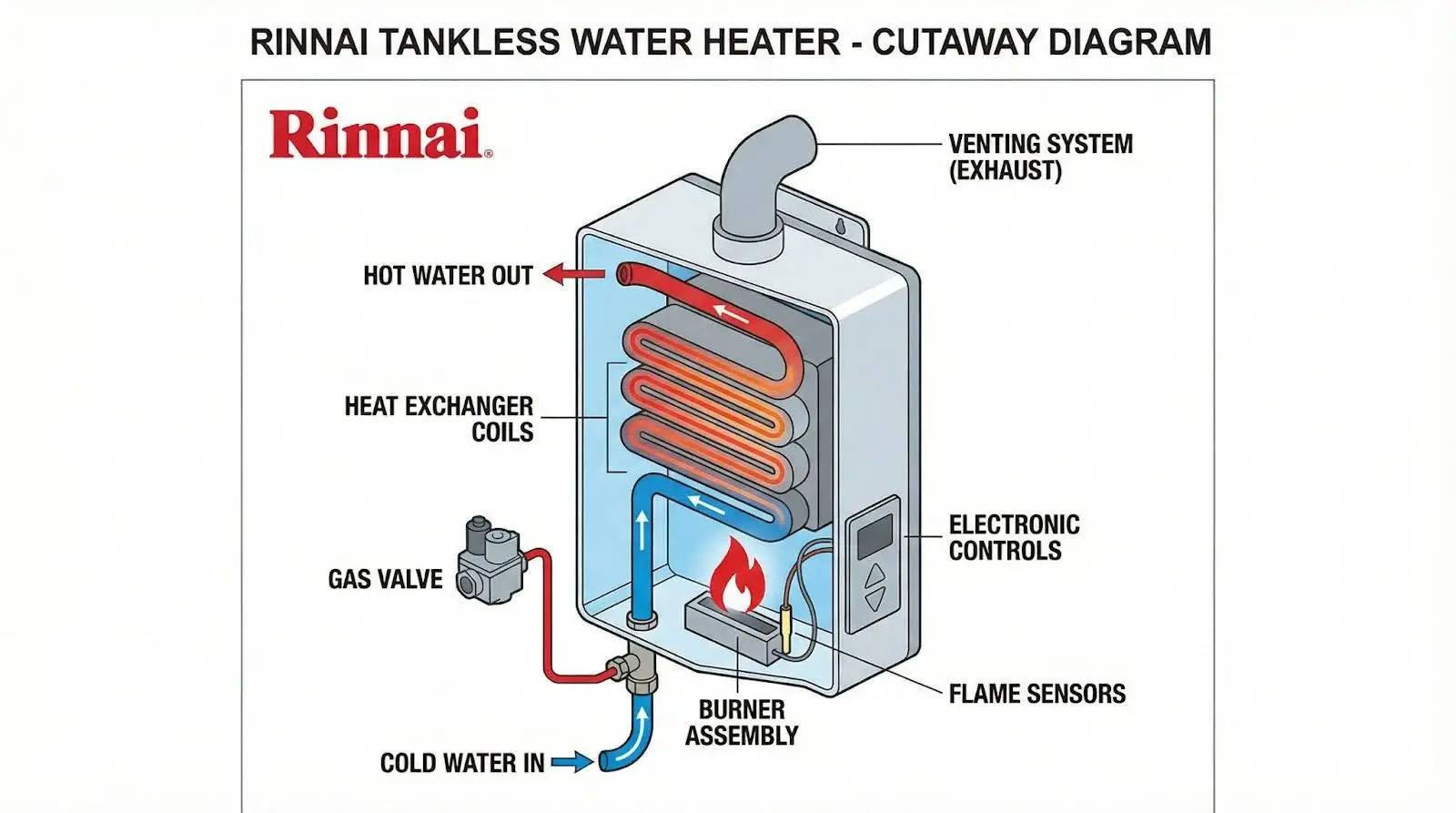
Rinnai: Tankless Specialist
Rinnai is one of the best known brands in tankless water heaters and is a common choice when someone wants endless hot water.
Strengths:
- Strong variety of tankless models for both natural gas and propane.
- Good performance when matched to the home’s hot water demand.
- Wall mounted units free up floor space and work well in small spaces.
Considerations:
- Tankless models require more planning for venting, gas line sizing, and heat exchanger maintenance.
- Regular descaling is important, especially in areas with hard cold water.
- Installation costs more than a simple tank swap.
Best fit: Homeowners who want on demand hot water and are ready to invest in a quality tankless unit instead of a storage tank.
Types of Water Heaters and How They Work
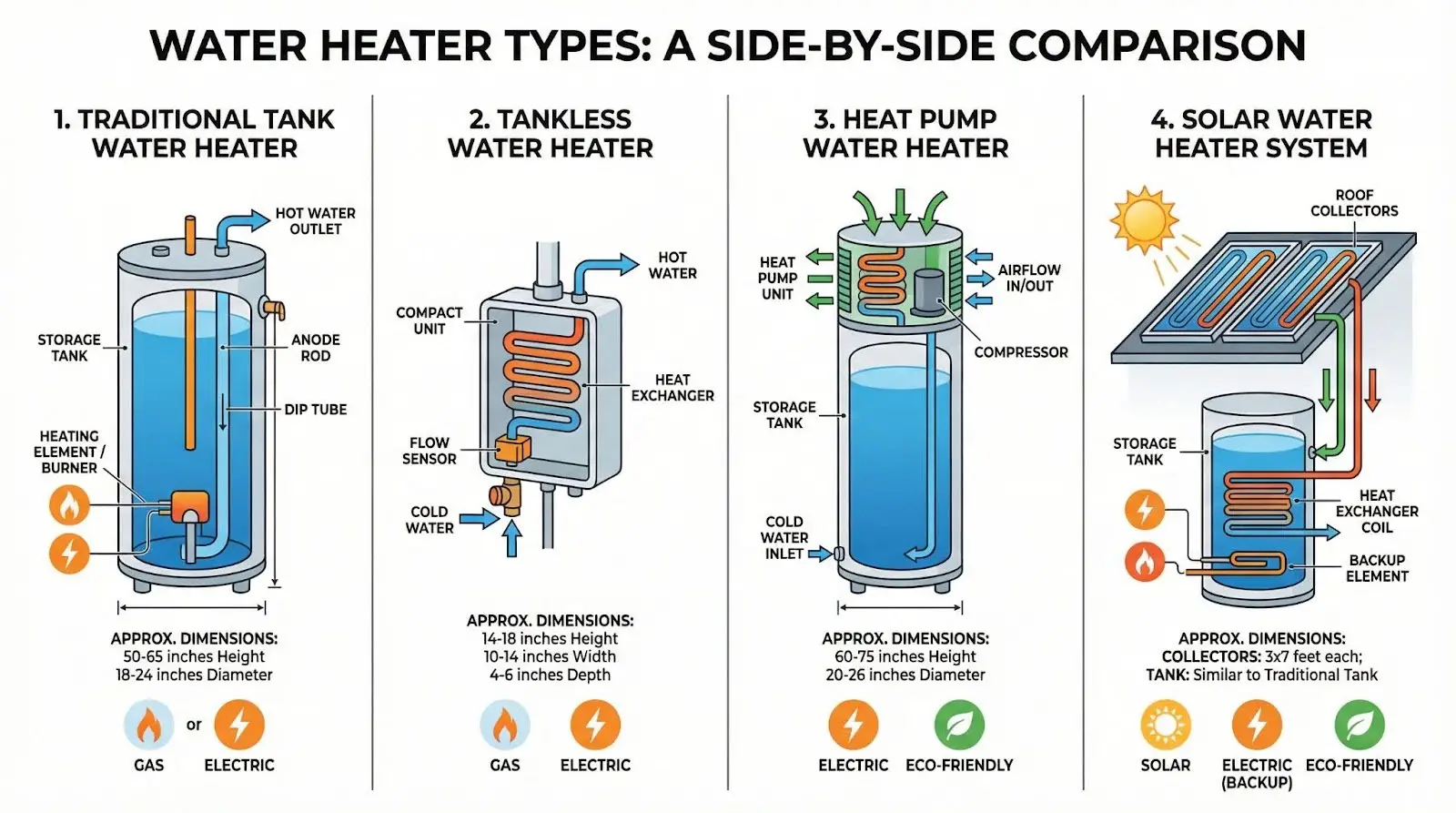
Before picking a brand, it helps to understand the main water heater types and how they handle heating water.
Standard Tank Water Heaters
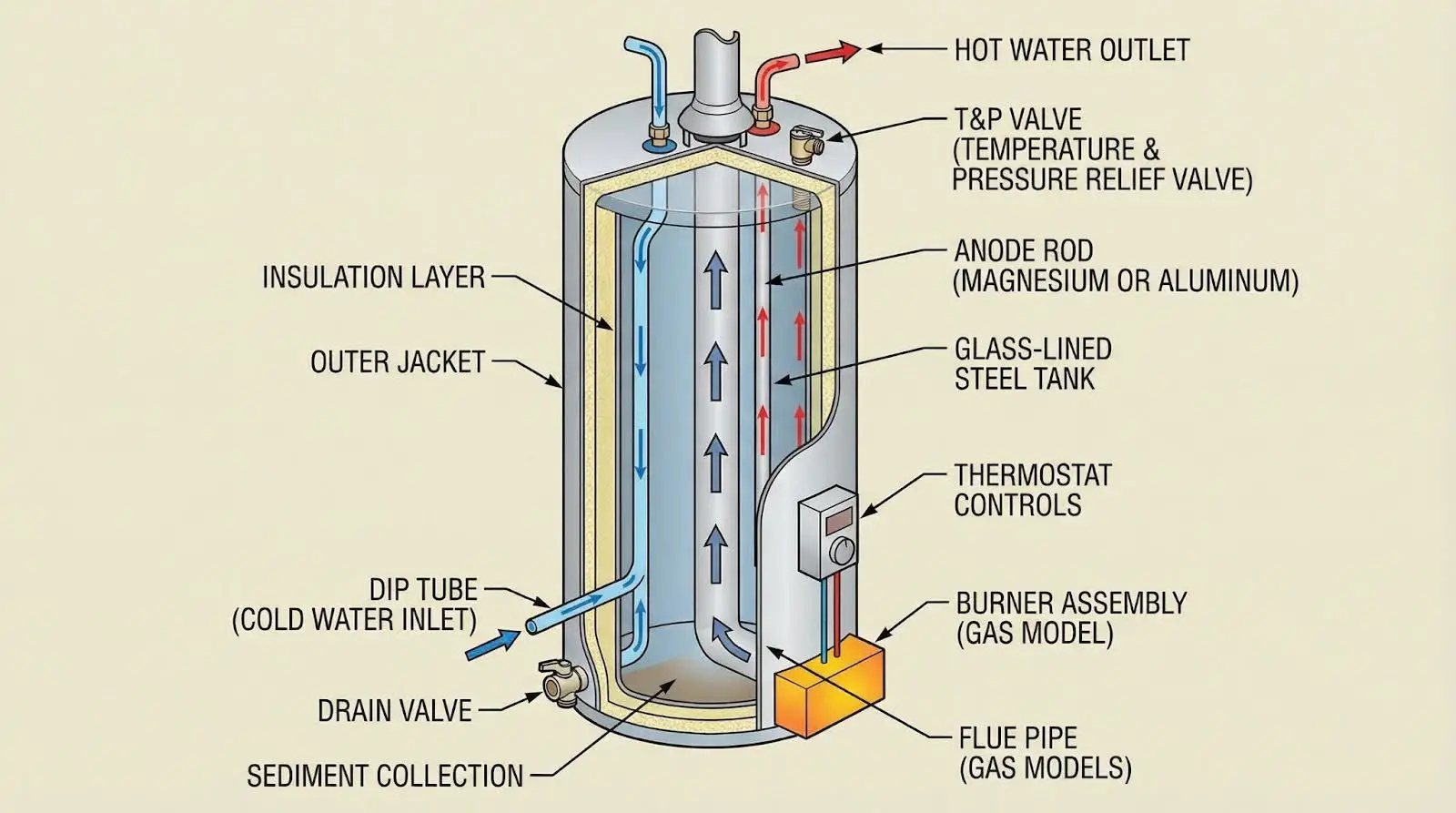
These are the most common type found in many homes. They use a storage tank that holds hot water ready for use.
- Available as natural gas, propane, and electric models.
- Typically cheaper to install and easier to replace than more complex systems.
- Use a burner or heating elements at the bottom, and an anode rod to help protect the glass lined tanks.
- A pressure relief valve helps protect against excessive pressure and heat buildup.

Tankless Water Heaters
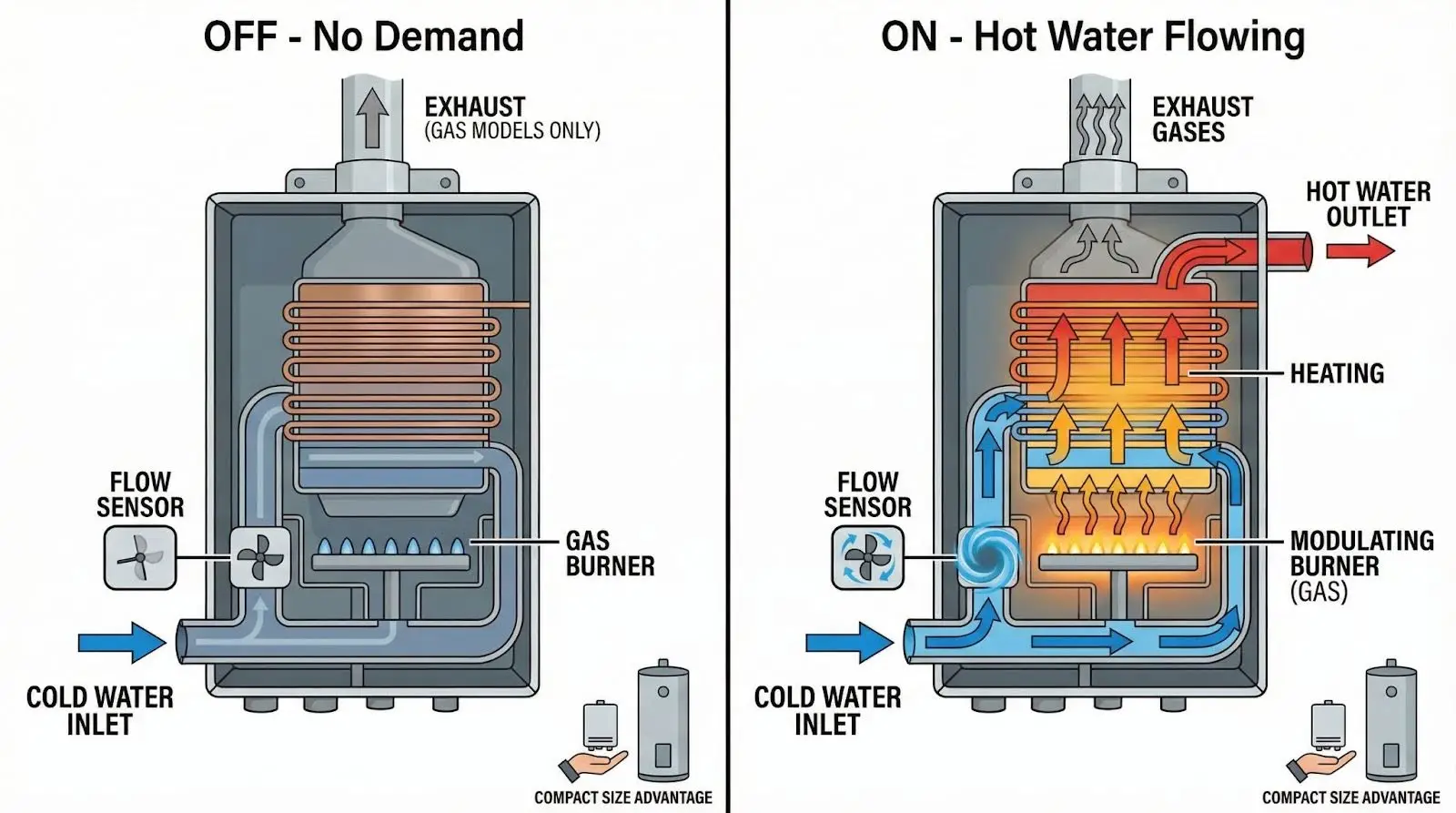
Tankless units heat water as it flows through a heat exchanger instead of storing it in a tank.
- Can provide a constant supply of hot water if properly sized.
- Commonly use natural gas or propane burners, although electric tankless water heaters also exist.
- Save space and can be very energy efficient but need regular descaling and maintenance.
- Exhaust gases must be vented correctly on gas and propane models.
Heat Pump Water Heaters and Hybrid Water Heaters
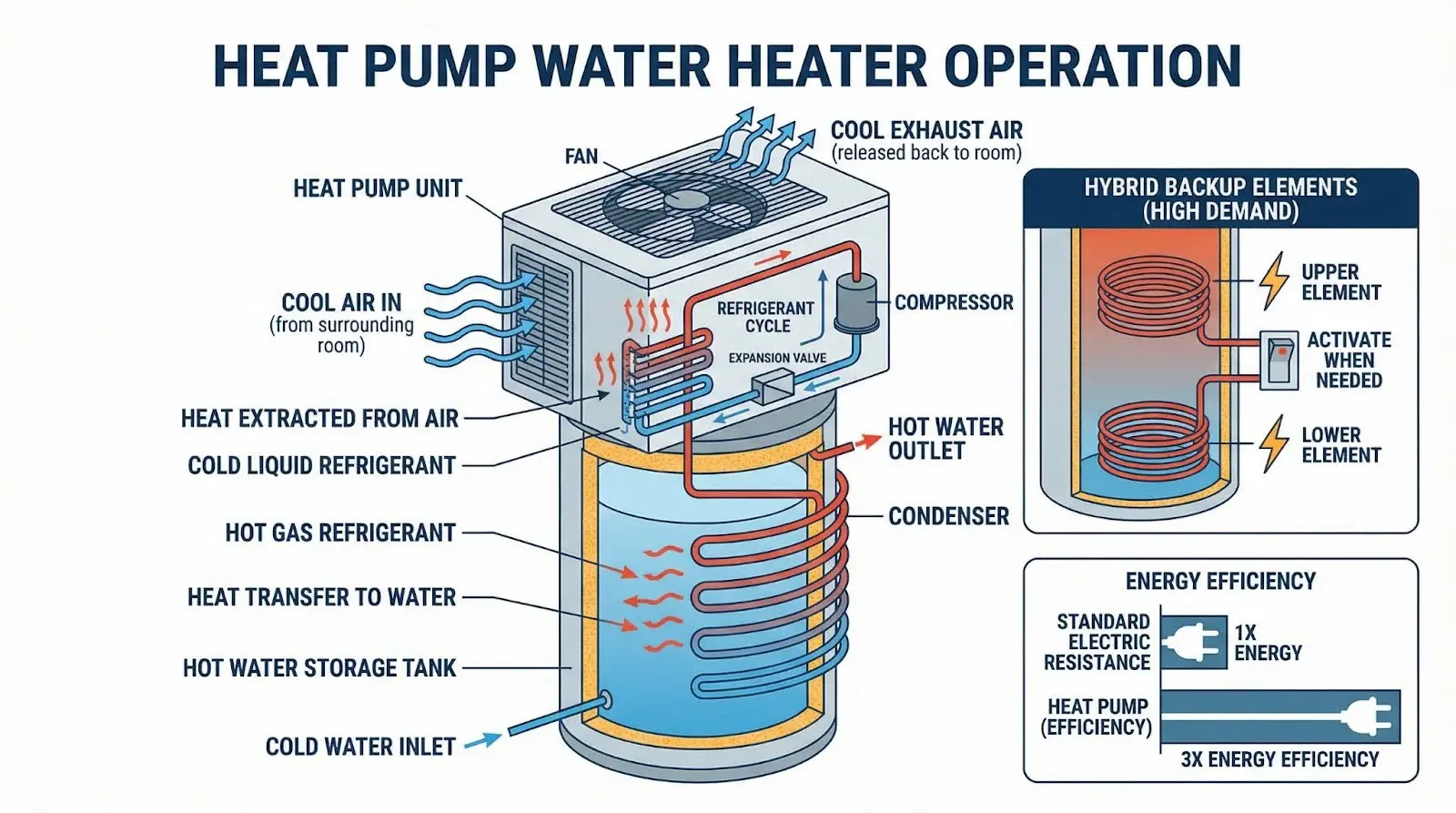
Heat pump water heaters move heat from the surrounding air into the water instead of generating heat directly.
- They use a heat pump on top of the tank that pulls heat from the air.
- Hybrid water heaters can switch between heat pump mode and standard electric mode depending on demand and conditions.
- They use less energy than standard electric tanks and are often Energy Star certified models.
- They need enough space around them for air flow and work best in areas that are not freezing cold.
Solar Water Heaters and Condensing Water Heaters
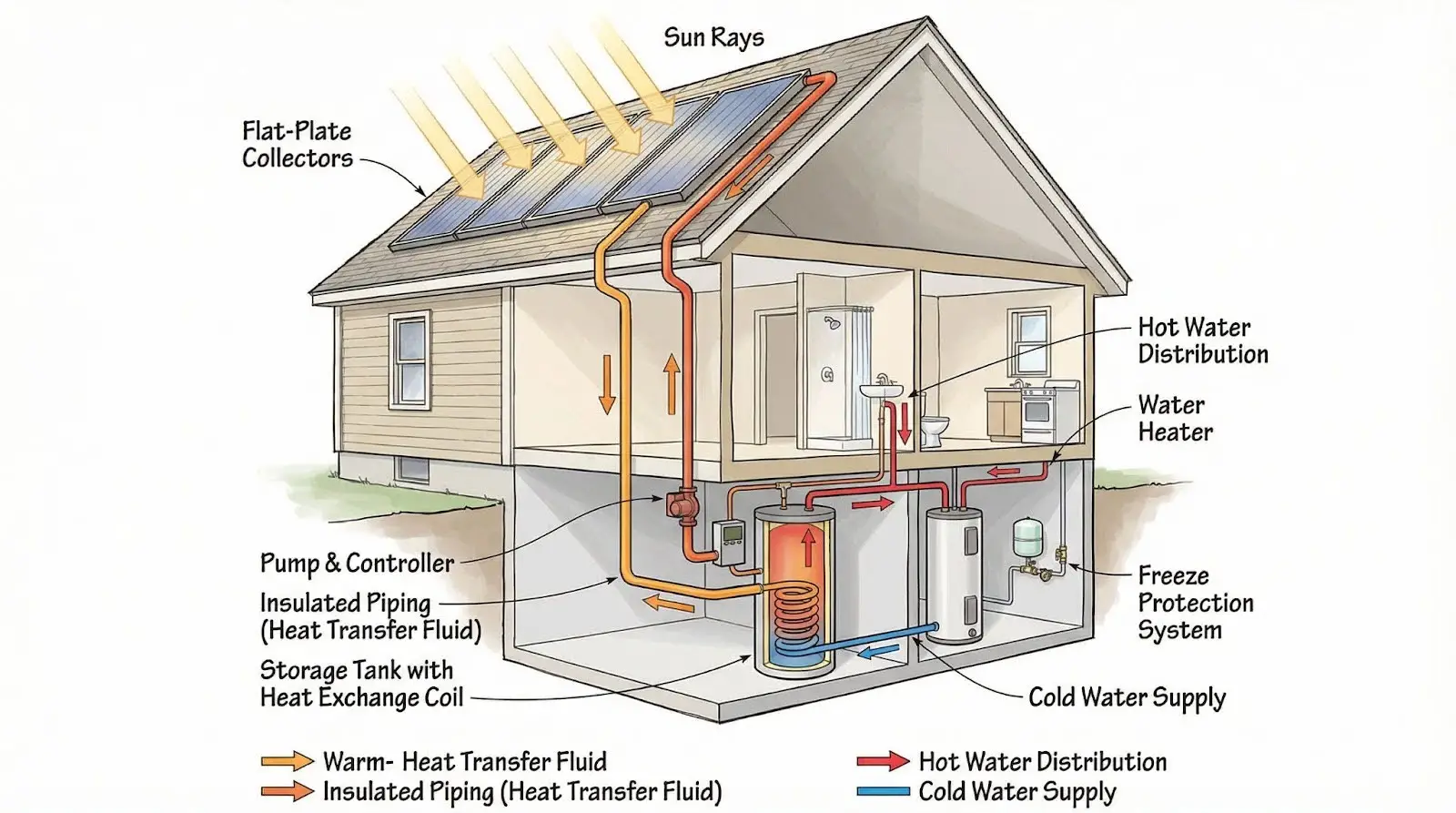
Solar water heaters use the sun’s energy to help heat water.
- Collectors on the roof warm water or a transfer fluid that then heats the storage tank.
- Often used with a backup system like a gas or electric unit for cloudy days or higher demand.
- Work best in sunny regions and can greatly reduce the energy needed for water heating.
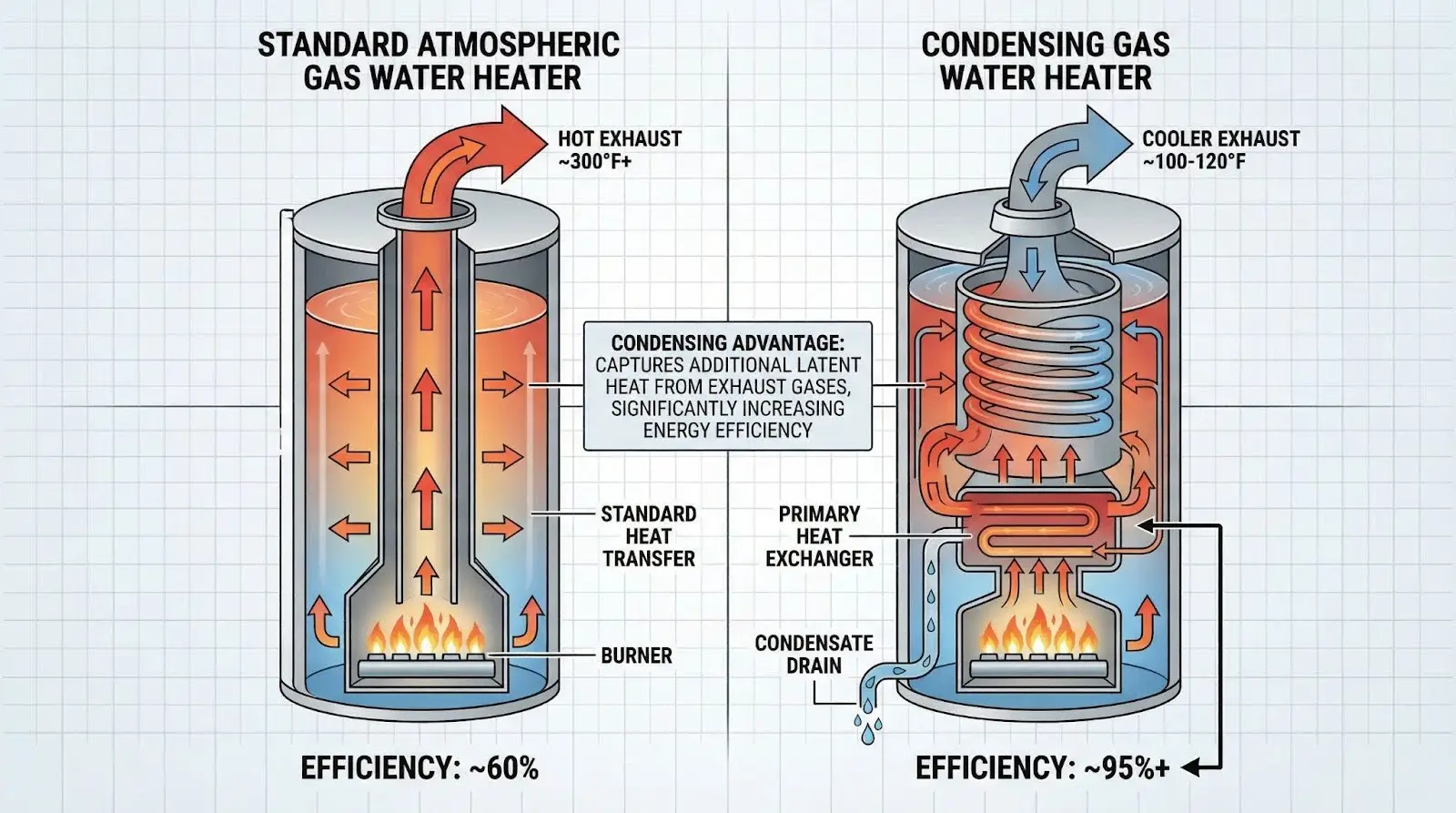
Condensing water heaters are usually high efficiency gas models.
- They capture extra heat from exhaust gases that traditional units simply send outside.
- This makes them more energy efficient than older standard gas models.
Matching Brand and Type to Your Home
Here is a simple way to think through your options.
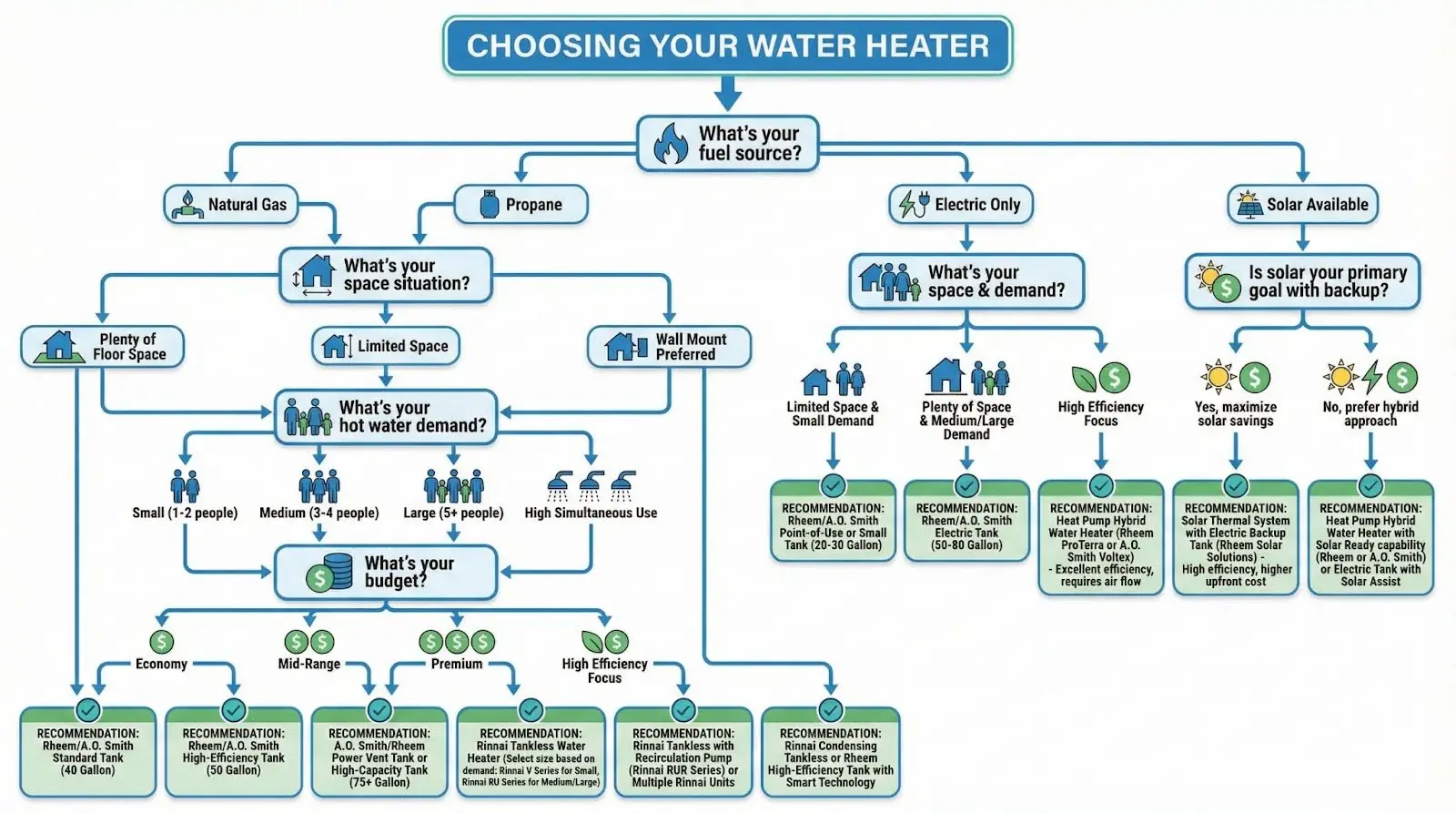
If you want a dependable, efficient tank for a typical family: look at Rheem, Bradford White, or A. O. Smith gas or electric tank water heaters.
If you want endless hot water and have enough gas supply and venting options: consider Rinnai or Navien tankless models sized to your hot water demand.
If you are all electric and want to use less energy: consider a heat pump water heater or hybrid water heater from A. O. Smith, Rheem, or Stiebel Eltron.
If you live in a very sunny region and want an eco friendly option, solar water heaters can be paired with other brands as a backup tank.
If you are on a tight budget and just need something that works: GE, Whirlpool, and some basic Rheem or other brands can work well when installed correctly.
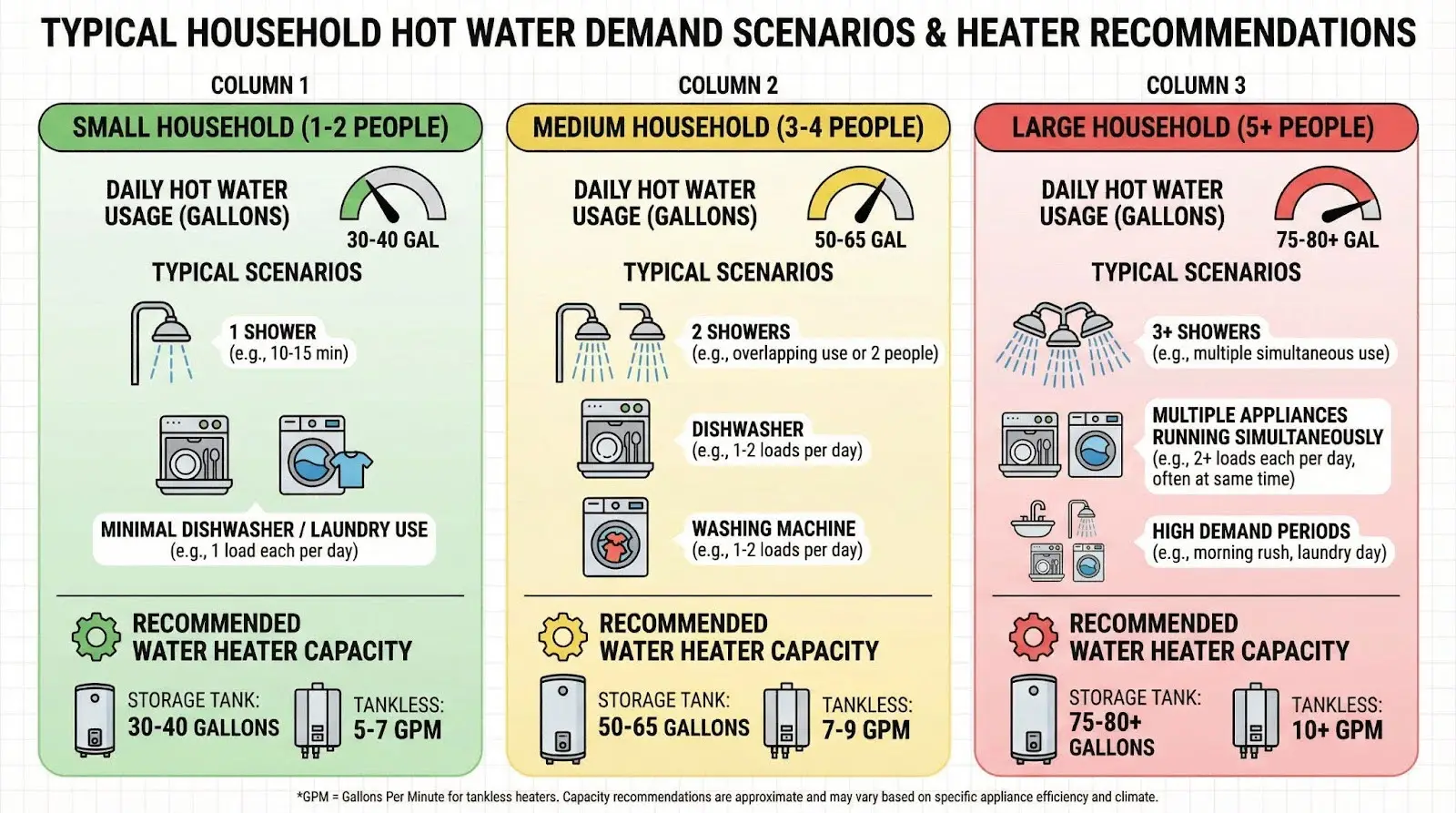
Remember that how much hot water you actually use each day matters. A family that showers back to back, runs laundry, and uses the dishwasher needs more capacity than a couple in a small home.
Warranty, Maintenance, and When to Replace
Even the best brand will not last if you ignore maintenance. Every unit needs a bit of care.
- ANODE ROD: Icon of anode rod, “Check and replace every 3-5 years”
- TANK FLUSHING: Icon of drain valve with sediment, “Flush annually to remove sediment”
- PRESSURE RELIEF VALVE: Icon of T&P valve, “Test annually for proper operation”
- TANKLESS DESCALING: Icon of heat exchanger with mineral buildup, “Descale annually in hard water areas”
- HEAT PUMP FILTER: Icon of air filter, “Clean filter quarterly”
- INSPECTION: Icon of plumber with clipboard, “Professional inspection every 2-3 years” Use a color scheme of blue, gray, and green. Include estimated time for each task. Professional, clean design suitable for homeowner handout or blog graphic. White background, modern typography.*
- Check and replace the anode rod in tanks when needed to protect against corrosion.
- Flush sediment from the storage tank so the heater does not waste energy.
- Keep an eye on the pressure relief valve to make sure it is not stuck.
- For tankless units, clean the inlet screens and descale the heat exchanger.
- For heat pump water heaters, keep filters and surrounding space clean.
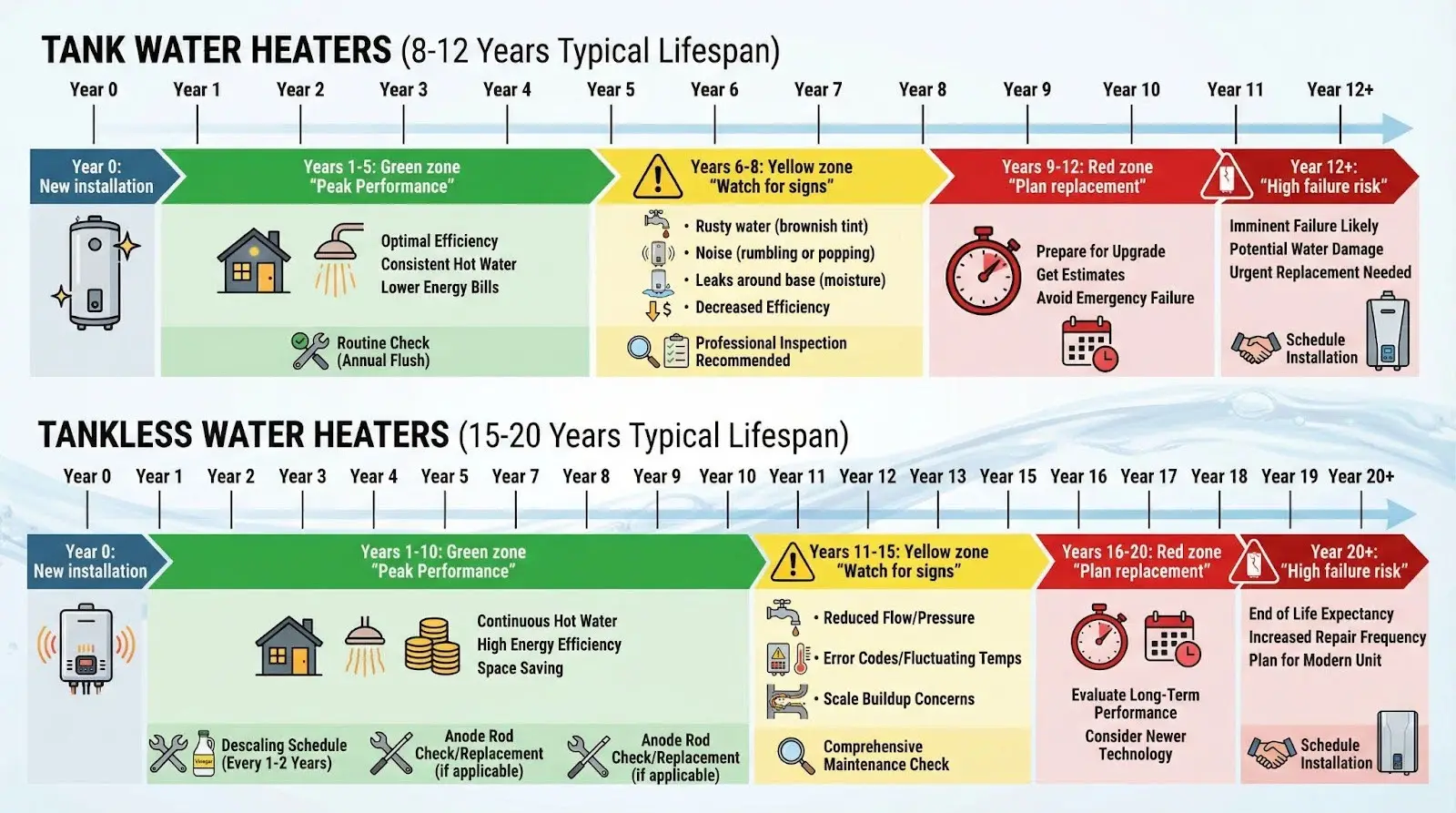
Many tanks are ready for replacement around 8 to 12 years, especially if they have never been maintained. Replacing before a big leak can save damage and stress.
Ready to Talk Through Your Options?
If you are trying to decide on the best brand and type for your situation, you do not have to guess.
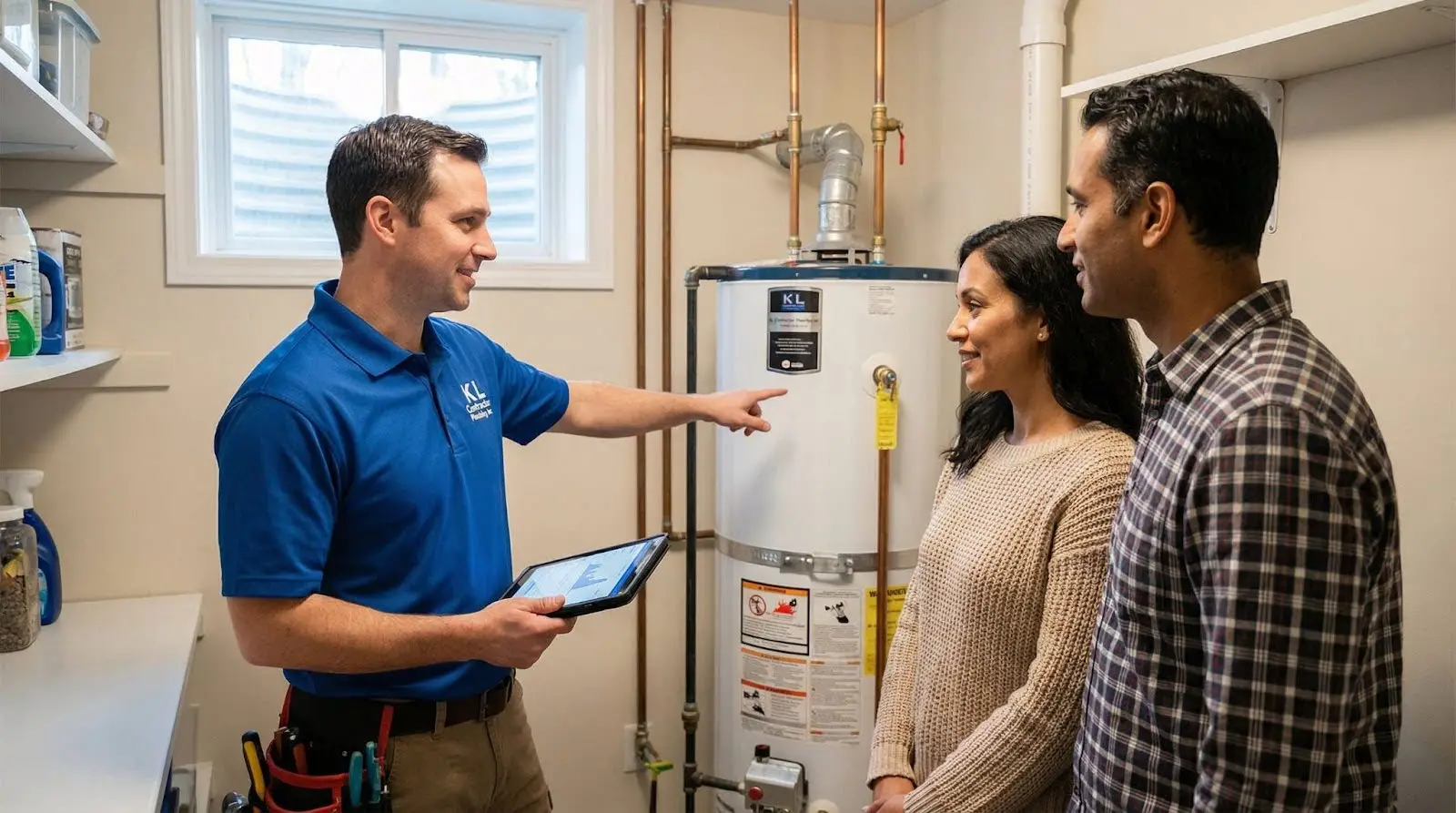
K L Contractor Plumbing Inc helps homeowners choose and install new water heater units that actually fit their homes and their hot water needs. We look at your fuel source, space, hot water demand, and budget, then recommend brands and models that make sense instead of upselling you something you do not need.
Whether you are looking at tankless units, heat pump water heaters, standard gas tanks, or you just know your old hot water heater needs to be replaced soon, we are here to help.
Reach out to K L Contractor Plumbing Inc to schedule a visit. We will walk you through your options, handle the installation, and set you up with a system that is efficient, safe, and ready to give you hot water when you need it.