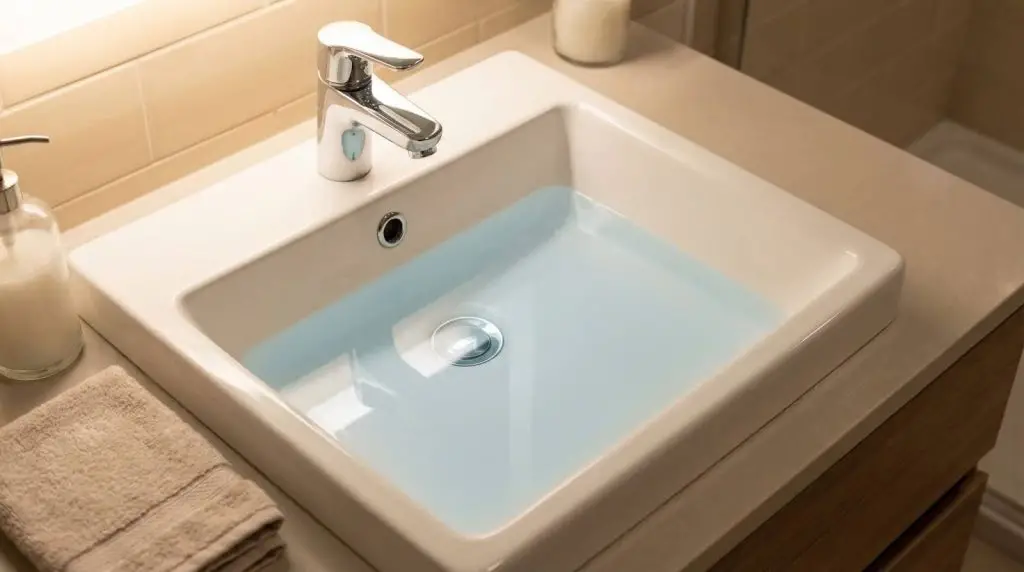
Troubleshooting: Bathroom Sink Filling Up With Water and How to Fix It
Contents
- 1 Troubleshooting: Bathroom Sink Filling Up With Water and How to Fix It
- 1.1 Why your bathroom sink is filling up with water
- 1.2 What’s going on under the bathroom sink
- 1.3 Safe DIY checks for a clogged bathroom sink
- 1.4 Using a drain snake (plumber’s snake) like a pro
- 1.5 Natural solutions for lighter clogs
- 1.6 How this compares to kitchen sink problems
- 1.7 Preventing the next clogged bathroom sink
- 1.8 When to call a plumber instead of wrestling with it
- 1.9 Friendly help in Marietta and East Cobb
A bathroom sink filling up with water when the faucet is off is your plumbing system’s way of telling you “hey, something’s wrong down here.” It usually comes down to a clogged drain or slow drainage in the drain line or P trap, not a supply leak.
Here’s how a master plumber who’s seen more bathroom sink disasters than he cares to admit would walk you through it, step by step.
Why your bathroom sink is filling up with water
When a bathroom sink starts filling with water on its own, it’s almost always because wastewater isn’t draining properly. Instead of flowing down the drain line, it hits a blockage and comes right back up into the sink.
Common scenarios:
- The sink basin fills with standing water even when the faucet is off
- Water from another sink or tub drain finds its way up into this bathroom sink
- The sink was just draining slowly for a while and then one day it stopped
The most common causes:
- Hair clumped together with soap scum and toothpaste
- Grease and sticky residue from lotions and products
- Small foreign objects (jewelry, caps, cotton swabs)
- Old, rough pipes that collect debris more easily
If the clog is close to the sink drain, you’ll usually see one slow draining sink. If you’re getting water backup in more than one bathroom or in a tub drain as well, you may have a deeper plumbing issue in a branch or main line.
What’s going on under the bathroom sink
Let’s talk anatomy. Under the bathroom sink you’ve got:
- The pop up stopper and tailpiece coming down from the basin
- The P trap, which is that U shaped pipe that always holds water
The horizontal drain line that carries water into larger drain pipes and eventually the main line.
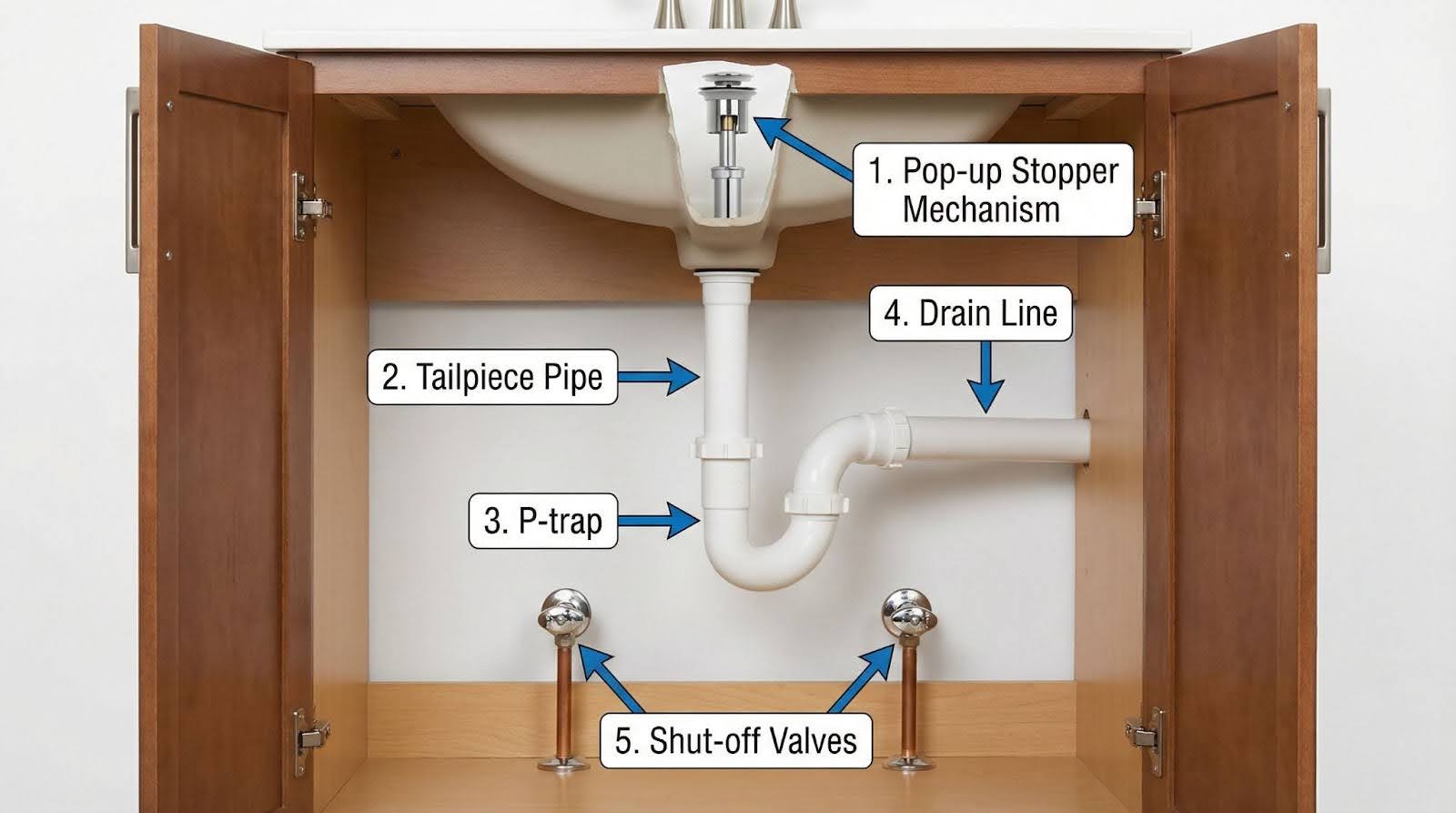
The P trap is there to block sewer gas, but it’s also a magnet for clogs:
- Hair and other debris settle there
- Grease and soap scum stick to the inside of the pipe
- Over time, the opening narrows until you’ve got a clogged sink
If the trap and nearby drain line are partially blocked, you get slow drainage at first. Let it go long enough and you end up with a bathroom sink filling completely and water that barely moves.
If two sinks in the same bathroom (or the toilet and tub) all start acting up, the root cause is probably farther down the line. For serious drain issues affecting multiple fixtures, you may need professional drain cleaning services in Marietta.
Safe DIY checks for a clogged bathroom sink
Before you call a plumber, there are a few things you can safely try. You don’t need to be a professional plumber; you just need a little patience and maybe a strong stomach.
- Clean the pop up stopper and drain opening
- Pull the stopper out of the bathroom sink.
- Clean off hair, gunk, and sticky residue.
- Shine a flashlight down the drain opening to see if anything obvious is stuck near the top.
- Run hot water
- Let hot water run for 20–30 seconds and see whether water flow improves at all.
- If the sink is totally clogged and filled with standing water, skip this step to avoid overflowing.
- Try a small plunger
- Plug the overflow hole with a wet cloth so you get good suction.
- Use a sink plunger (not the big toilet plunger) and give several steady plunges.
- This can clear organic clogs near the top of the drain.
If your bathroom sink is still clogging or draining slowly after this, the blockage is probably farther down, and it’s time to bring out the heavier tools.
Using a drain snake (plumber’s snake) like a pro
A drain snake (also called a plumber’s snake or a small drain auger) is one of the best tools for a clogged bathroom sink filling up with water.
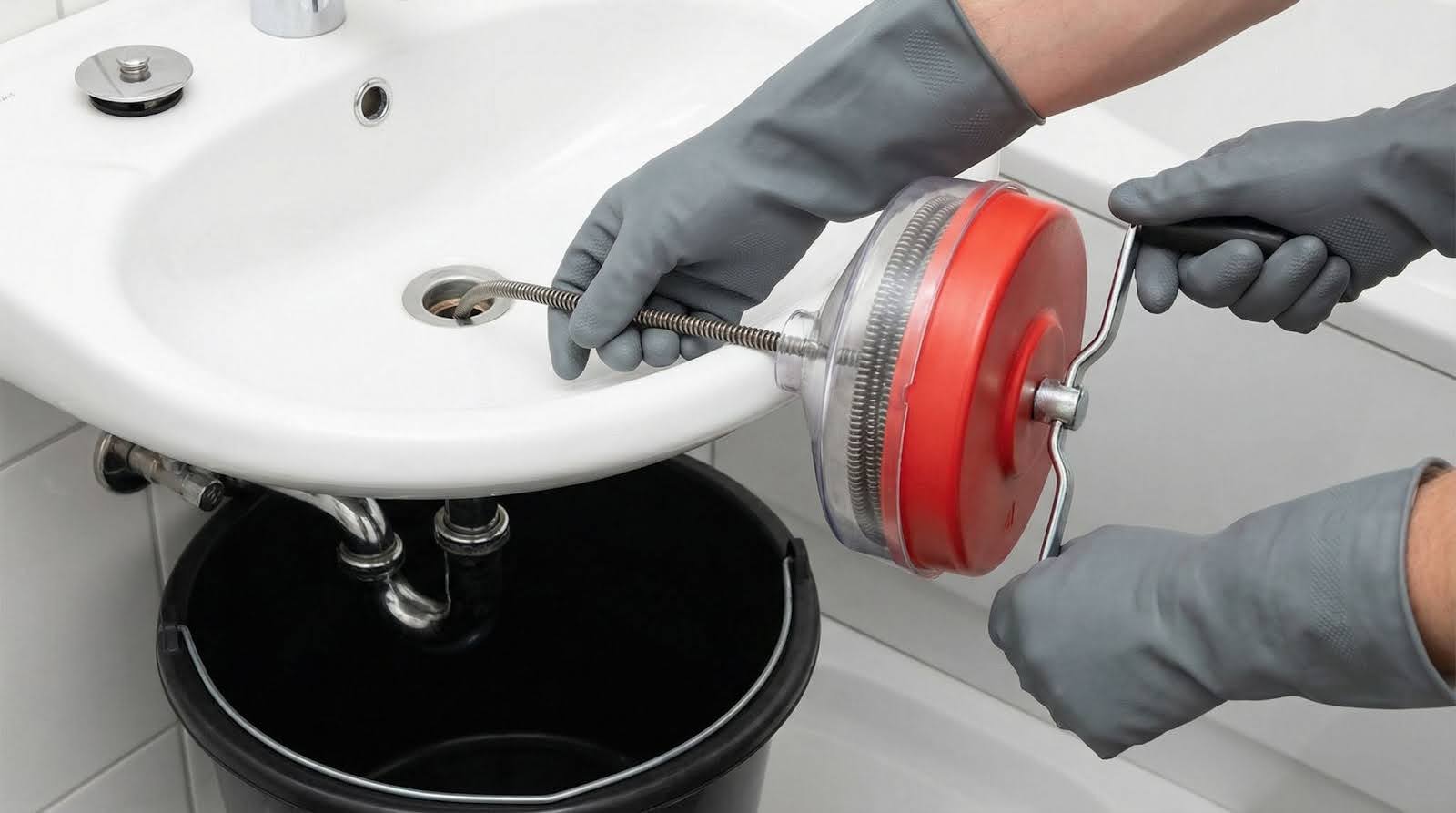
Here’s the basic process:
- Set up your work area
- Put on rubber gloves.
- Place a bucket under the P trap to catch water.
- Lay a towel under the sink in case any pipes drip.
- Snake from the top if possible
- Remove the pop up stopper.
- Feed the drain snake into the sink drain slowly while turning the handle.
- When you feel resistance, you’ve hit the partial clog or full blockage.
- Work gently back and forth until you break up the clog or hook it and pull it back.
- If that fails, remove the P trap
- Loosen the slip nuts on the P trap and pull the U shaped pipe off.
- Clean out any hair, grease, and debris inside the trap.
- Run the drain auger into the drain line in the wall to chase stubborn clogs deeper in the system.
- Reassemble and test
- Put the P trap back and tighten the slip nuts just snug enough for a good seal.
- Run hot water and check for leaks and that the water flow is back to normal.
If you’re not comfortable taking the P trap apart, that’s a perfectly good time to call a plumber instead of learning the hard way how many ways plastic pipes can leak.
Natural solutions for lighter clogs
For minor drain problems, you can try natural solutions before you reach for chemical drain cleaners.
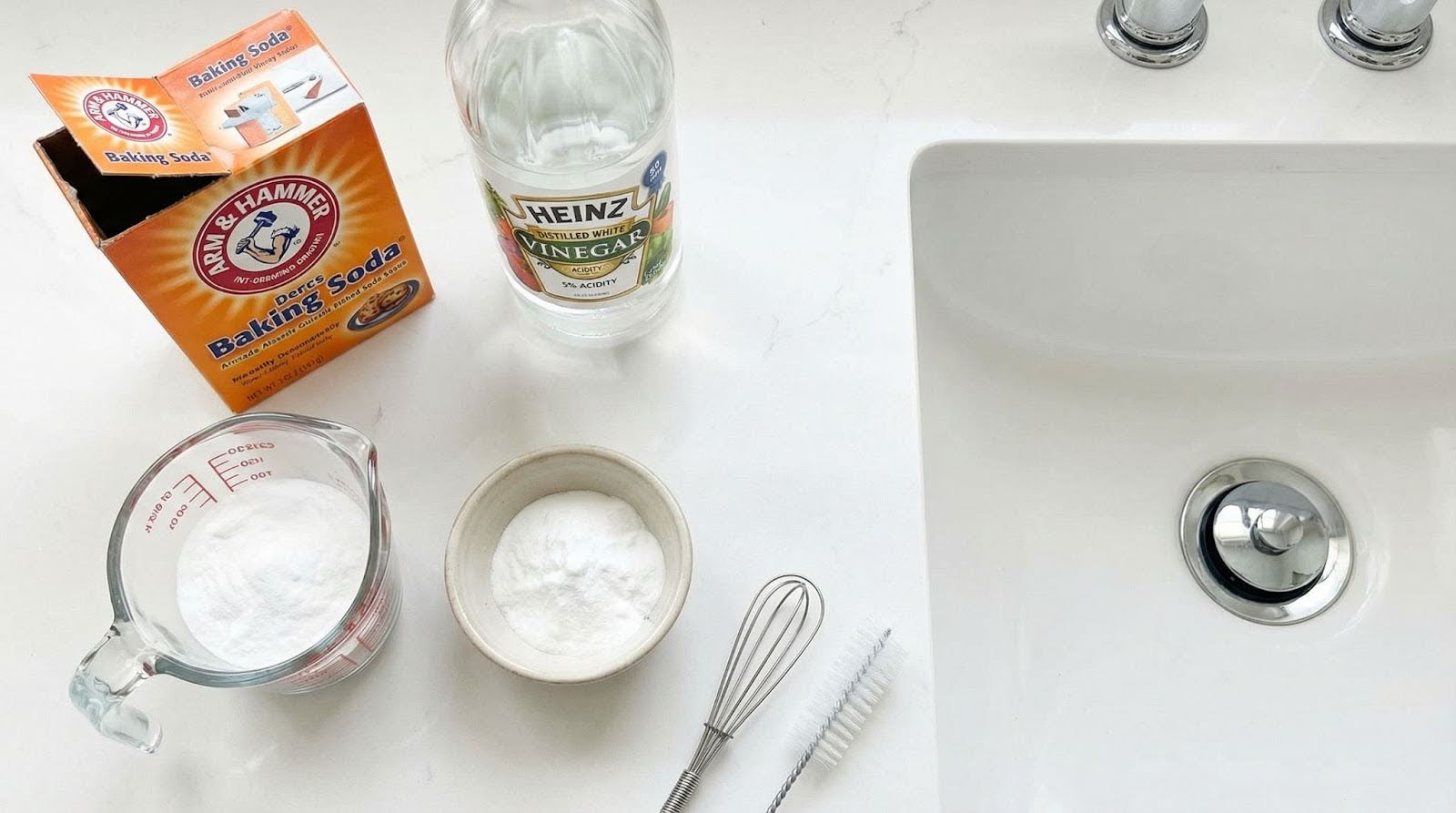
Options that actually help:
- Baking soda and white vinegar
- Pour about half a cup of baking soda into the drain.
- Follow with half to one cup of white vinegar.
- Let it fizz for 10–15 minutes.
- Flush with plenty of hot water.
- This is great for soap scum, light grease buildup, and other debris.
- Boiling water (used carefully)
- Heat a large pot of water to a boil.
- Carefully pour it down the bathroom sink in stages.
- Avoid using boiling water on very older pipes or questionable plastic; in that case use very hot tap water instead.
Natural solutions are good for maintenance and light clogs. They will not fix complete blockages from solid hair plugs or tree roots in a main line, and too much reliance on strong chemical drain cleaners can be rough on your plumbing system, especially older pipes. According to the Environmental Protection Agency’s WaterSense program, avoiding harsh chemicals helps protect both your plumbing and the environment.
How this compares to kitchen sink problems
Some folks ask, “Why is my kitchen sink fine but the bathroom sink keeps clogging?” The simple answer is that the sinks handle different kinds of waste:
- Bathroom sink
- Hair
- Soap scum
- Toothpaste, shaving cream, skincare products
- Kitchen sink
- Grease and cooking oil
- Food scraps
- Coffee grounds and heavier debris
Kitchen sink clogs tend to be heavier on grease and food, sometimes involving the garbage disposal. Bathroom sink clogs are more about hair and product buildup. But in both cases, the basic rules are the same:
- Keep solids out
- Keep the drain clear
- Catch hair and debris before they hit the drain line
- Don’t let a slow draining sink turn into a full-on clogged sink
If you’re dealing with kitchen drainage issues, check out our kitchen plumbing services for specialized help.
Preventing the next clogged bathroom sink
You can’t stop every clog forever, but you can dramatically reduce how often your bathroom sink fills up with water.
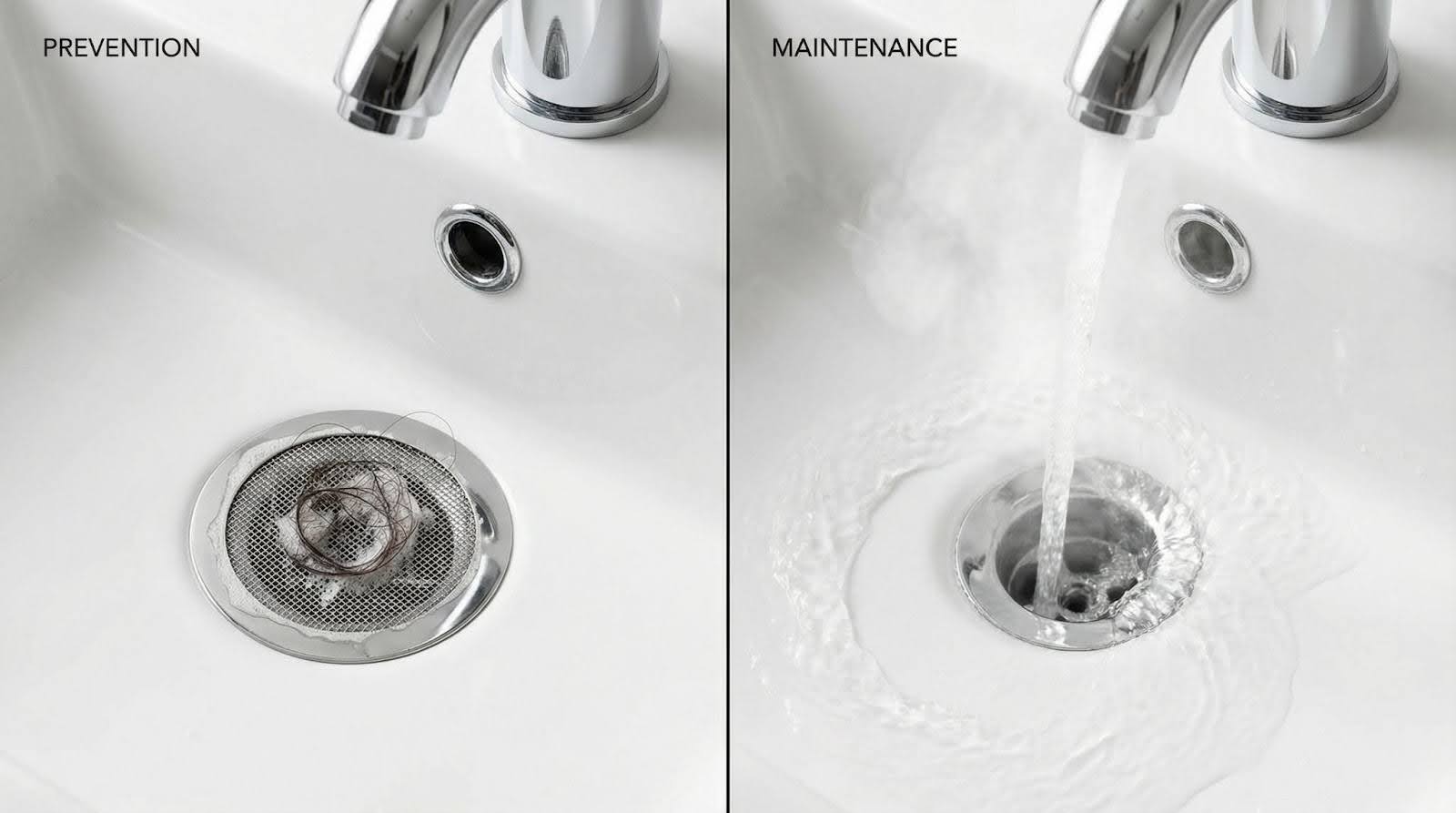
Good habits:
- Catch hair and debris
- Use a drain screen or a pop up stopper that helps catch hair and small debris.
- Empty it into the trash instead of rinsing everything down.
- Run hot water regularly
- After shaving or washing up, run hot water for 20–30 seconds to push soapy residue through the pipes.
- Skip heavy chemical drain cleaners
- Frequent use of strong chemical drain cleaners or harsh commercial drain cleaners can be hard on older pipes and P traps.
- Use baking soda and hot water for regular maintenance and save the serious cleaning for a drain snake or professional.
- Watch for early signs
- If the sink starts draining slowly, don’t wait until you are staring at a full basin of standing water.
- Light clogs are cheaper and easier to fix than the ones that plug the whole line.
Apply the same mindset in the kitchen and the rest of your plumbing will thank you. If you’re planning a bigger bathroom upgrade, our bathroom remodeling services can help you design a setup that’s easier to maintain.
When to call a plumber instead of wrestling with it
In my experience, here’s when it makes the most sense to call a plumber or professional plumber:
- You’ve cleaned the pop up stopper and tried hot water and a plunger with no luck
- You’re not comfortable taking apart the P trap and messing with slip nuts and pipes under the sink
- You’ve cleared the P trap before and the problem keeps coming back
- Multiple fixtures are slow, backing up, or making strange noises
- You suspect a main line issue, tree roots, or a deeper plumbing issue beyond a simple bathroom sink clog
At that point, you’re not just dealing with a little bathroom sink filling up with water; you’re protecting your home from further damage to cabinets, floors, and the rest of the plumbing system.
Friendly help in Marietta and East Cobb
If your bathroom sink is filling with water, draining slowly, or backing up whenever you use another sink, you don’t have to keep playing “home plumber” every weekend.
K L Contractor Plumbing Inc has been helping homeowners in Marietta, East Cobb, and the surrounding Cobb County area clear clogged bathroom sinks and bigger drain problems for years. A typical visit for a clogged bathroom sink includes:
- A thorough check of the sink drain, P trap, and nearby drain line
- Mechanical cleaning with the right drain snake or auger instead of just dumping chemicals down the drain
- Looking for signs of deeper drain problems or main line issues
- Straight, honest advice on how to prevent clogs with simple regular maintenance
If you’re tired of standing water in the basin, mystery clogs, or water backup in your bathroom, call a plumber at K L Contractor Plumbing Inc. We will get your bathroom sink draining properly again so you can stop worrying about what’s happening inside those pipes and get back to using your bathroom like a normal human.
