Why Kitchen Sink Clogs Are So Common in Marietta Homes
Contents
- 1 Why Kitchen Sink Clogs Are So Common in Marietta Homes
- 2 Cause #1: Grease and Cooking Oil Buildup
- 3 Cause #2: Food Particles and Scraps
- 4 Cause #3: Soap Scum and Detergent Residue
- 5 Cause #4: Mineral Deposits from Hard Water
- 6 Cause #5: Small Objects and Non-Food Items
- 7 Cause #6: Damaged or Collapsed Pipes
- 8 How to Prevent Kitchen Sink Clogs: Best Practices
- 9 When to Call K L Contractor Plumbing Inc for Kitchen Drain Cleaning
- 10 Professional Drain Cleaning Methods
- 11 Why Marietta Homeowners Trust K L Contractor Plumbing Inc
- 12 Understanding Your Kitchen Sink Trap
- 13 Take Action Before Small Problems Become Major Emergencies
Kitchen sinks face more abuse than any other drain in your home. Every meal preparation, dish washing session, and food disposal creates potential for buildup inside your pipes.
Marietta’s water characteristics also play a role. The mineral content in local water contributes to residue buildup over time, especially when combined with soap and food particles.
Most homeowners don’t realize how quickly small issues escalate into major blockages. A slightly slow drain today becomes a complete backup tomorrow without proper attention.
Cause #1: Grease and Cooking Oil Buildup
Grease is the single biggest cause of kitchen sink clogs we encounter in Marietta. This includes cooking oil, butter, bacon grease, and any fat-based substance.
The Science Behind Grease Clogs
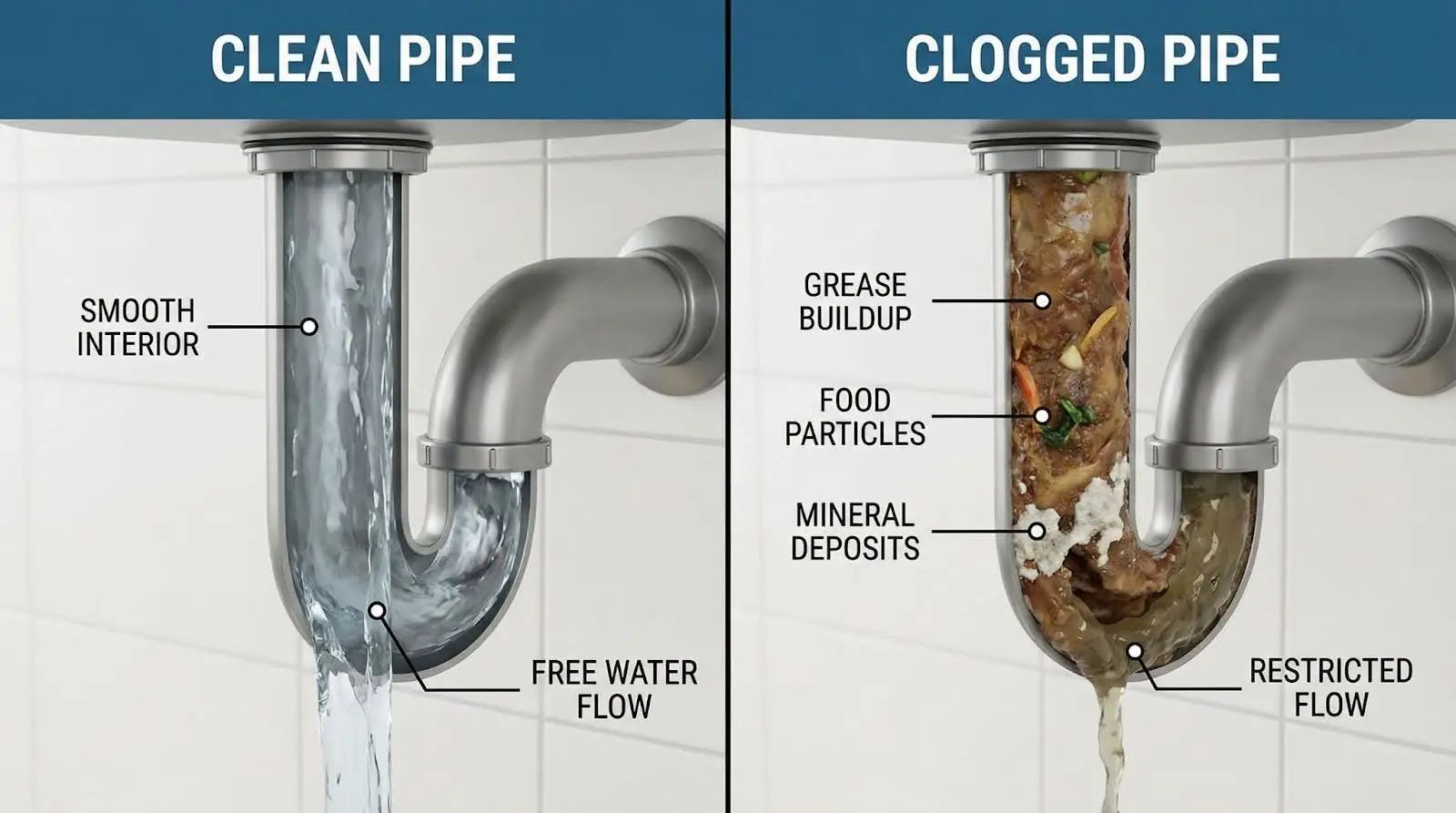
Liquid grease pours down the drain easily when hot. But as it cools inside your pipes, it solidifies and sticks to the pipe walls. Each time you rinse more grease down the drain, another layer builds up.
Over weeks and months, this accumulation narrows the pipe diameter. Eventually, the opening becomes so restricted that water can barely pass through.
Common grease sources include:
- Pan drippings from cooking meat
- Oil from sautéing vegetables
- Butter scraped from pans
- Salad dressings and creamy sauces
- Cheese and dairy residue
Even small amounts add up over time. That tablespoon of bacon grease you rinse away contributes to the growing problem inside your pipes.
Prevention Strategy
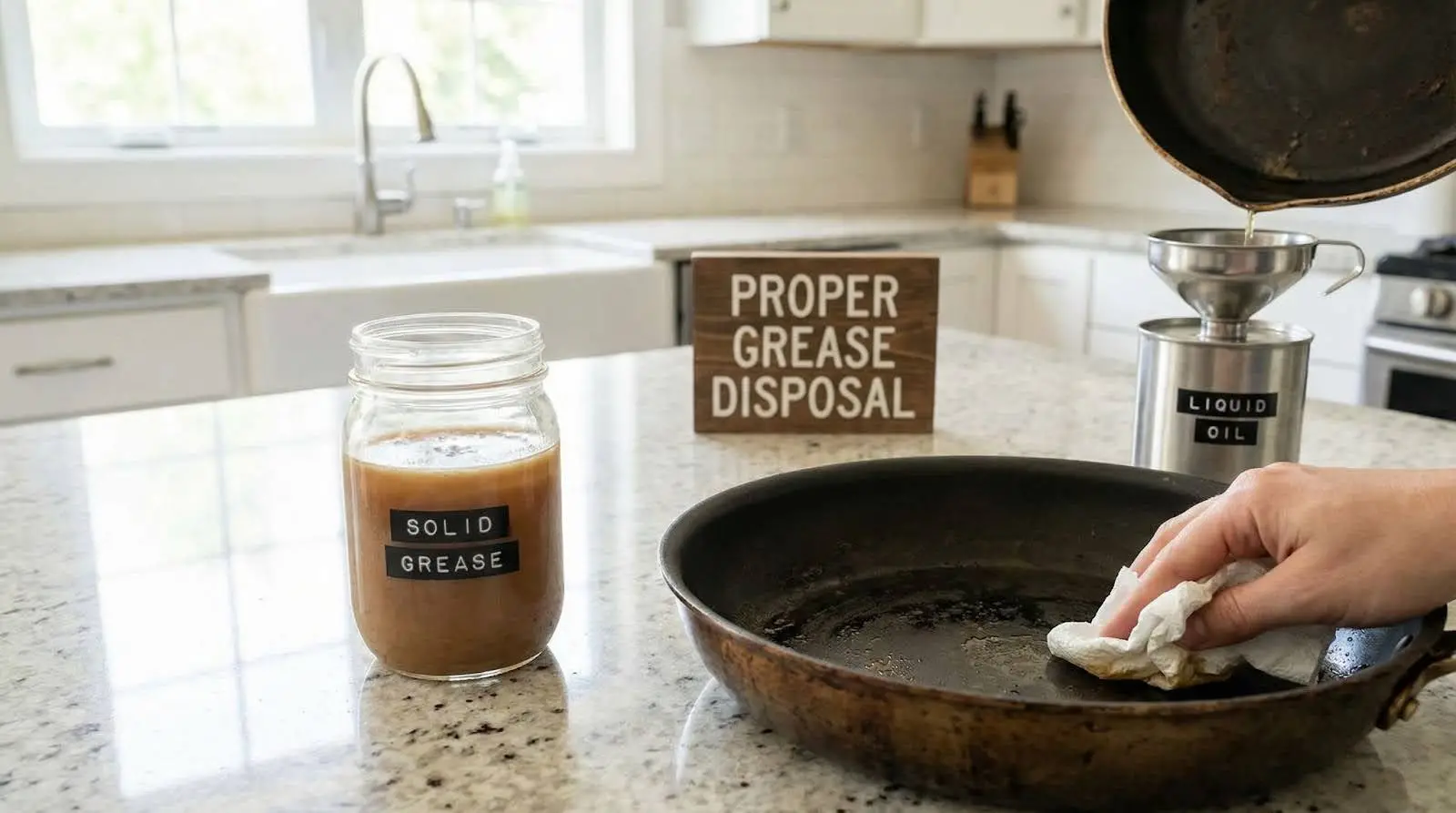
Never pour grease down your kitchen drain. Let cooking fats cool and solidify, then scrape them into the trash. For liquid oils, pour them into a disposable container and throw it away.
Wipe greasy pans with paper towels before washing. This removes the bulk of the grease before it reaches your drain.
If grease already caused a clog in your kitchen sink, don’t attempt to flush it with hot water. K L Contractor Plumbing Inc uses professional hydro jetting equipment to completely remove grease buildup from your pipes.
Cause #2: Food Particles and Scraps
Even with a garbage disposal, food particles cause significant drain problems. Not everything that seems safe to rinse actually belongs in your pipes.
The Worst Offenders
Certain foods create particularly stubborn clogs:
- Pasta and rice: These starches expand in water, creating gummy masses that trap other debris
- Coffee grounds: Despite their small size, grounds clump together and never break down
- Eggshells: The membrane inside creates a net-like trap for other particles
- Flour and dough: These create thick paste inside pipes
- Potato peels: Starchy residue combines with other materials to form dense blockages
How Food Particles Create Clogs
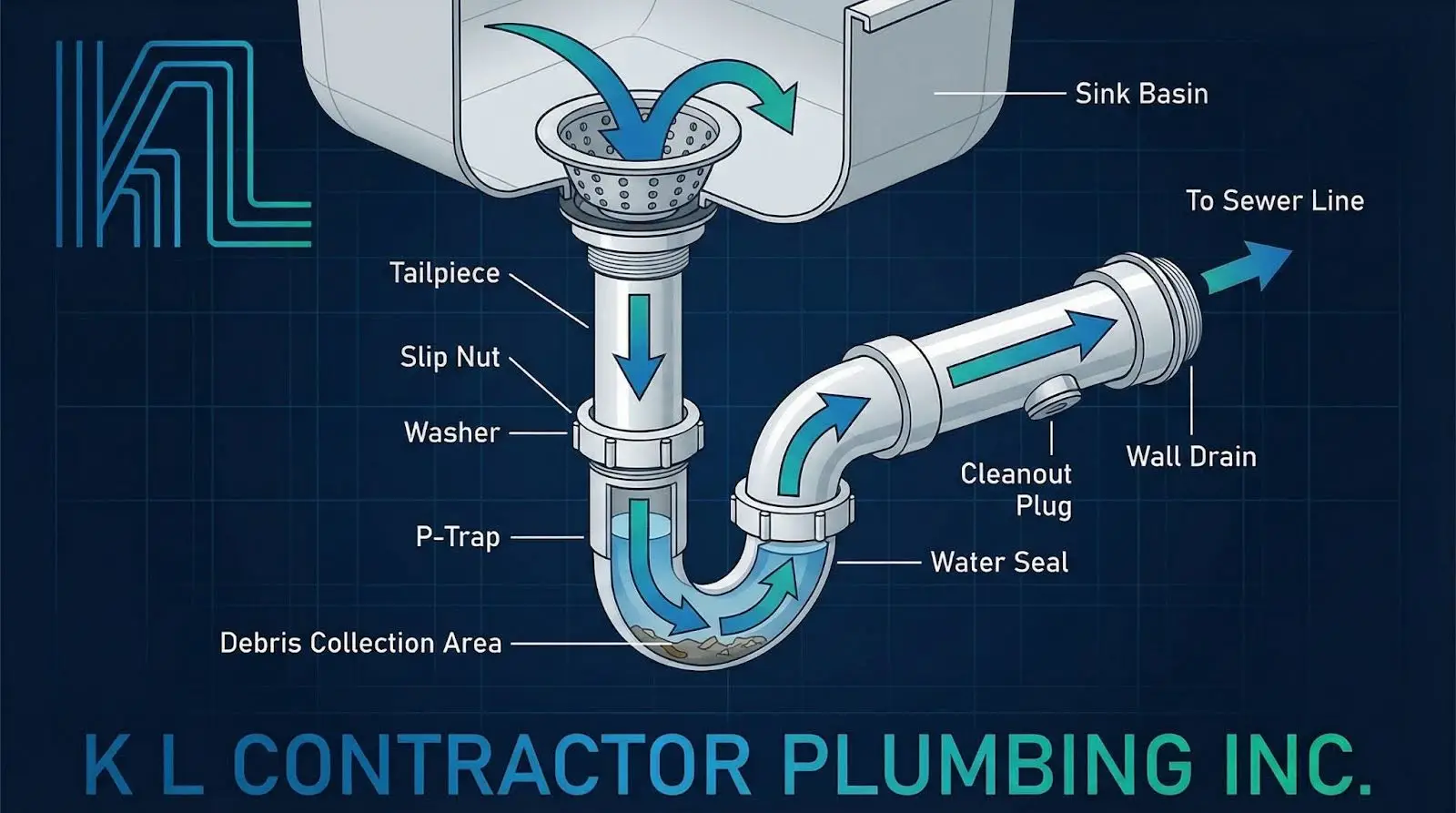
Food doesn’t need to be large to cause problems. Tiny particles accumulate over time, especially in the P-trap—the curved section of pipe under your sink designed to hold water and block sewer gases.
The trap’s shape naturally collects debris. Combined with grease, soap residue, and mineral deposits, food particles cement together into a solid mass.
Prevention Strategy
Install a sink strainer over your drain opening. This simple device catches food particles before they enter your pipes. Empty the strainer into the trash after each use.
Scrape plates thoroughly into the garbage before rinsing. Your garbage disposal handles some food waste, but it’s not designed for everything.
Run cold water for 30 seconds after using your disposal. This flushes particles through the pipes before they can settle and cause a clogged kitchen sink.

Cause #4: Mineral Deposits from Hard Water
Hard water contains elevated levels of calcium and magnesium. These minerals gradually accumulate inside your pipes, similar to how they create that white film on faucets and fixtures.
How Mineral Buildup Restricts Flow
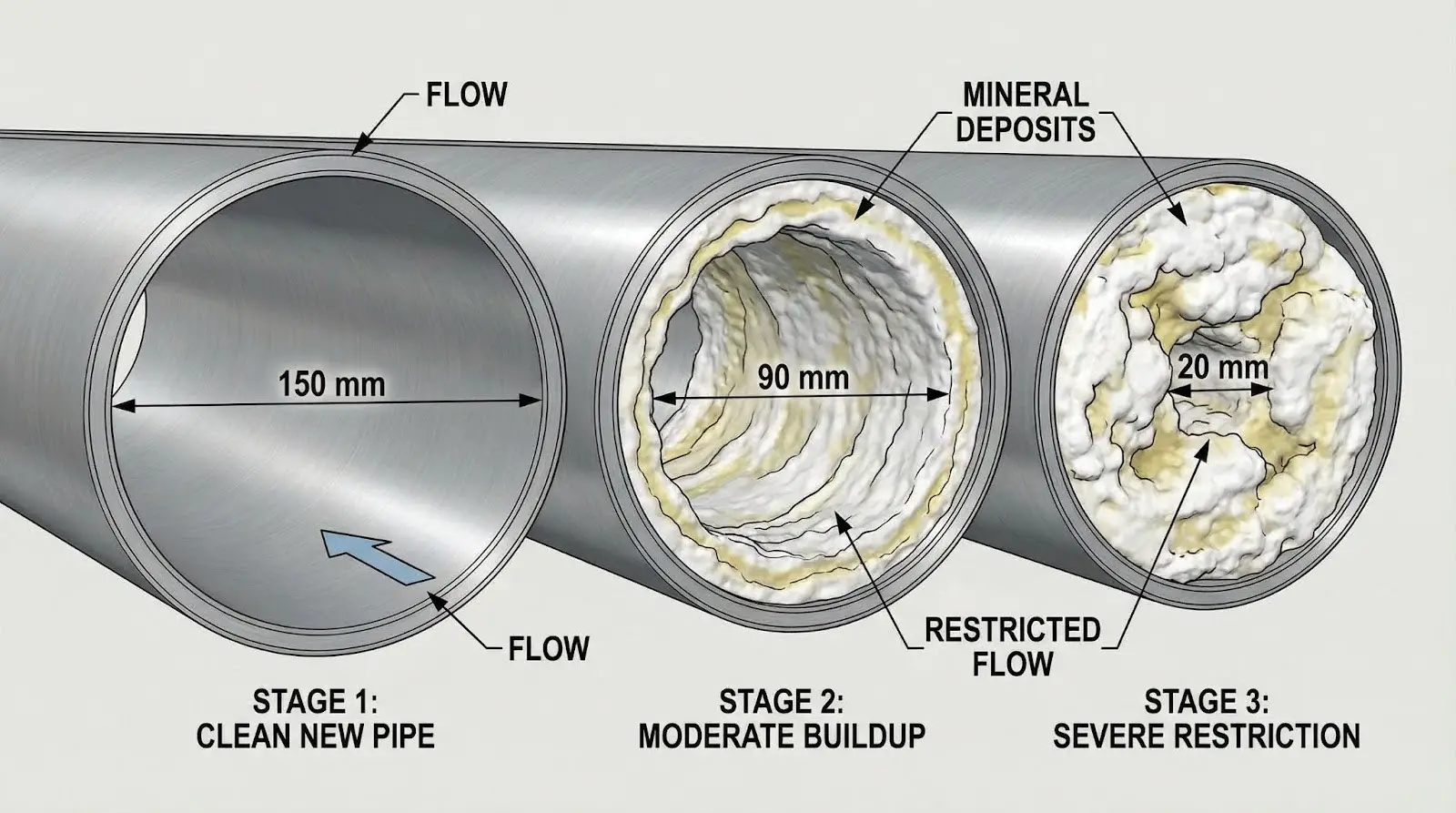
Mineral deposits form slowly but persistently. Each time water flows through your pipes, a microscopic layer of minerals adheres to the pipe walls. Over months and years, these layers build up.
The accumulation narrows the pipe’s interior diameter. What started as a 1.5-inch drain pipe might effectively function as a 1-inch pipe after years of mineral buildup.
Signs of hard water buildup include:
- White or yellowish crust around your drain opening
- Reduced water flow from faucets
- Spotting on dishes and glassware
- Slow drainage even without visible blockage
Mineral deposits rarely cause a complete clog by themselves. Instead, they create the perfect foundation for other materials to accumulate. The rough, scaly surface catches grease, soap, and food particles that would otherwise flush through smooth pipes.
Prevention Strategy
Consider installing a water softener if your home has severe hard water issues. This system removes excess minerals before they enter your plumbing.
Professional pipe cleaning removes existing mineral deposits. K L Contractor Plumbing Inc uses specialized equipment to clear your pipes without damaging them.
Avoid chemical drain cleaners that claim to remove mineral buildup. These products can damage pipes, especially if used repeatedly.
Cause #5: Small Objects and Non-Food Items
Your kitchen sink drain wasn’t designed to handle anything except water, approved food waste, and dissolved soap. Small objects that accidentally fall into the sink cause immediate problems.
Common Culprits We Remove
Over 26 years of service in Marietta, K L Contractor Plumbing Inc has extracted countless items from kitchen drains:
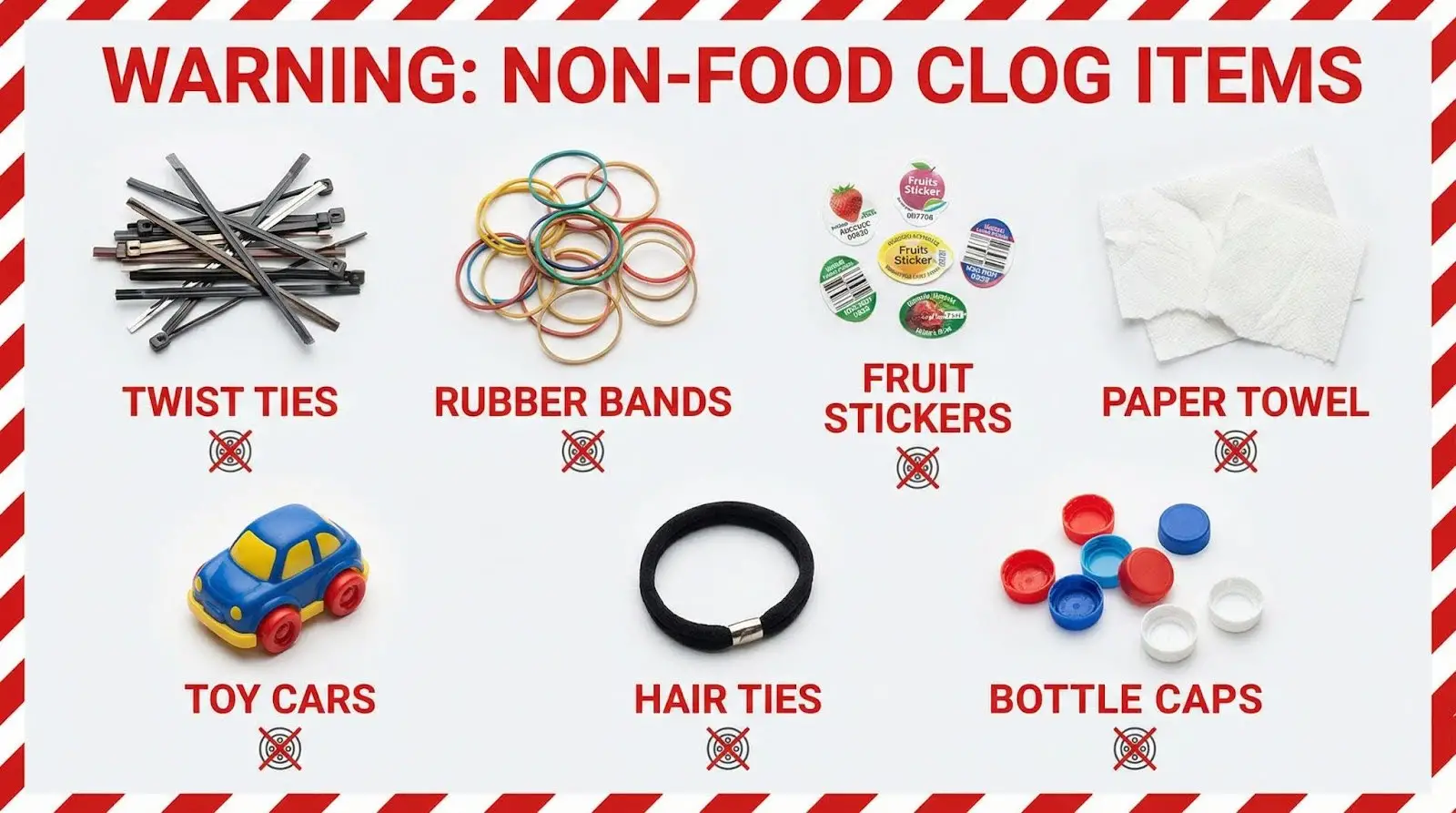
- Twist ties and bread bag clips
- Rubber bands and fruit stickers
- Small plastic lids and caps
- Paper towels and napkins
- Pieces of sponge or dishcloth
- Jewelry and small utensils
- Children’s small toys
How Objects Create Clogs
A single small object might lodge in your P-trap or get caught on existing buildup inside your pipes. This creates an anchor point where other materials accumulate. What started as a minor obstruction quickly becomes a major blockage.
Paper products cause particularly stubborn clogs. Unlike toilet paper designed to disintegrate in water, paper towels are engineered to stay intact when wet. They expand in your pipes and catch everything that flows past them.
Prevention Strategy
Install a quality sink strainer that catches both food particles and small objects. Make it a habit to check the strainer before running water.
Keep a magnetic catch tray near your sink for twist ties, clips, and other metal objects.
If you drop something down your drain, don’t run water hoping it will flush through. Call K L Contractor Plumbing Inc immediately. We can often retrieve objects before they cause extensive damage or require pipe disassembly to physically remove them.
Cause #6: Damaged or Collapsed Pipes
Sometimes the problem isn’t what goes down your drain—it’s the condition of the pipes themselves. Damaged plumbing creates internal obstructions that trap debris and slow drainage.
Types of Pipe Damage
Corrosion and Deterioration
Older metal pipes corrode from the inside out. This creates rough, pitted surfaces that catch debris. Homes built before 1990 in Marietta often have galvanized steel pipes that deteriorate significantly after 40-50 years.
Pipe Bellies and Sagging
Ground settlement or poor initial installation can cause pipes to sag, creating low spots where water and debris collect, leading to frequent clogs.
Collapsed or Crushed Pipes
External pressure from soil movement, tree roots, or construction can crush pipes. This creates a permanent restriction that no amount of drain cleaning can fix.
Warning Signs of Pipe Damage
- Clogs that return quickly after professional cleaning
- Multiple drains backing up simultaneously
- Wet spots in your yard or under your home
- Persistent sewage odors
K L Contractor Plumbing Inc uses video camera inspection to diagnose pipe condition. This technology lets us see exactly what’s happening inside your plumbing without destructive excavation.
If inspection reveals significant pipe damage, we recommend replacement rather than repeated drain cleaning. Modern PVC or PEX pipes resist corrosion and last 50-100 years with proper installation. Our water line repair team handles all aspects of pipe replacement.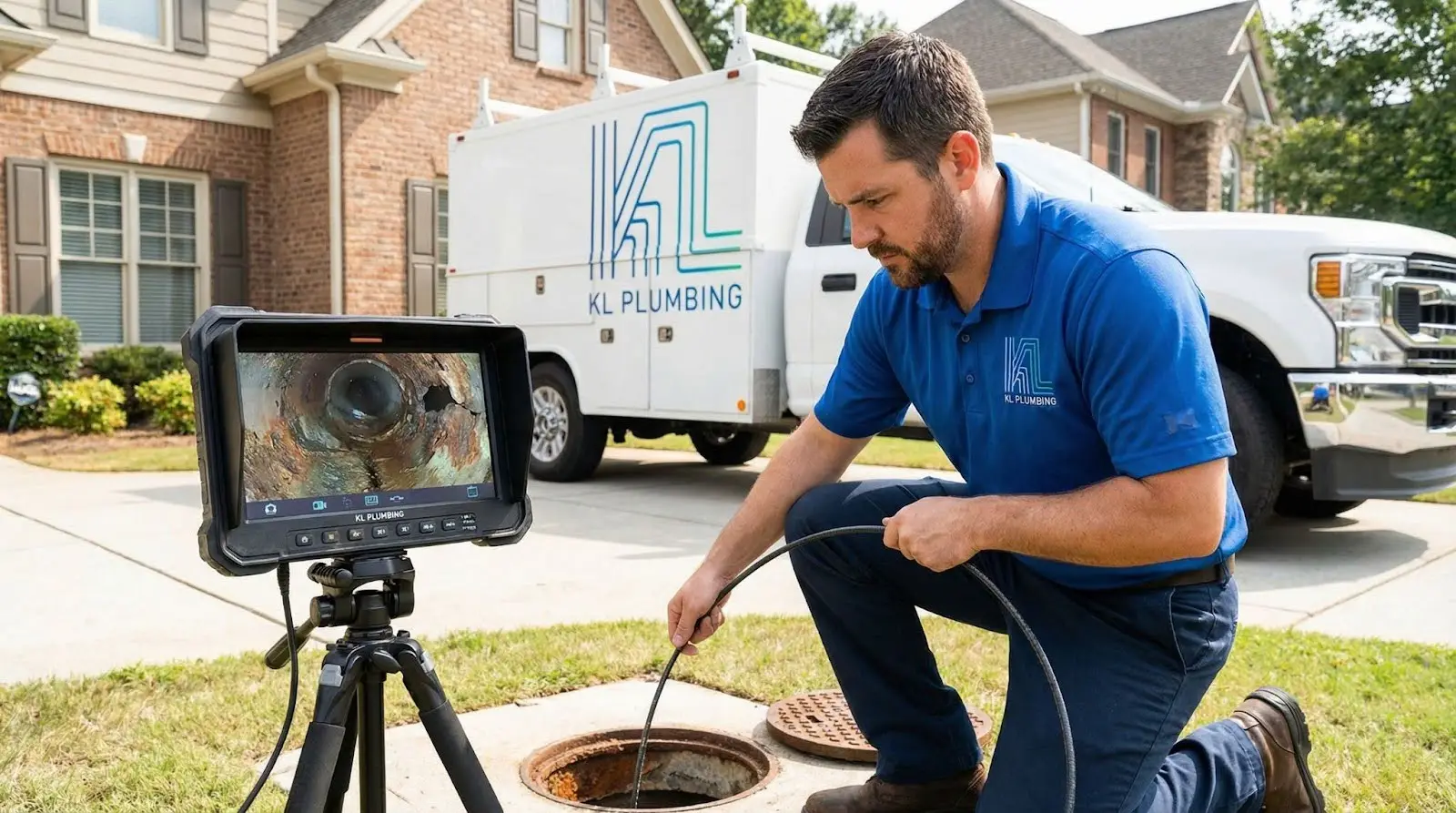
How to Prevent Kitchen Sink Clogs: Best Practices
Prevention costs far less than emergency drain cleaning. These daily habits protect your kitchen plumbing:
Daily Habits
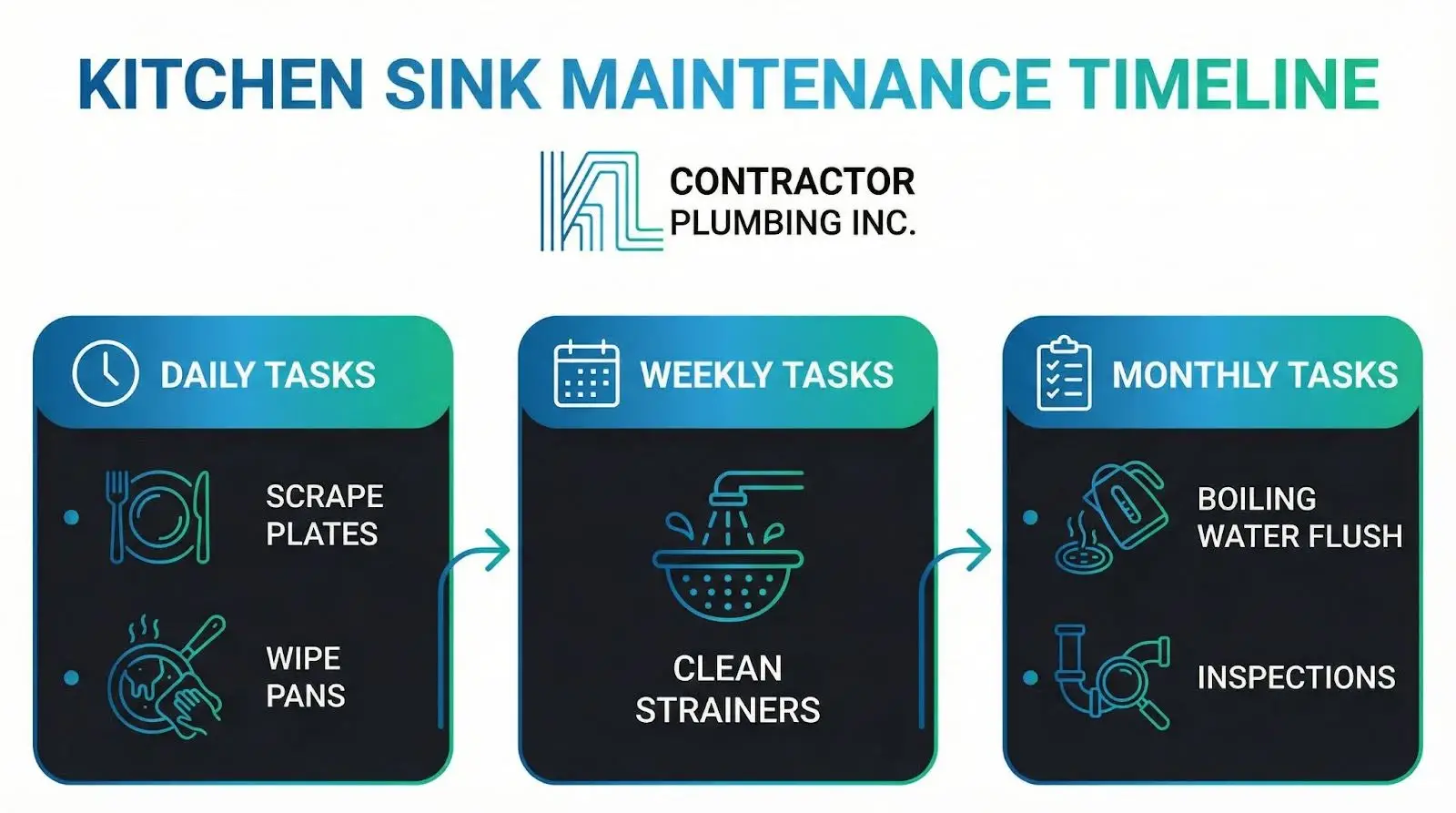
- Scrape all plates into the trash before rinsing
- Wipe greasy pans with paper towels before washing
- Run cold water when using the garbage disposal
- Use sink strainers to catch food particles
Weekly Maintenance
- Clean your sink strainers and garbage disposal splash guard
- Run a full disposal cycle with cold water to clear any standing water and accumulated debris
- Pour hot water down the drain to help dissolve soap and grease residue
Monthly Prevention
Pour a kettle of boiling water down your drain to help clear accumulating buildup. Follow with cold water to flush everything through.
Check under your sink for leaks or loose connections. Catching small problems early prevents major repairs later.
Additional Resource: The EPA’s WaterSense program provides comprehensive guidance on plumbing maintenance and water efficiency.
Professional Drain Cleaning Methods
Hydro Jetting
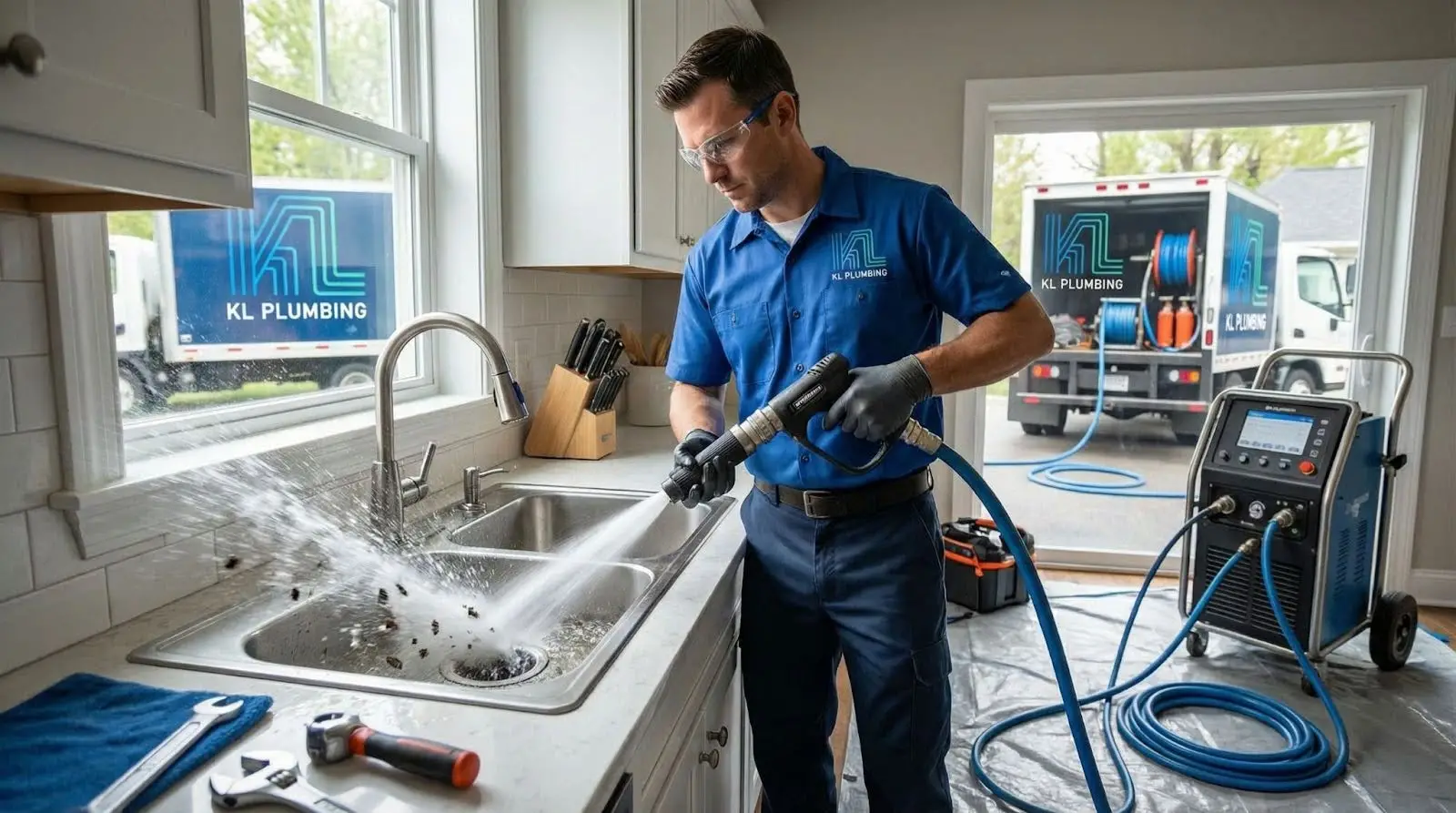
This method uses high-pressure water streams to completely clear pipes of grease, soap scum, mineral deposits, and other buildup. Hydro jetting cleans pipe walls thoroughly, restoring them to near-original condition.
Mechanical Snaking
For certain types of clogs, mechanical augers (drain snakes) effectively break up and remove blockages. We use professional-grade equipment far more powerful than consumer models.
Video Inspection
Before recommending any solution, we can inspect your pipes with waterproof cameras. This shows us exactly what we’re dealing with and helps us recommend the most effective treatment.
Why Marietta Homeowners Trust K L Contractor Plumbing Inc
We’ve served the Marietta community for 26 years, building our reputation on reliable service and honest recommendations. When you call us for kitchen drain cleaning, you get:

- 24/7 Emergency Response: We respond to emergency calls around the clock, including weekends and holidays
- Experienced, Licensed Plumbers: Every technician has the training and experience to diagnose and resolve complex plumbing issues
- Upfront Pricing: We provide clear estimates before starting work
- Complete Solutions: We identify and address underlying issues that cause recurring problems
- Same-Day Service: Most kitchen drain cleaning calls receive same-day attention
Understanding Your Kitchen Sink Trap
The P-trap plays a crucial role in preventing both clogs and sewer gas intrusion. This curved pipe section under your kitchen sink holds water that blocks odors while naturally collecting debris.
When debris accumulates in the trap, it creates a blockage that stops water flow. If you’re comfortable with basic plumbing tasks, you can disassemble the trap, clean out debris, and reinstall it. However, if you notice corrosion, cracks, or persistent leaks, call K L Contractor Plumbing Inc for professional replacement.
If cleaning the trap doesn’t resolve your drainage issues, the blockage exists deeper in your plumbing system. This requires professional equipment that can reach blockages in your main drain lines.