Smyrna is one of the fastest-growing cities in metro Atlanta. Over the past decade, the city has seen older ranch homes demolished along the Atlanta Road corridor, dense townhome communities rise along South Cobb Drive, and commercial redevelopment reshape Spring Road from end to end. The transformation has been visible above ground: new rooflines, fresh curbs, and modern storefronts where older structures once stood.
Below the surface, the picture is different. The sewer infrastructure that serves much of Smyrna was installed decades ago, and it was not designed to handle the volume of wastewater that today’s population density demands. For homeowners in established Smyrna neighborhoods, this creates a set of real, pressing problems, from tree roots infiltrating aging clay pipes to laterals overwhelmed by new connections to the same mains. At K L Contractor Plumbing, we have been serving Cobb County since 1999, and we have seen firsthand what rapid development does to the pipes that most homeowners never think about until something goes wrong.
Older Smyrna Neighborhoods: Clay Pipes, Tree Roots, and Decades of Buildup
Many of Smyrna’s established residential streets, particularly those west of Atlanta Road and in the neighborhoods surrounding Concord Road, were developed in the 1950s, 1960s, and 1970s. The sewer laterals that connect those homes to the city’s sewer mains were typically installed using vitrified clay pipe, a material that was standard for the era and reasonably durable under stable conditions. Stable conditions, however, do not last forever.
Clay pipe has two significant vulnerabilities. First, it relies on tight mechanical joints that shift and separate over time as the surrounding soil settles. When joints open even slightly, two things happen simultaneously: groundwater infiltrates the pipe from outside, adding volume and stress to the sewer system, and the joint creates a foothold for tree roots. Smyrna’s older neighborhoods sit under a mature tree canopy of oak, maple, and sweet gum trees. Those root systems follow moisture directly into compromised sewer joints, and once inside, they expand and fill the pipe. A lateral that was 90 percent open five years ago can be functionally blocked today.
Second, clay pipe corrodes from the inside as well. Hydrogen sulfide gas, a natural byproduct of sewage decomposition, attacks the upper interior of clay and cast iron pipes over time, creating pitting and roughness that catches grease, soap scum, and debris. In a home that has been occupied for 40 or 50 years with the original sewer lateral still in place, the interior of that pipe may have a fraction of its original flow capacity. Slow drains, gurgling toilets, and recurring clogs are often the first symptoms homeowners notice.

How New Development Strains Existing Sewer Infrastructure
The redevelopment transforming Smyrna creates a second category of sewer problems that is less discussed but equally serious. When a developer demolishes a single-family home on South Cobb Drive and replaces it with a six-unit townhome community, that new development does not always connect to a new sewer main. In many cases, the new connections tie into the same aging sewer infrastructure that was serving the original neighborhood, multiplying the daily wastewater volume flowing through pipes that were sized for a fraction of that load.
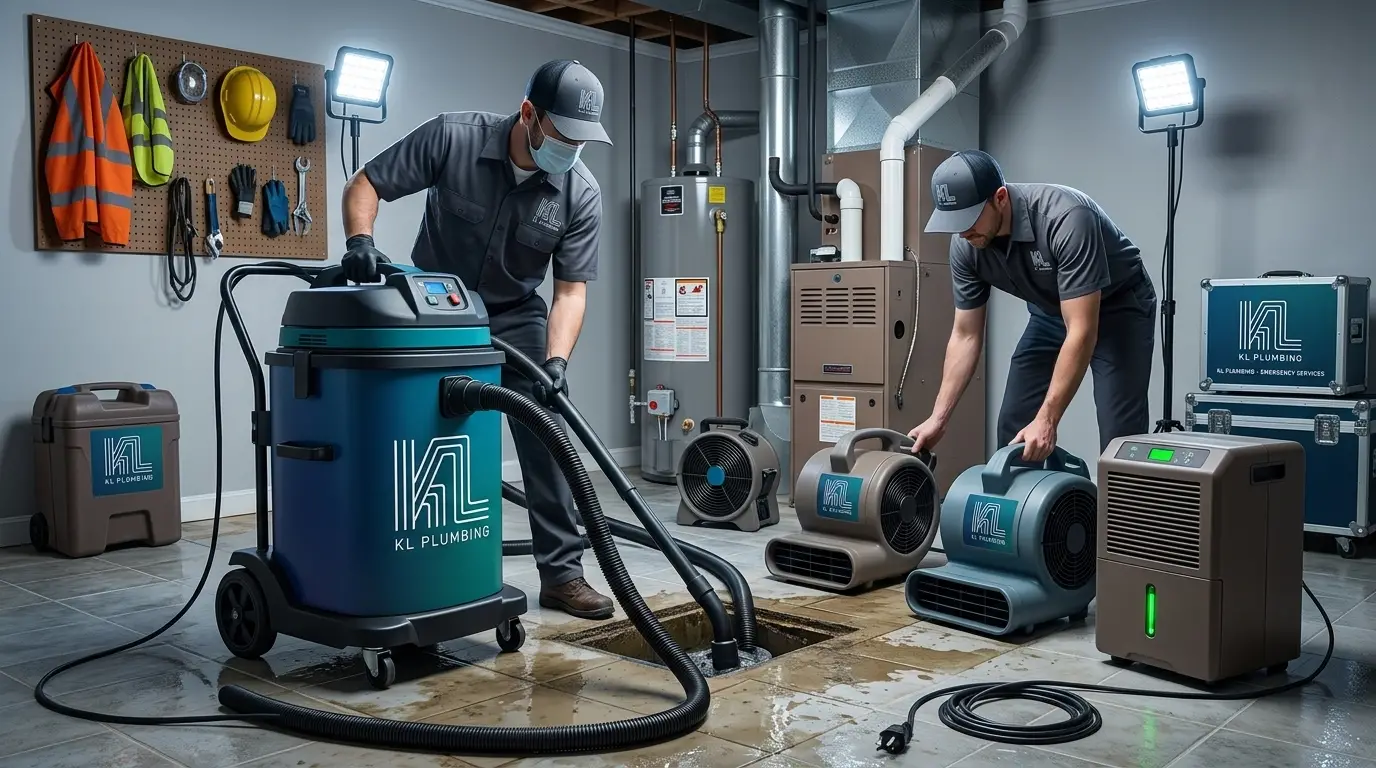
Overtaxed sewer mains back up during heavy rain events, when storm infiltration and sanitary sewer flow combine to exceed what the system can move. When that happens, the backpressure travels backward through residential laterals. Homeowners in lower-lying areas of older Smyrna neighborhoods may experience sewage backup at their floor drains or toilets during heavy storms, even if their own pipes are in reasonable condition. The problem is upstream, but it shows up in their basement or crawlspace.
Construction activity itself also damages existing laterals. Heavy equipment operating near property lines, trenching for new utility connections, and changes in soil compaction around active construction sites all place stress on the clay and cast iron pipes in the ground. A lateral that was structurally marginal can crack or collapse when a loaded excavator passes over it. Many homeowners do not discover this damage until they experience a complete backup or notice sinkholes forming in their yard.
Warning Signs Smyrna Homeowners Should Not Ignore
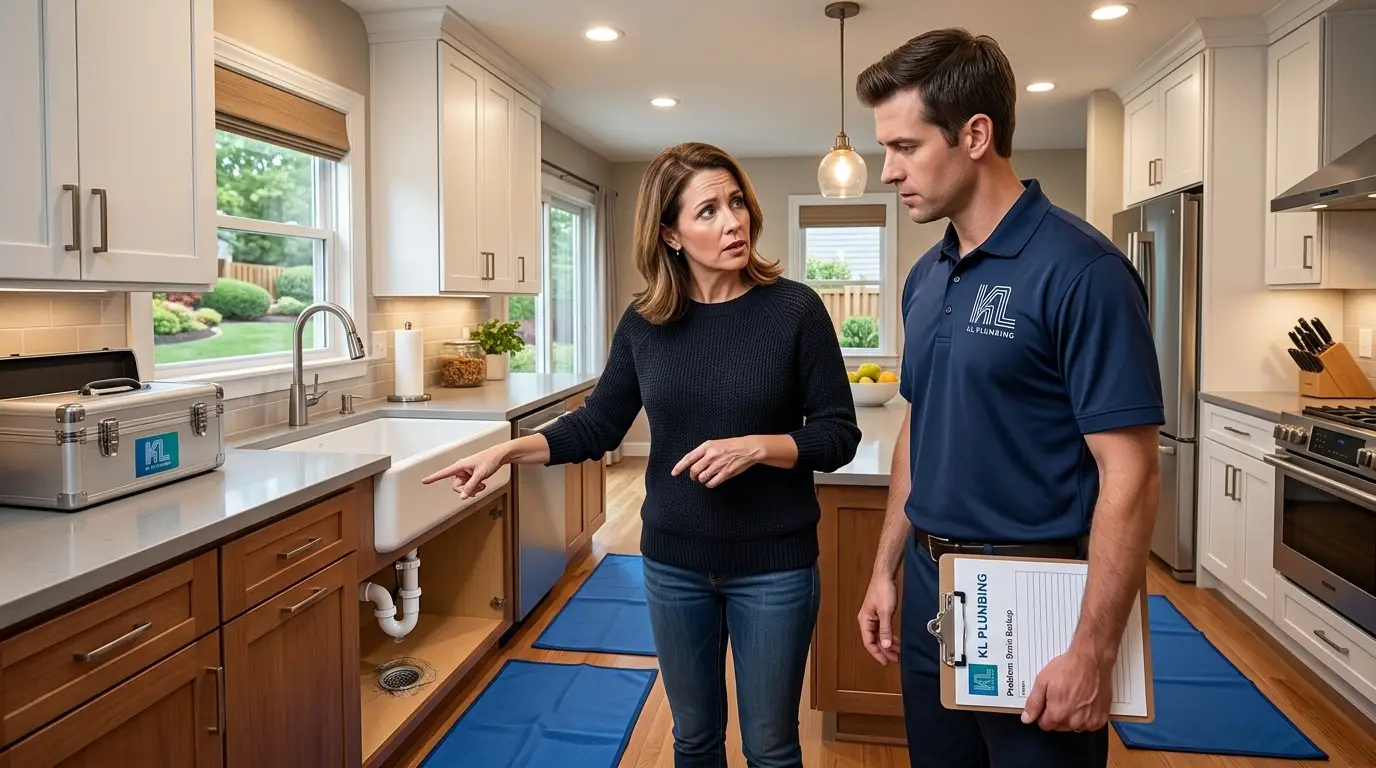
Knowing what to watch for can be the difference between a simple drain cleaning service and an emergency sewer repair. Contact a licensed plumber if you notice any of the following:
- Multiple drains in the home are slow or backing up at the same time
- Toilets gurgle when you run water in a sink or tub
- A persistent sewage odor inside the home or near the foundation outside
- Wet or unusually green patches of grass over your sewer lateral’s path through the yard
- Water backing up into floor drains, particularly during or after heavy rain
- A sinkhole or soft spot forming in your yard, driveway, or near the foundation
Any single one of these symptoms warrants a professional inspection. Multiple symptoms together suggest a sewer line problem that will not resolve on its own.
Drain Cleaning vs. Sewer Repair: Understanding the Difference
Not every slow drain requires a sewer repair, and not every sewer problem can be solved with a drain cleaning. Understanding the distinction saves time and money.
Drain cleaning addresses obstructions inside the pipe: grease buildup, soap accumulation, hair clogs, and minor root intrusion close to a cleanout. A professional drain cleaning service using a cable auger or hydro-jetting equipment restores flow by removing the blockage. If the pipe itself is structurally sound, a thorough cleaning can provide years of reliable service.
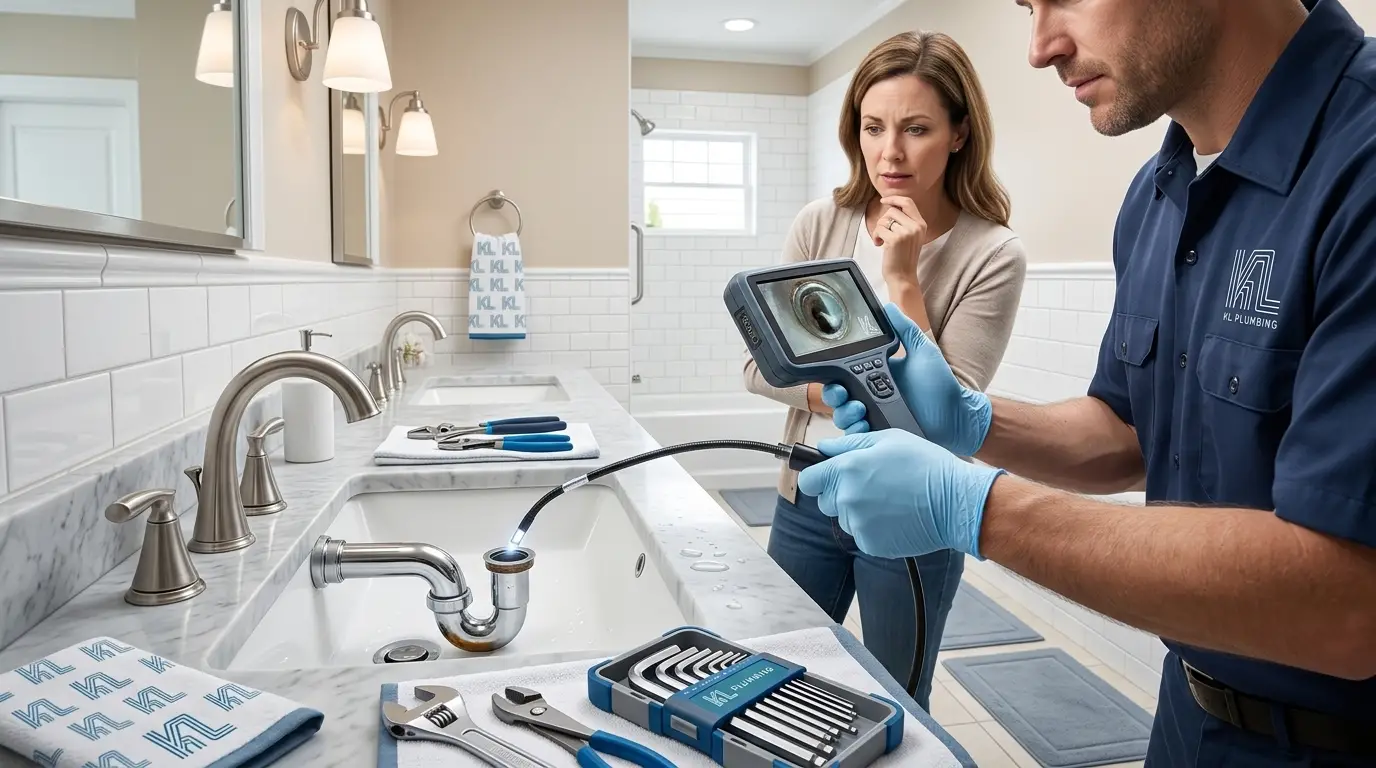
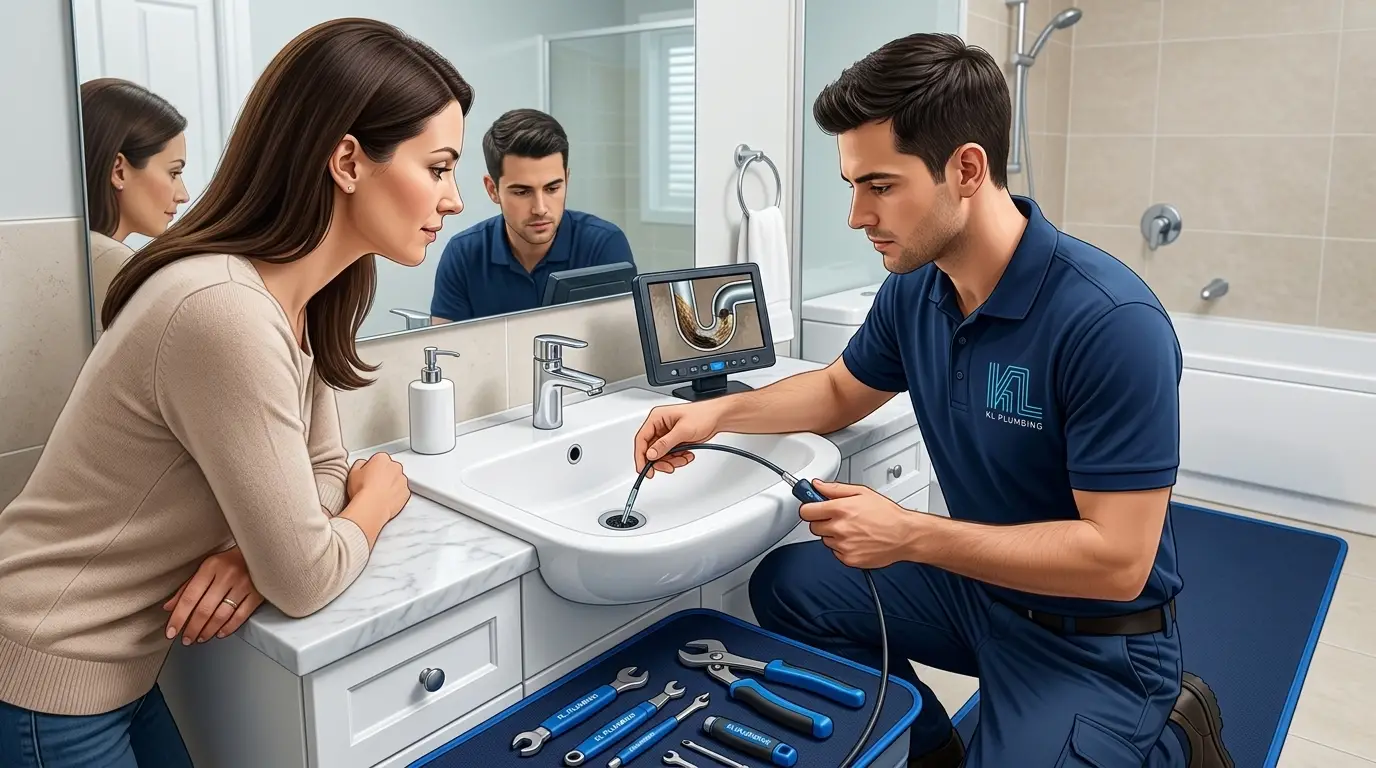
Sewer line repair becomes necessary when the pipe is damaged, collapsed, severely root-infiltrated, or offset at the joints to the point that cleaning alone will not restore reliable flow. The only way to know which situation you are dealing with is a camera inspection. A plumber runs a flexible camera down the cleanout or through a toilet, and the footage shows the pipe’s interior condition in real time. In Smyrna’s older neighborhoods, camera inspections regularly reveal root masses, pipe sags, offset joints, and cracked sections that would continue causing problems regardless of how many times the drain is cleaned.

What to Expect from Professional Drain and Sewer Service in 2026
A reputable plumbing company serving the Smyrna area will typically approach drain and sewer issues through a defined process:
Camera Inspection. A video inspection of the sewer lateral is the starting point for any sewer-related complaint. This service typically runs between $175 and $350 in the Cobb County market in 2026, and it eliminates guesswork by showing exactly what is inside the pipe and where the problem is located.
Hydro Jetting. For lines with significant grease buildup, scale, or moderate root intrusion, hydro jetting uses pressurized water to scour the pipe interior clean. This is a more thorough solution than cable augering for heavily built-up pipes. Hydro jetting for a standard residential lateral in the Smyrna area typically runs between $400 and $700 depending on access conditions and lateral length.
Trenchless Sewer Repair. When a camera inspection reveals cracked or structurally compromised pipe, trenchless methods such as pipe lining or pipe bursting allow the lateral to be repaired or replaced without excavating the entire yard. Pipe lining installs a new epoxy liner inside the existing pipe. Pipe bursting pulls a new pipe through the old one while fracturing it outward. These methods typically cost between $4,500 and $9,000 for a standard residential lateral in Cobb County, depending on length, depth, and conditions. They cost more than traditional excavation in some cases, but they preserve landscaping, driveways, and foundations that would otherwise need to be disturbed and restored.
Traditional Excavation. In cases where the pipe is collapsed, the depth is too shallow for lining, or the access conditions rule out trenchless methods, open excavation remains the appropriate solution. Costs for excavation-based sewer repair in the Smyrna area in 2026 typically start around $3,500 and can exceed $12,000 for longer runs or complex situations near foundations and utilities.
Schedule a Drain or Sewer Inspection with K L Plumbing
K L Contractor Plumbing has been serving Smyrna, Marietta, and the surrounding Cobb County area since 1999. If your home is showing any signs of drain or sewer trouble, call us before a slow drain becomes a sewage backup. We offer camera inspections, hydro jetting, drain cleaning, and full sewer line repair and replacement, including trenchless options.
Call us today at (404) 637-2796 or visit our Smyrna service page to schedule an appointment. We answer the phone, we show up on time, and we give you a straight answer about what your pipes need.