

Galvanized Steel Pipe: The Old Standard
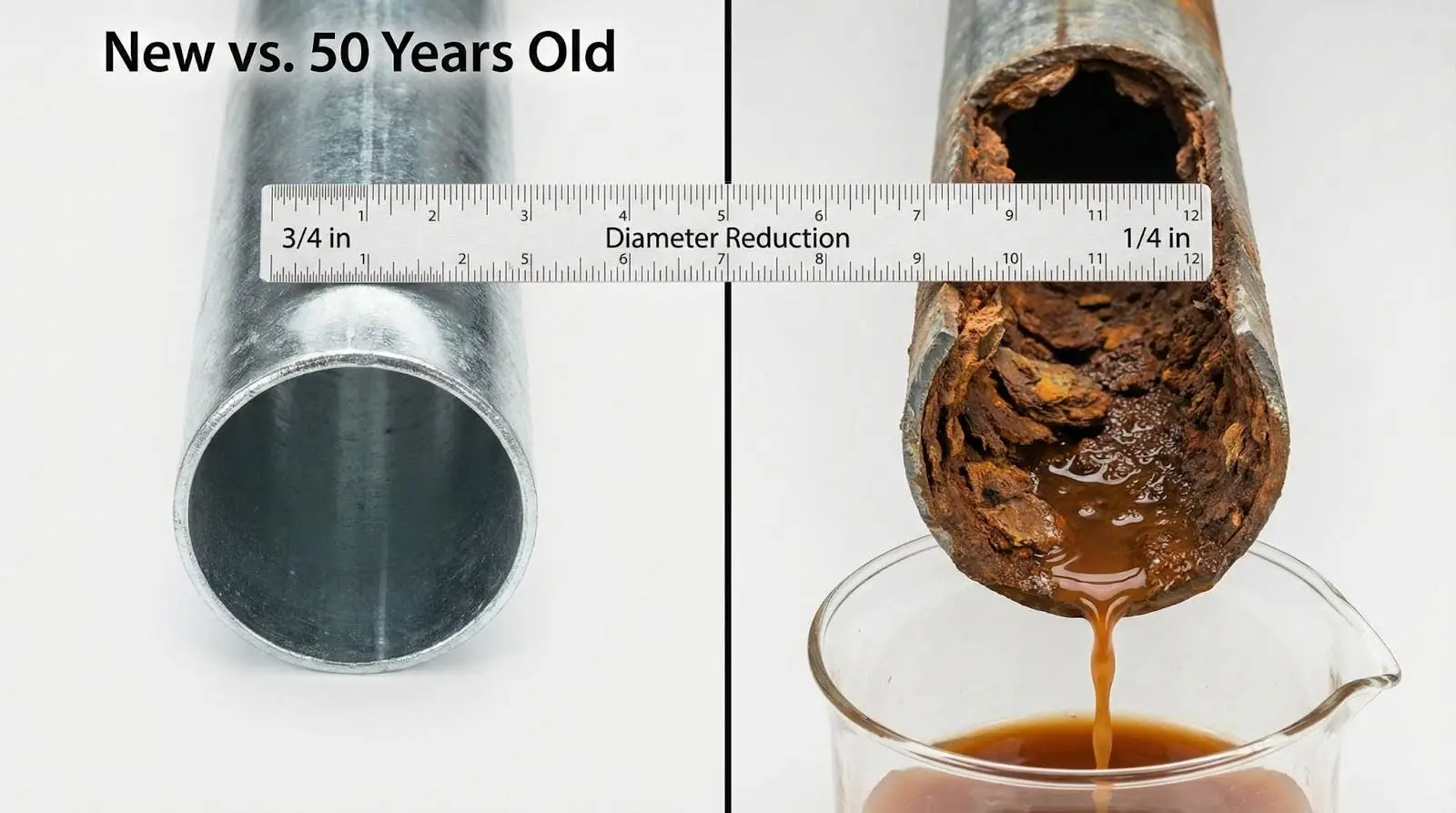
Galvanized steel pipe was the go-to choice for residential plumbing from the early 1900s through the 1960s. These pipes feature a zinc coating designed to protect the steel from rust and corrosion. If your Metro Atlanta home was built before 1970, there is a good chance galvanized pipes are still part of your plumbing system.
How Galvanized Pipes Work
The galvanization process involves dipping steel pipe into molten zinc. This creates a protective barrier that shields the steel from water exposure. When first installed, galvanized pipes perform adequately and can handle both hot and cold water supply lines.
However, the protective zinc coating does not last indefinitely. Over time, the coating wears away from the inside of the pipe, exposing the steel beneath to constant water contact.
Common Problems with Galvanized Steel
Homeowners with galvanized plumbing frequently encounter several issues as pipes age:
- Internal corrosion that restricts water flow
- Rust-colored water, especially when first turning on faucets
- Decreased water pressure throughout the home
- Pinhole leaks that develop as pipes deteriorate
- Lead contamination from corroded joints and fittings
The buildup of rust and mineral deposits inside galvanized pipes can reduce the internal diameter significantly. A pipe that started with a half-inch opening may have only a quarter-inch of usable space after decades of corrosion. This explains why many older homes experience frustratingly low water pressure.
When to Replace Galvanized Steel Pipes
Most galvanized pipes have a lifespan of 40 to 50 years under ideal conditions. Given that these pipes were commonly installed through the 1960s, most have exceeded their expected service life. If your home still has galvanized plumbing, scheduling a professional inspection can help you understand the current condition and plan for replacement.
Signs that your galvanized pipes need attention include visible rust at pipe joints, discolored water, frequent leaks, and noticeably low water pressure. Addressing these issues proactively prevents water damage and ensures your family has access to clean, safe water.
Why Copper Pipes Are Popular for Hot and Cold Water
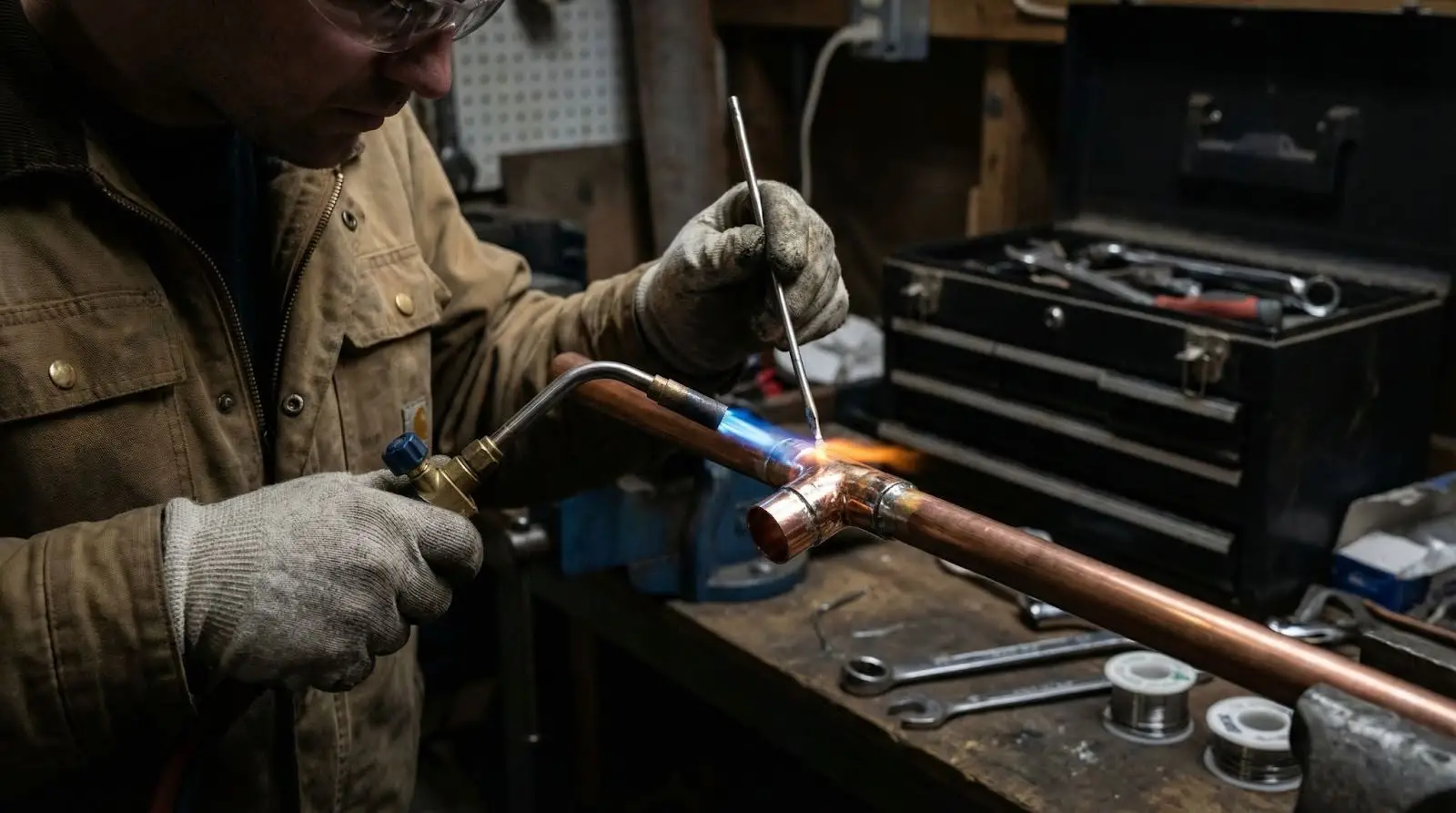
Copper is durable, reliable, and performs well with both hot and cold water supply lines. This long-lasting pipe material has been used in residential plumbing for over 70 years and continues to be a preferred choice for many applications throughout Metro Atlanta.
Benefits of Copper Pipe
Copper offers several advantages that explain its enduring popularity in the plumbing industry:
- Proven track record of 50 or more years of service life
- Naturally resistant to bacteria growth
- Handles high temperatures without degrading
- Does not release harmful chemicals into water
- Recyclable and environmentally responsible
Copper pipes are also resistant to UV exposure, making them suitable for both indoor and limited outdoor applications. The material maintains its integrity under pressure and does not expand or contract significantly with temperature changes.
Types of Copper Pipe
Plumbers use different types of copper pipe depending on the specific application. Understanding these distinctions helps you communicate effectively with your plumber:
Type K copper features the thickest walls and handles the highest pressure. Common applications include underground water service lines connecting your home to the municipal supply.
Type L copper has medium-thick walls and works well for interior water supply lines. Many professional plumbers prefer Type L for residential repiping projects because it balances durability with ease of installation.
Type M copper has the thinnest walls and lowest pressure rating. While less expensive, it may not be suitable for all applications, particularly in areas with aggressive water chemistry.
Considerations for Copper Pipe Installation
Copper pipe requires soldered joints, which demands skilled workmanship. Improper soldering can lead to leaks and premature joint failure. Professional installation ensures connections are made correctly and will last for decades.
The material can be affected by acidic water conditions, which are present in some parts of Georgia. If your water has a low pH level, copper may experience accelerated corrosion. A professional plumber can test your water and recommend appropriate solutions.
Copper pipes also expand when carrying hot water. Proper installation includes allowances for this movement to prevent stress on joints and fittings.
PEX Pipe: Modern Flexibility for Today’s Homes
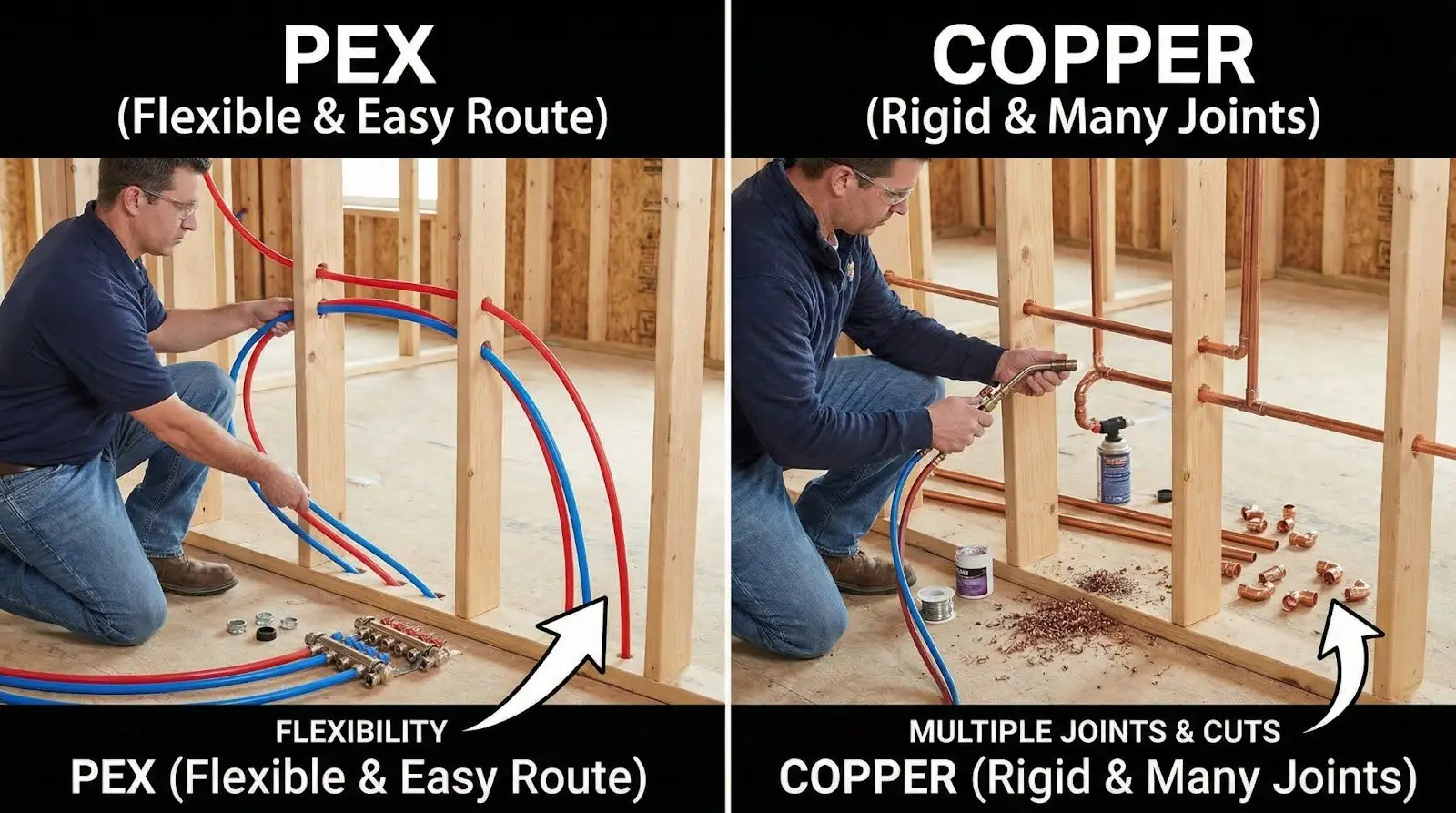
Cross-linked polyethylene, commonly called PEX, has transformed residential plumbing since its introduction in the United States in the 1980s. This flexible plastic pipe material offers numerous advantages that make it increasingly popular for both new construction and repiping projects throughout Metro Atlanta.
What Makes PEX Different
PEX pipe consists of high-density polyethylene that has been chemically or physically cross-linked to improve strength and temperature resistance. This process creates a material that combines flexibility with durability, allowing for installation methods that are impossible with rigid materials.
The flexibility of PEX allows plumbers to run continuous lines from the water source to individual fixtures without intermediate connections. Fewer connections mean fewer potential leak points and a more reliable plumbing system overall.
Advantages of PEX Pipe
Homeowners and plumbers choose PEX for several compelling reasons:
- Flexible enough to bend around obstacles without cutting
- Resistant to scale and chlorine damage
- Does not corrode like metal pipes
- Expands to resist freeze damage better than rigid materials
- Quick and simple installation reduces labor time
- Available in color-coded versions for hot and cold lines
The freeze resistance of PEX deserves special attention for Metro Atlanta homeowners. While our region does not experience severe winters regularly, occasional hard freezes can damage rigid pipes. PEX has some ability to expand without bursting, providing valuable protection during unexpected cold snaps.
PEX Installation Methods
Professional plumbers install PEX using several connection methods:
Crimp connections use metal rings that are compressed around the pipe and fitting using a specialized tool. This method is widely used and creates reliable joints when done correctly.
Expansion connections involve expanding the PEX pipe and fitting, then allowing them to contract together for a secure seal. This method leverages the material’s memory properties.
Push-fit connections allow quick installation without special tools, though professional plumbers typically prefer crimp or expansion methods for permanent installations.
Limitations of PEX Pipe
While PEX offers many benefits, it is not suitable for every application. Understanding these limitations helps ensure proper use:
PEX cannot be used outdoors in direct sunlight. UV exposure degrades the material, causing it to become brittle and fail. All exterior runs must be protected from sun exposure.
Local plumbing codes may restrict PEX use in certain applications. A licensed plumber familiar with Metro Atlanta requirements can advise on appropriate applications.
Some older PEX formulations experienced problems with certain brass fittings. Current materials and fittings have addressed these concerns, but older installations may need inspection.
PVC Pipe and ABS: Understanding Drain Line Options
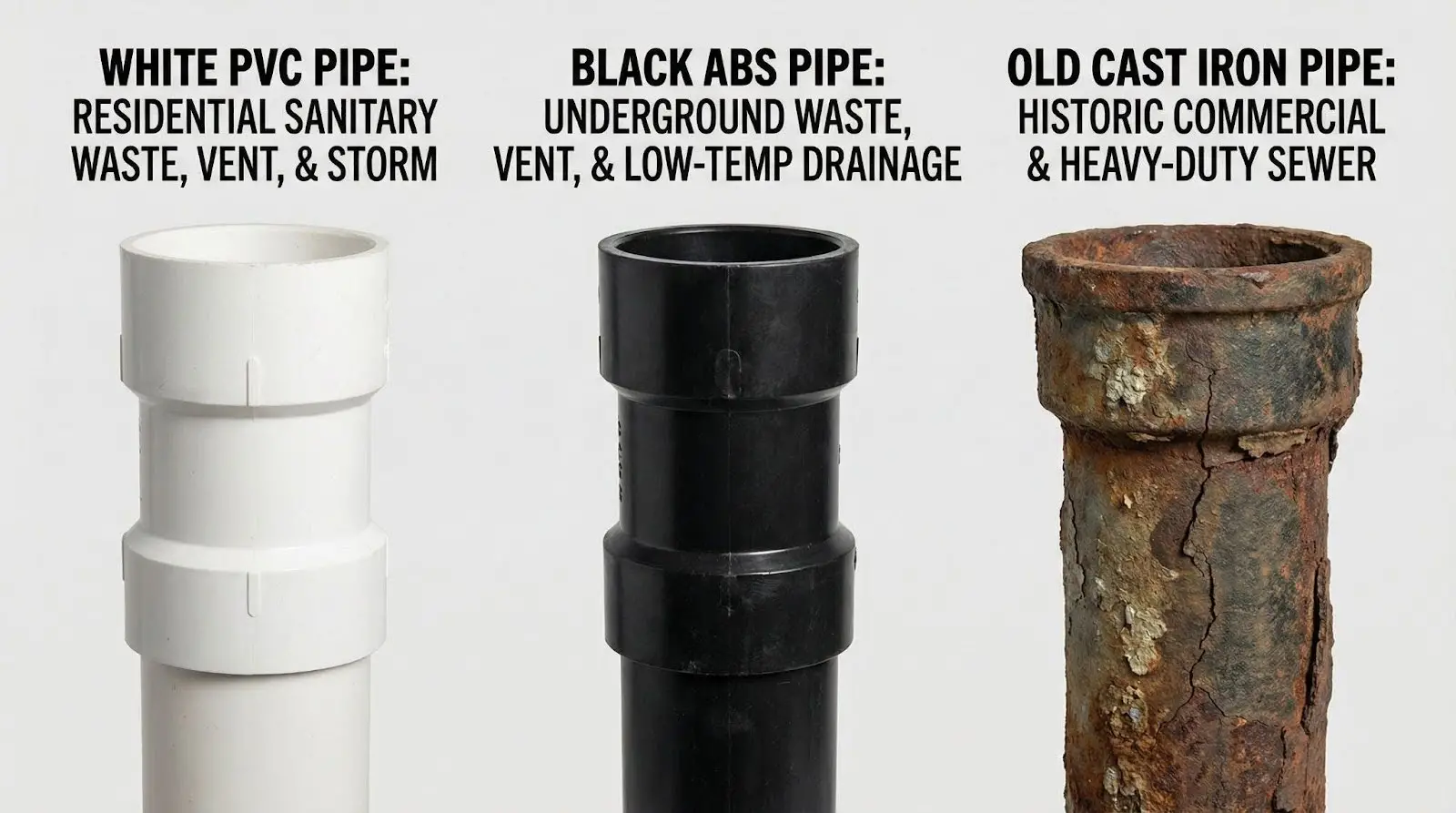
While this guide focuses primarily on water supply pipes, drain lines also deserve attention. PVC pipe and ABS are the most common materials used for residential drain, waste, and vent systems in Metro Atlanta homes.
PVC Pipe Characteristics
PVC has become the standard for residential drain lines because of its durability, chemical resistance, and ease of installation. The material resists corrosion from waste water and cleaning chemicals. PVC pipe uses solvent-welded joints that create permanent, leak-resistant connections.
White PVC remains the most visible option, though gray and other colors exist for specific applications. The material works well for both drain lines and vent stacks that allow proper drainage and prevent sewer gas from entering the home.
ABS Pipe Overview
Black ABS pipe serves similar purposes to PVC but has slightly different characteristics. ABS handles higher temperatures better than PVC, making it suitable for commercial applications with hot water discharge. The material is lighter and easier to cut than PVC.
Some jurisdictions prefer ABS while others specify PVC. Local building codes determine which material is acceptable in your area. Both materials provide decades of service when properly installed.
Cast Iron Drain Pipes
Older homes in Marietta may still have cast iron drain lines. These heavy-duty pipes served well for many years but eventually succumb to rust and corrosion. Signs of cast iron drain pipe failure include:
- Recurring drain clogs and backups
- Slow drains throughout the home
- Cracks or holes in horizontal sections
When cast iron pipes fail, replacement with PVC or ABS typically provides the most practical solution. Our drain cleaning services can help diagnose drainage system issues.
Signs Your Metro Atlanta Home Needs Repiping
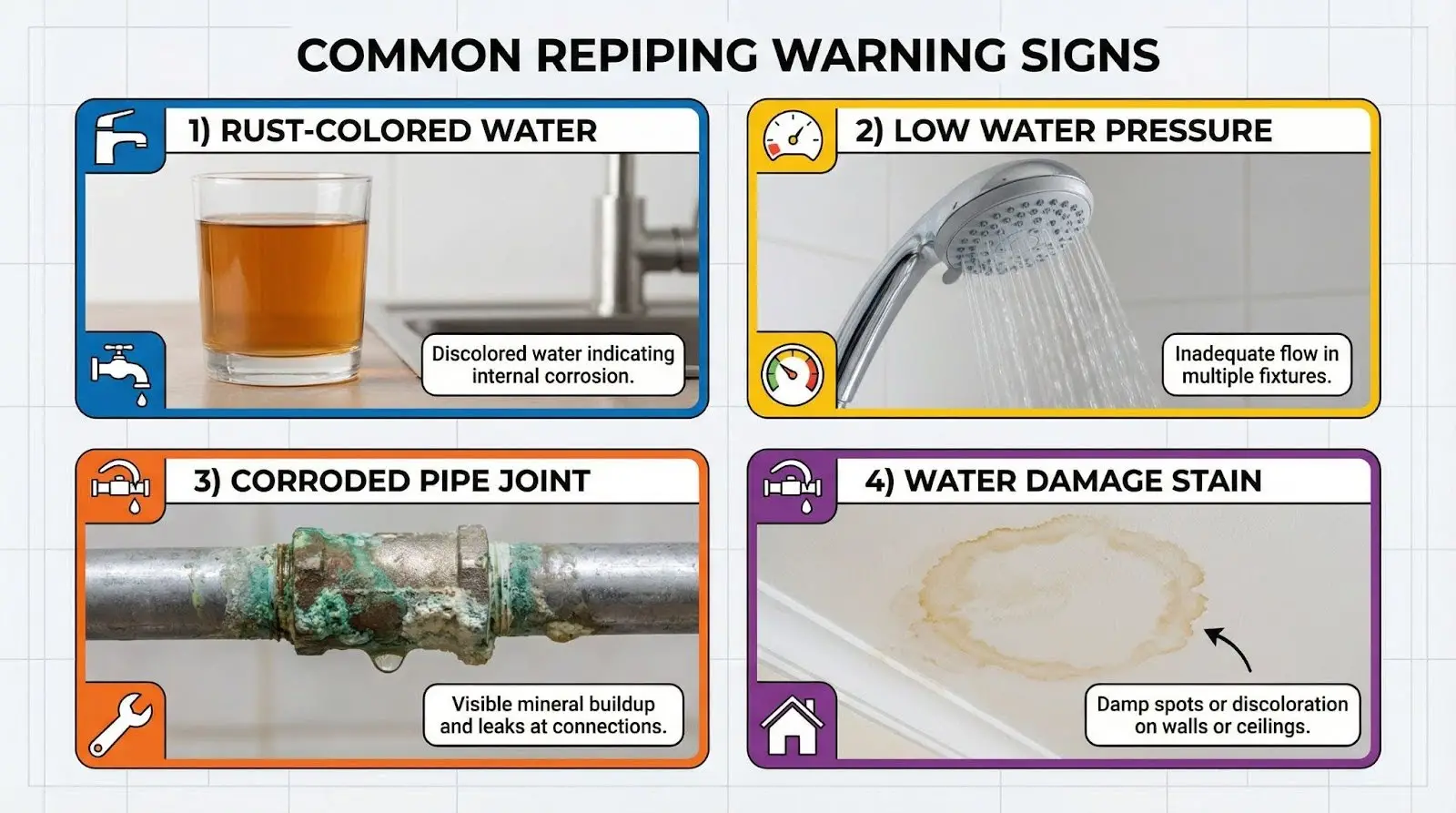
Understanding when to replace your home’s plumbing system helps you address problems before they cause extensive damage. Several warning signs indicate that repiping should be on your radar.
Water Quality Issues
Changes in your water’s appearance, taste, or smell often signal pipe problems:
- Rust or brown discoloration when running water
- Metallic taste that suggests corrosion
- Particles or sediment in your water
- Sulfur or rotten egg odors from iron pipes deteriorating
These symptoms typically indicate internal pipe corrosion that will only worsen over time.
Pressure and Flow Problems
Reduced water pressure throughout your home points to pipe deterioration:
- Noticeably weak shower pressure
- Multiple fixtures cannot run simultaneously
- Hot water takes increasingly long to reach fixtures
- Pressure varies unexpectedly
Corrosion buildup inside galvanized pipes commonly causes these issues.
Visible Pipe Damage
Exposed pipes in basements, crawl spaces, and utility areas allow visual inspection:
- Green patina on copper indicating corrosion
- White or green mineral deposits at joints
- Flaking or bubbling on pipe surfaces
- Evidence of previous leak repairs
Frequent repairs on the same line suggest systemic problems that repiping addresses permanently.
Age of Your Plumbing System
If your Metro Atlanta home is more than 50 years old and still has original plumbing, the pipes have likely reached the end of their service life. Proactive replacement before a major failure occurs prevents water damage and emergency repair costs.