

Signs Your House May Need a Complete Repipe
Contents
- 1 Signs Your House May Need a Complete Repipe
- 2 The Initial Assessment and Planning Phase
- 3 Preparing Your Home for the Repiping Process
- 4 What Happens During Piping Installation
- 5 Areas Affected During House Repiping
- 6 Timeline for Whole-House Repiping Projects
- 7 Choosing the Right Piping Material
- 8 What to Expect After Repiping Completion
- 9 Why Professional Installation Matters
- 10 Making the Decision to Repipe
- 11 Contact K L Contractor Plumbing Inc

Recognizing when your plumbing system requires complete replacement rather than continued repair saves time, money, and frustration. Multiple simultaneous warning signs typically indicate systemic pipe failure throughout your house. Understanding these indicators helps homeowners make informed decisions about their home’s infrastructure before emergency situations develop.
Frequent Leaks Throughout the House
A single leak can happen to any plumbing system. However, when leaks appear in multiple areas of your home within a short timeframe, this pattern indicates systemic failure rather than isolated problems.
Pinhole leaks in copper pipes or joint failures in older galvanized lines often spread quickly. Fixing one section simply shifts pressure to another weakened area, creating an endless repair cycle.
Discolored Water from Multiple Fixtures
Brown, orange, or rusty water coming from your taps signals corrosion inside your water supply lines. When discoloration appears at fixtures throughout your house rather than just one location, internal pipe degradation has become widespread.
This issue affects both hot and cold water pipes in aging systems. The rust particles you see in your water represent material flaking away from pipe walls, gradually restricting flow and contaminating your supply.
Noticeable Decline in Water Pressure
Mineral buildup, corrosion, and internal scaling reduce the interior diameter of aging pipes over time. What starts as a minor inconvenience eventually becomes a significant problem affecting showers, appliances, and overall water pressure throughout the house.
If your water pressure has steadily declined despite no changes from your municipal supply, your piping system may be substantially restricted.
Visible Corrosion on Exposed Pipes
Check exposed plumbing lines in your basement, crawl space, utility areas, and under sinks. Green staining on copper, white mineral deposits, or flaking rust on galvanized pipes indicates active deterioration.
What you see on accessible pipes likely reflects conditions throughout your entire plumbing system.
Polybutylene or Galvanized Pipe Materials
Certain pipe materials have known reliability issues that make eventual failure almost inevitable.
Polybutylene piping, installed in many homes between 1978 and 1995, degrades when exposed to chlorine and other oxidants in municipal water supplies. These pipes often fail from the inside out, making damage invisible until leaks occur.
Galvanized steel pipes, common in homes built before the 1960s, corrode internally over decades. Even if they haven’t leaked yet, galvanized lines are likely nearing the end of their functional lifespan.
Age of Your Plumbing System
Different pipe materials have different expected lifespans:
- Galvanized steel: 20-50 years
- Copper: 50-70 years
- Polybutylene: Often fails within 10-25 years
- PEX: Expected to last 40-50+ years
If your home’s plumbing falls within or beyond these ranges, proactive repiping prevents emergency failures.
The Initial Assessment and Planning Phase
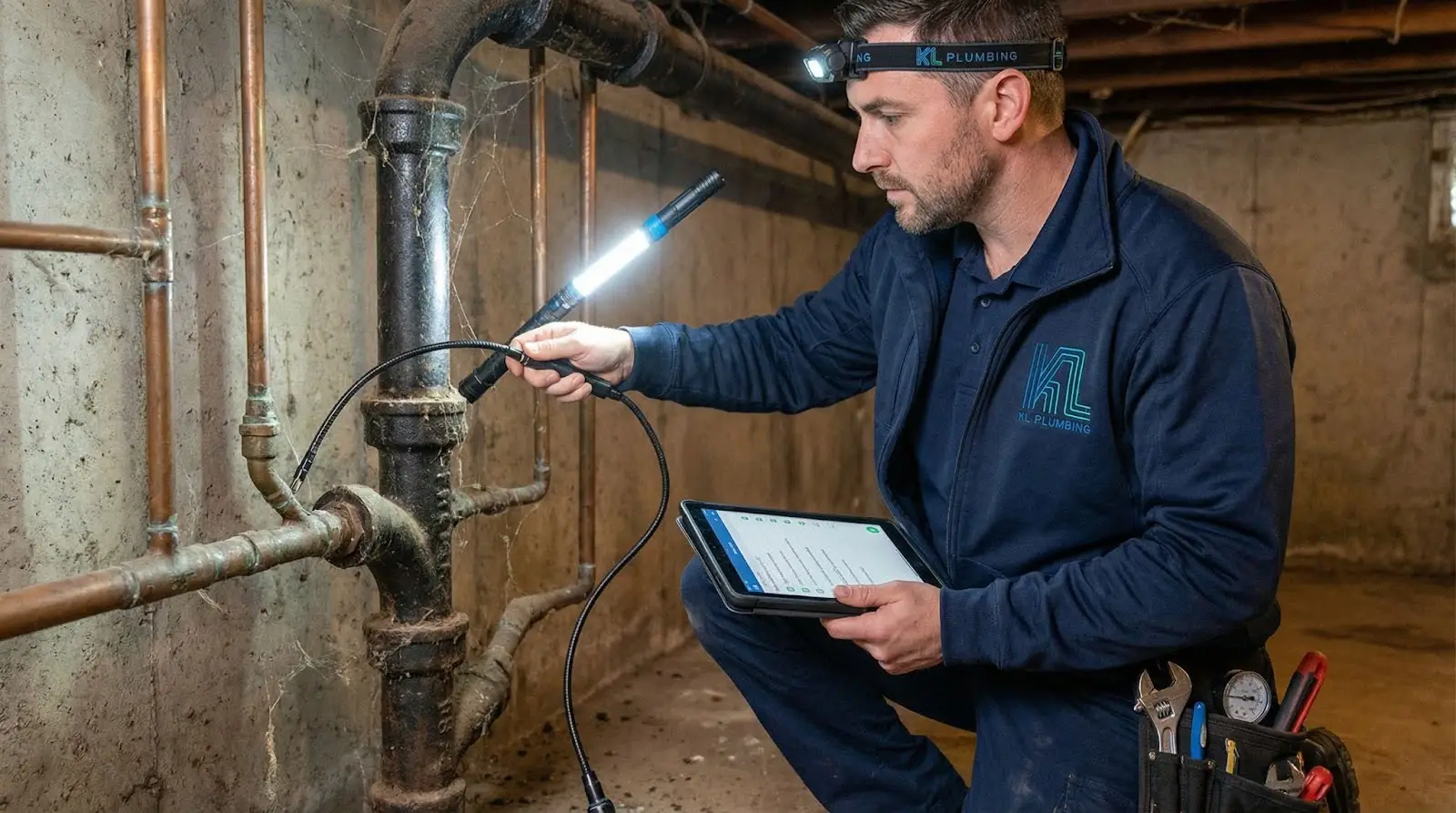
Every successful house repiping project begins with comprehensive evaluation and strategic planning. This critical preliminary work determines project scope, identifies potential challenges, and establishes a clear roadmap for execution. Proper assessment prevents surprises during installation and ensures accurate service expectations for homeowners throughout Marietta.
Complete System Inspection
Licensed plumbers examine your entire plumbing infrastructure during the initial assessment. This inspection covers visible pipe runs, connection points, fixture locations, and access areas throughout the house.
The inspection identifies exactly which lines require replacement, what materials currently exist in your system, and any unique challenges your property presents.
K L Contractor Plumbing Inc performs comprehensive assessments that account for both obvious problem areas and hidden sections behind walls and under floors.
Mapping the Pipe Routes
Your home’s piping network follows specific paths from the main water supply line to each fixture, appliance, and outdoor connection. Mapping these routes helps plumbers plan the most efficient approach for pipe replacement.
This planning phase considers wall cavities, floor joists, ceiling spaces, and other structural elements that affect installation. Proper route planning minimizes necessary wall openings and speeds project completion.
Material Selection Discussion
Modern repiping projects typically use either copper or PEX piping, each with distinct characteristics.
Copper pipes offer proven durability, natural antibacterial properties, and a track record spanning generations. Copper remains the premium choice for homeowners prioritizing longevity and traditional materials.
PEX piping has gained widespread acceptance for its flexibility, freeze resistance, and installation efficiency. PEX tubing can navigate around obstacles with fewer fittings than rigid pipe materials, reducing potential leak points.
Your plumber should explain the advantages of each material option for your specific situation.
Permit Requirements
Whole house repiping requires building permits in Marietta and throughout Cobb County. This permitting process ensures work meets local plumbing codes and includes official inspection upon completion.
Professional plumbing contractors handle permit applications as part of their standard service. K L Contractor Plumbing Inc manages all permitting requirements for repiping projects we perform.
What Happens During Piping Installation
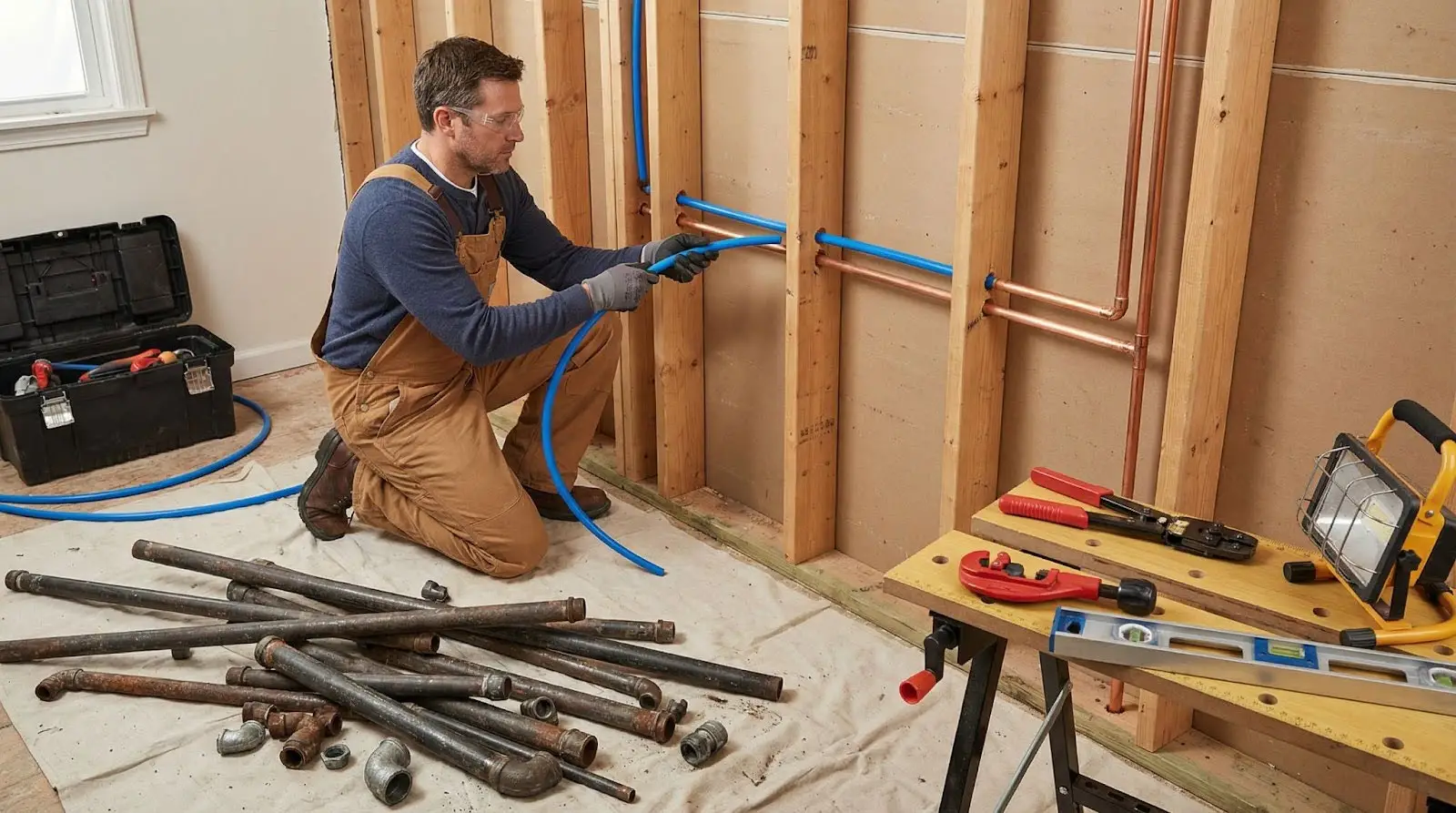
The actual piping installation phase represents the core of any whole-house repiping project. This systematic process involves careful removal of deteriorated lines and precise installation of new water supply piping. Understanding each step helps homeowners know exactly what plumbers accomplish during this intensive work phase.
Shutting Off the Main Water Supply
Before any work begins each day, plumbers shut off water supply at the main valve. This step prevents flooding during pipe disconnection and allows the system to be drained.
Creating Access Points in Walls and Ceilings
Reaching pipes hidden behind finished surfaces requires opening sections of wall, ceiling, or floor covering. Skilled plumbers minimize these openings while still achieving necessary access.
Strategic planning during the assessment phase determines where access cuts will be made. In many cases, plumbers can work through existing openings like cabinet backs, closet spaces, and utility areas to reduce visible wall cuts.
Removing Old Piping
Workers systematically disconnect and remove deteriorated pipe sections. This process may reveal additional corrosion or damage that wasn’t visible during initial inspection.
Old pipes are hauled away for proper disposal. Copper pipes often have scrap value, while galvanized steel and plastic materials are recycled where facilities exist.
Installing New Water Supply Lines
New piping follows planned routes through your home’s structure. Installation techniques differ based on material choice.
Copper installation involves measuring, cutting, and soldering joints to create watertight connections. This traditional method requires skill and produces extremely durable results.
PEX installation uses specialized fittings that crimp or expand onto the flexible tubing. The piping material bends around corners and through wall cavities with fewer joints than rigid alternatives.
Both hot and cold water pipes run parallel routes to supply each fixture location. Proper support brackets and hangers secure lines to prevent movement and stress on connections.
Connecting to Existing Fixtures
New supply lines connect to your existing faucets, toilets, appliances, and other fixtures. These connection points require careful attention to ensure leak-free operation.
Plumbers test each fixture connection individually before restoring full system pressure.
Pressure Testing the New System
Once all lines are installed and connected, the entire system undergoes pressure testing. This quality control step identifies any leaks or weak points before walls are closed.
Plumbers pressurize the system beyond normal operating levels to stress-test every joint and connection. Even tiny leaks become evident under this elevated pressure.
K L Contractor Plumbing Inc performs thorough pressure testing on every repiping project to ensure system integrity.
Restoring Wall and Ceiling Openings
After piping passes inspection, access openings in walls and ceilings require repair. Some repiping contractors include basic drywall patching in their service, while others leave this work for a dedicated drywall professional.
Clarify wall restoration expectations before work begins. K L Contractor Plumbing Inc discusses all aspects of project scope during the planning phase so homeowners know exactly what to expect.
Timeline for Whole-House Repiping Projects
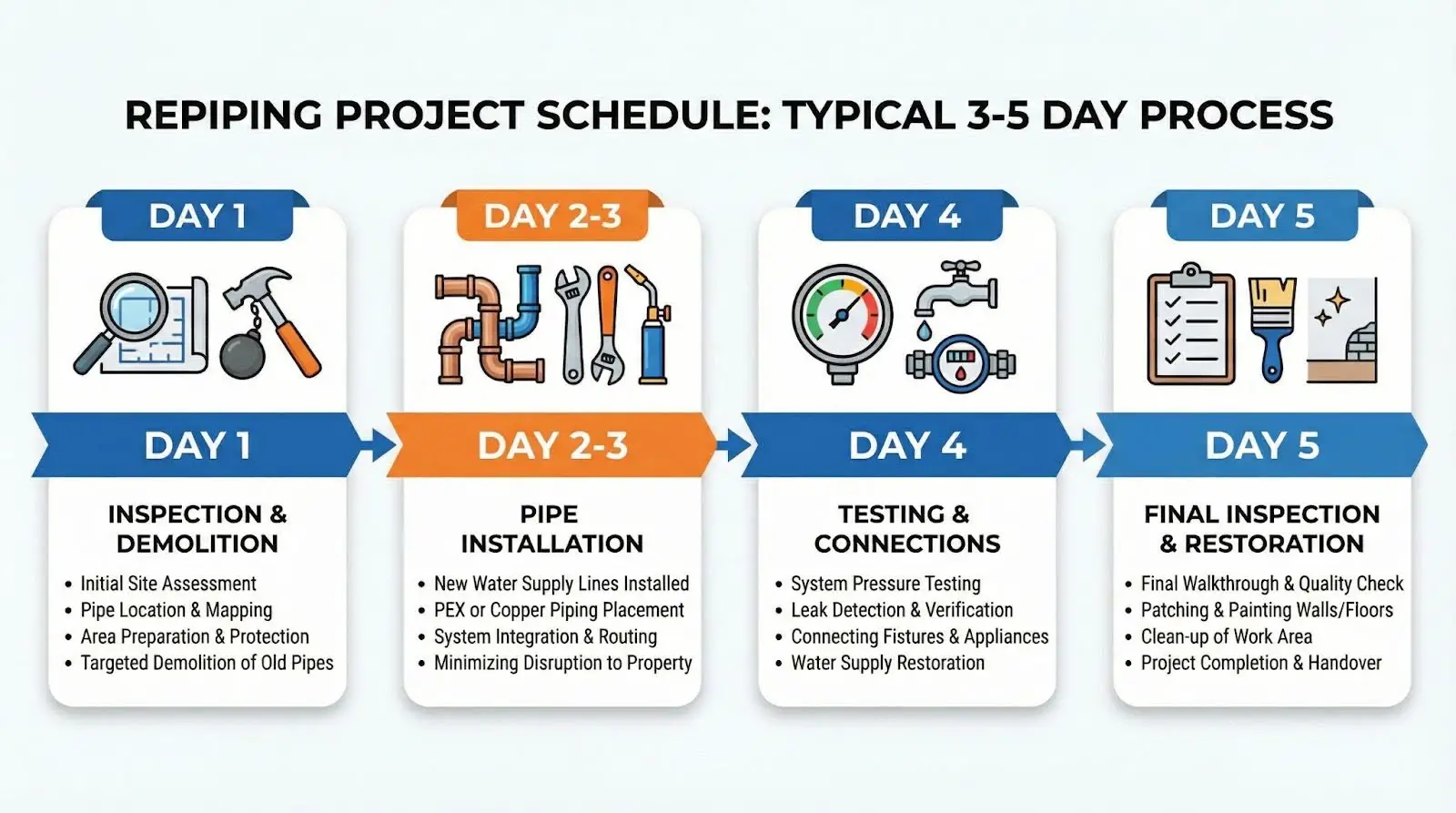
Understanding project duration helps homeowners plan appropriately for this significant home improvement. Timeline varies based on house size, complexity, and specific conditions encountered during installation. Knowing what factors influence duration allows realistic expectations for how long your particular repiping project will take to complete.
Typical Duration Range
Most single-family homes require two to five days for complete repiping. This range accounts for typical house sizes and standard complexity levels.
Smaller homes with straightforward layouts may finish toward the shorter end. Larger homes with complex architecture, multiple stories, or extensive fixture counts extend toward longer timelines.
Factors That Affect Project Length
House size directly impacts duration since more square footage means more pipe runs to install. A 1,500-square-foot home typically requires less time than a 3,500-square-foot property.
Foundation type matters because slab foundations limit access compared to homes with basements or crawl spaces. Slab homes may require additional time for accessing supply lines.
Number of fixtures multiplies connection work. Each bathroom, kitchen sink, appliance connection, and outdoor spigot requires individual supply line installation.
Wall and ceiling construction affects access ease. Plaster walls take longer to open and repair than modern drywall construction.
What Happens Each Day
Day one typically involves system shutdown, access point creation, and beginning pipe removal. Workers establish the project foundation and start systematic replacement.
Middle days focus on installing new piping throughout the structure. This represents the most intensive work phase.
Final days complete fixture connections, pressure testing, and verification. Once testing confirms system integrity, walls can be prepared for closing.
Choosing the Right Piping Material
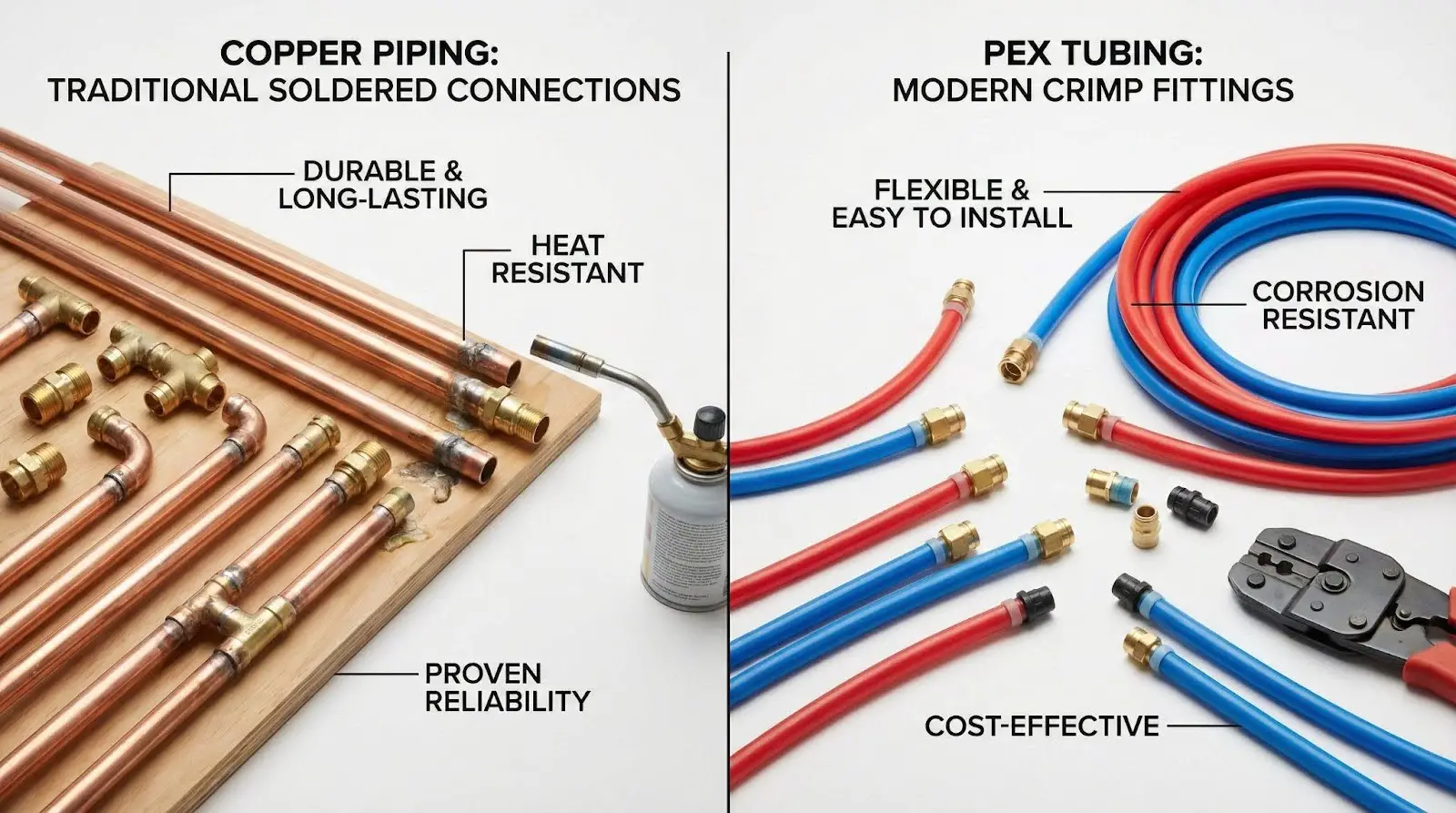
Material selection represents one of the most important decisions in any repiping plumbing project. Modern options include proven traditional materials alongside innovative newer alternatives. Understanding the characteristics of each piping material helps homeowners make informed choices that align with their priorities and circumstances.
Copper Pipe Characteristics
Copper has served residential plumbing for over a century with exceptional results. This material resists corrosion, inhibits bacterial growth, and maintains water quality over decades of service.
Copper pipes handle temperature extremes well and offer excellent fire resistance. The material’s proven track record gives homeowners confidence in long-term performance.
Installation requires skilled soldering to create joints. This technique produces extremely strong connections when performed by experienced plumbers.
PEX Piping Characteristics
PEX tubing brings modern manufacturing advantages to residential plumbing. The flexible material installs faster than rigid copper and requires fewer fittings throughout typical pipe runs.
Cross-linked polyethylene construction provides excellent chemical resistance and handles temperature variation well. The material’s flexibility allows it to expand slightly if water freezes, reducing pipe burst risk.
PEX piping comes in different colors for easy identification of hot and cold water lines during installation and future service work.
Making Your Material Choice
Both copper and PEX perform well in residential applications. Your choice may depend on personal preference, budget considerations, or specific home characteristics.
K L Contractor Plumbing Inc installs both materials and can discuss which option best suits your situation during the project planning phase.
Making the Decision to Repipe
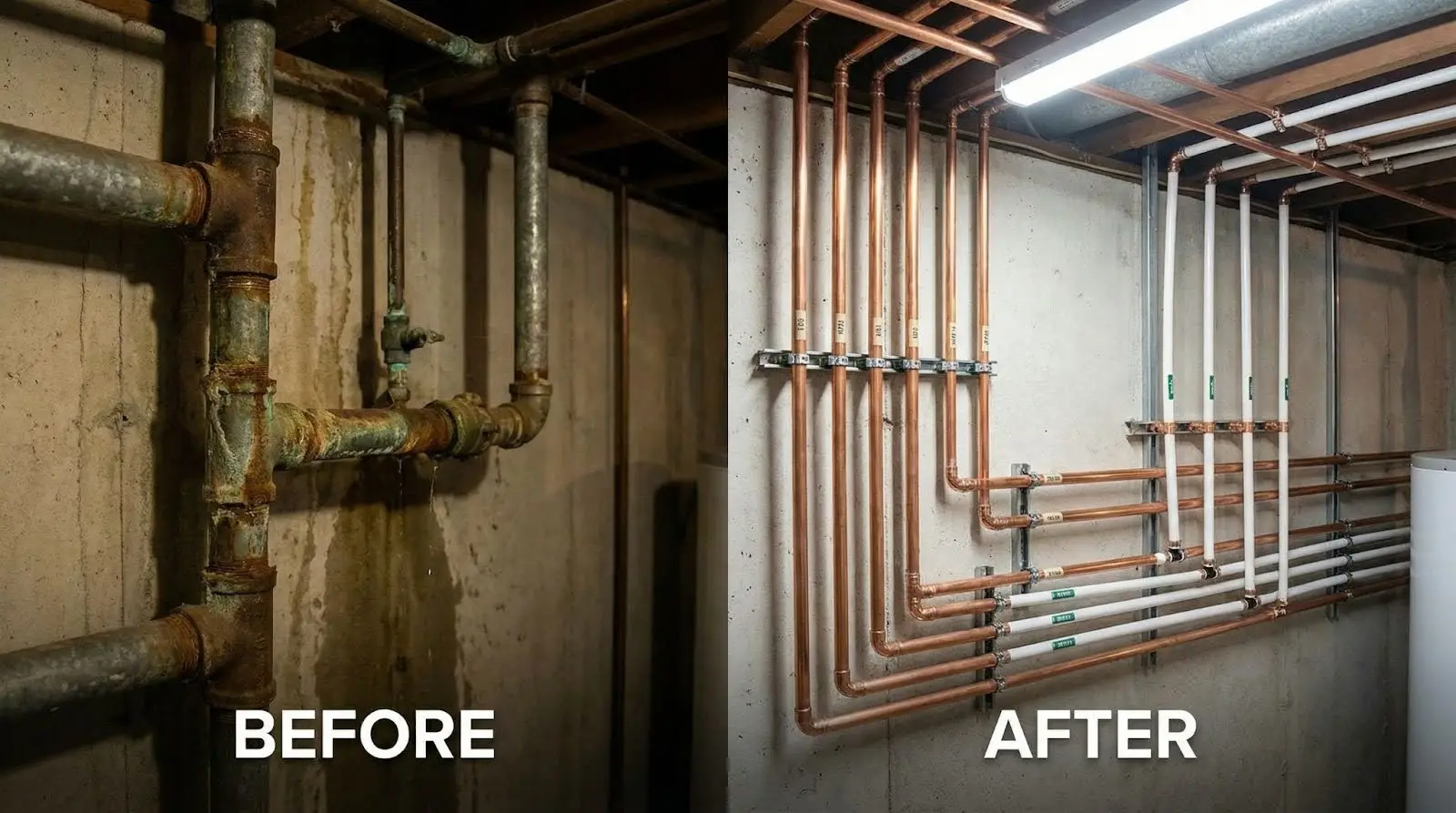
Deciding whether to repipe your entire house requires weighing current problems against long-term benefits and practical considerations. This significant investment delivers lasting value when timing aligns with actual need. Professional assessment provides the objective information homeowners need to make confident decisions about their plumbing system’s future.
Whole house repiping represents a significant project that delivers lasting value. When your plumbing system shows multiple warning signs of deterioration, replacing the entire network often makes more sense than continuing piecemeal repair efforts.
The repiping process follows a logical sequence from assessment through completion. Understanding each phase helps homeowners prepare practically and mentally for the work involved.
Professional plumbers guide you through material selection, timeline expectations, and preparation requirements. This partnership ensures your project proceeds smoothly from start to finish.
If your Marietta home shows signs that repiping may be necessary, professional assessment provides clear answers about your system’s condition and the best path forward.