K L Contractor Plumbing Inc

Plumber_inspecting_pipe_leak_202608201832

Should You Repair Old Pipes or Repipe Your House?

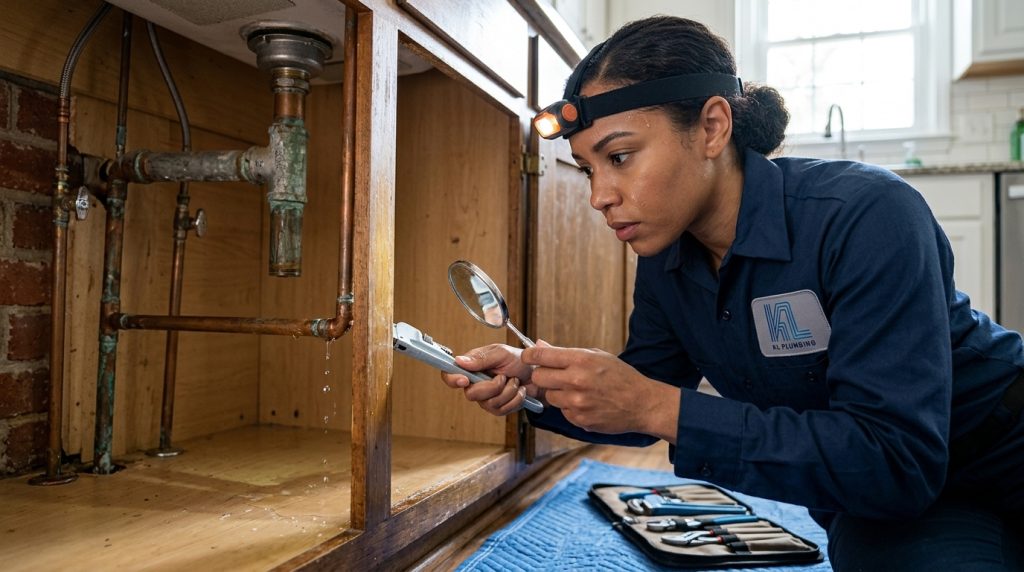
If one pipe starts leaking, repairing that pipe usually makes sense. But when leaks keep returning, water pressure drops throughout your home, or your plumbing contains aging materials such as galvanized steel or polybutylene, repeatedly fixing individual sections may no longer address the underlying problem.

The decision between pipe repair and whole-house repiping depends on why the pipe failed, how much of the plumbing system is affected, the condition of the remaining pipes, and whether you are dealing with an isolated problem or a system-wide pattern.

For homeowners in Marietta and nearby Metro Atlanta communities, the most useful question is not simply, “Can this pipe be repaired?” It is:

Does repairing this pipe solve the problem, or does it postpone a larger plumbing issue?

Is It Better to Repair a Pipe or Repipe the House?

A pipe repair is generally appropriate when the damage is isolated and the rest of your plumbing system is in good condition.

Repiping becomes worth considering when problems are widespread or recurring.

For example, repairing one damaged connection in an otherwise healthy plumbing system is very different from repairing the fourth leak in an aging house with deteriorating supply lines.

A plumber should look beyond the immediate leak and determine whether the failure is an isolated event or evidence of a larger problem.

Pipe repair may make sense when:

  • The leak is limited to one accessible area
  • The damage was caused by an isolated event
  • The surrounding plumbing is in good condition
  • Water pressure is normal throughout the rest of the home
  • You have not experienced repeated pipe failures
  • There are no broader signs of corrosion or deterioration

Repiping may make more sense when:

  • You have had multiple leaks in different parts of the house
  • Pipes show widespread corrosion
  • Water pressure is consistently poor at several fixtures
  • Your water is frequently discolored
  • Previous repairs have not stopped new problems from developing
  • Large portions of the plumbing system contain deteriorating or outdated pipe material

The right decision depends on the plumbing system as a whole, not just the section that failed today.
Plumber_evaluating_corroded_supp…_202608201833

How Many Pipe Leaks Are Too Many?

There is no universal number of leaks that automatically means a house needs repiping.

What matters more is the pattern.

One leak caused by accidental damage does not necessarily indicate a failing plumbing system. Several unrelated leaks developing over a relatively short period deserve a closer look.

Repeated leaks can indicate that the material itself is deteriorating. Repairing each failure individually may stop water at that location while leaving other vulnerable sections untouched.

Ask your plumber to determine:

  1. Why did this pipe fail?
  2. What material are the other supply lines made from?
  3. Are similar problems visible elsewhere?
  4. Is corrosion isolated or widespread?
  5. How likely are additional failures?

That diagnosis is much more useful than automatically choosing another patch or automatically assuming you need a complete repipe.

What Are the Signs Your House May Need Repiping?

A major leak is not the only reason to investigate your home’s piping.

Several smaller symptoms can point toward a broader supply-line problem.

Recurring Pipe Leaks

A history of leaks in different rooms is one of the clearest reasons to evaluate the entire plumbing system.

Pay particular attention if plumbers are repeatedly repairing similar problems in different sections of the house.

Low Water Pressure Throughout the House

Low pressure at one faucet may be a fixture-specific issue.

Low pressure at several fixtures can indicate something affecting the broader plumbing system.

In older galvanized steel piping, corrosion and mineral buildup can reduce the usable opening inside the pipe and restrict water flow.

If you are experiencing weak flow throughout your home, a professional diagnosis can determine whether the problem comes from the pipes, pressure regulator, water supply, a leak or another cause.

Learn more about water pressure problems and professional diagnosis.

Discolored Water

Rust-colored or otherwise discolored water can have several possible causes, including issues involving the water heater or plumbing system.

When discoloration appears alongside aging galvanized pipes, corrosion inside the supply piping should be investigated.

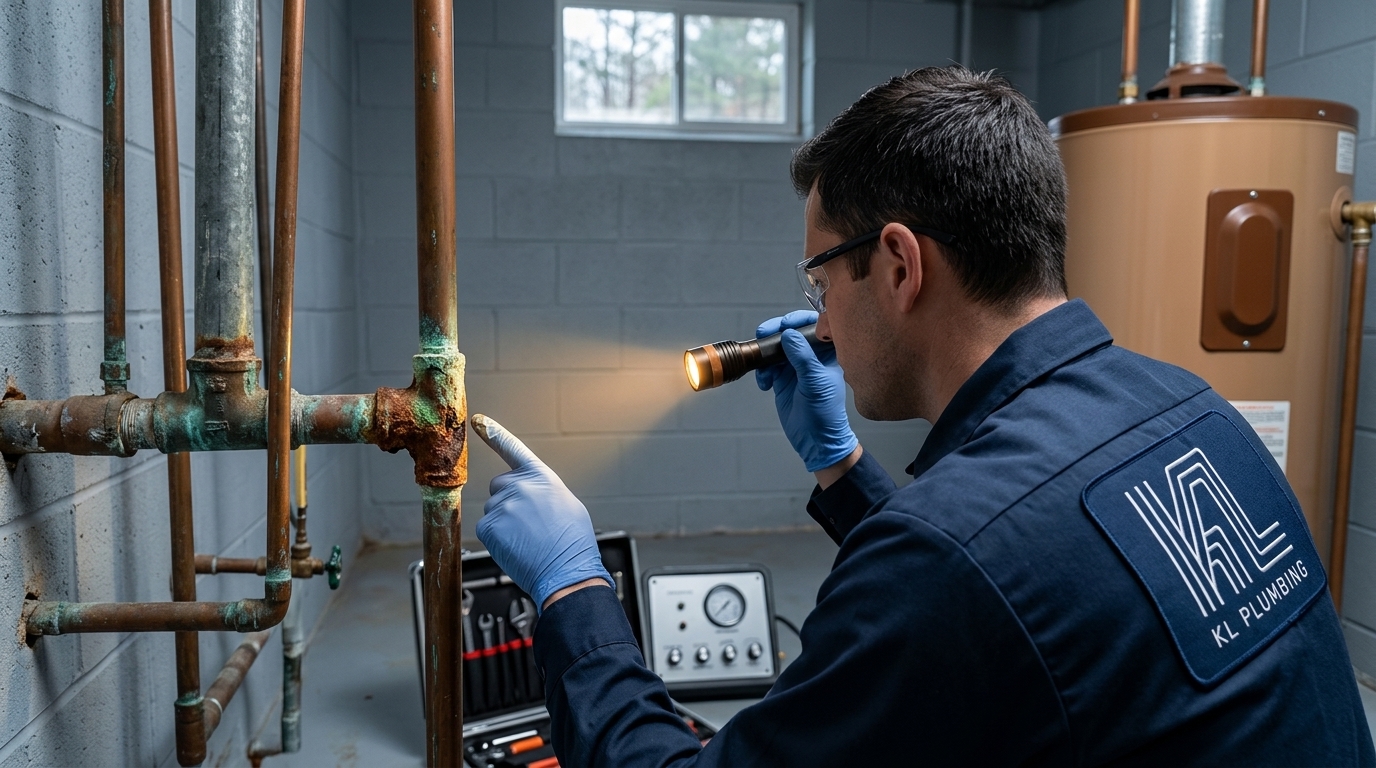
Visible Corrosion

Check accessible plumbing in areas such as:

  • Basements
  • Crawl spaces
  • Utility rooms
  • Under sinks
  • Near the water heater
  • Around previous repair locations

Corrosion, mineral deposits and evidence of repeated repairs can help a plumber understand the overall condition of the system.

Changes in Water Flow

If running one fixture dramatically affects water flow elsewhere in the house, pipe sizing, restrictions or deterioration may be contributing to the problem.

A plumber can determine whether the issue can be corrected locally or requires broader plumbing work.
K L Contractor Plumbing Inc | Should You Repair Old Pipes or Repipe Your House?

Can You Repipe Only Part of a House?

Sometimes.

A partial repipe may be appropriate when one portion of the plumbing system has a clearly defined problem while the remaining piping is in good condition.

For example, a remodeling project may provide an opportunity to replace older supply lines serving that section of the home.

But partial repiping should be approached carefully when the same aging material remains throughout the rest of the property.

Replacing one deteriorated section does not change the condition of similar pipes elsewhere.

This is why the decision should be based on an inspection rather than simply choosing the smallest immediate project.

Should Galvanized Pipes Be Repaired or Replaced?

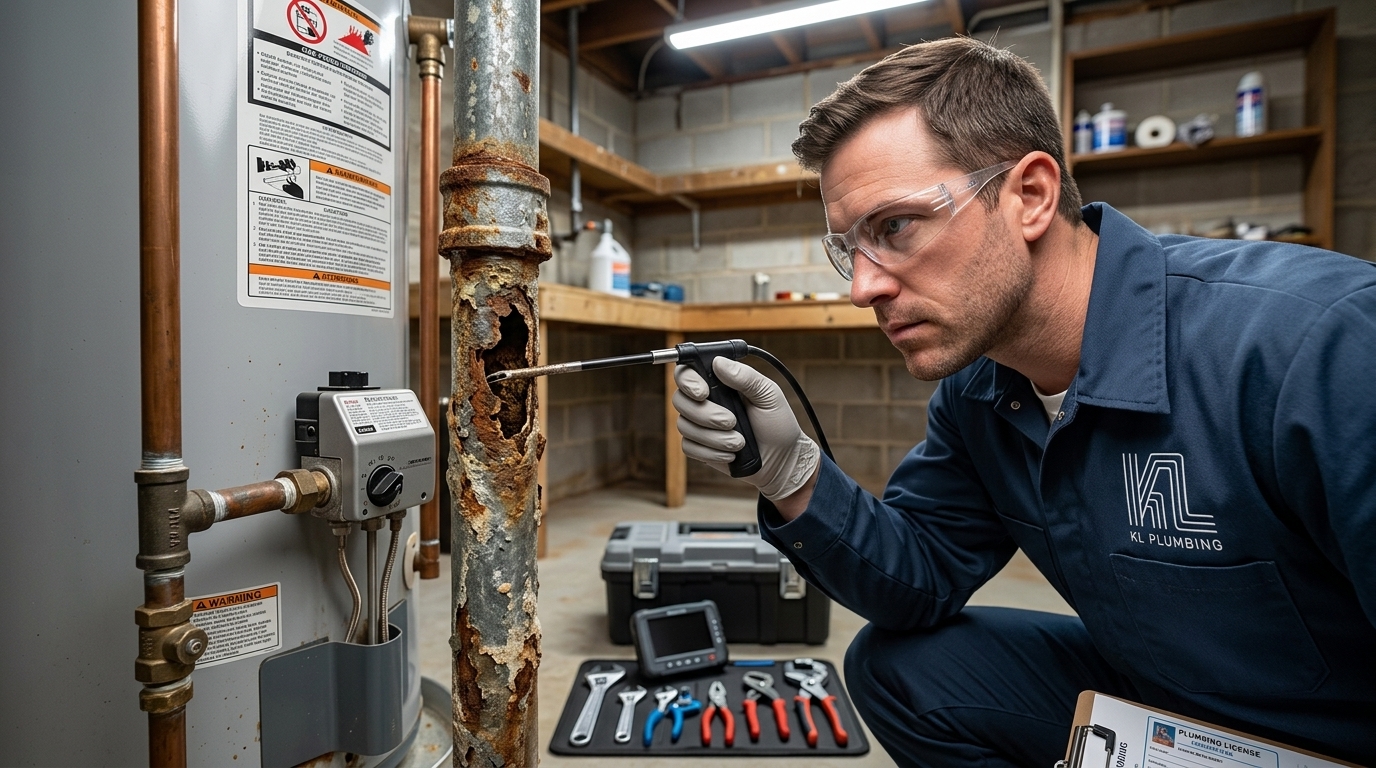
Galvanized steel piping can deteriorate internally over time.

One challenge for homeowners is that the outside of a pipe does not always reveal what is happening inside it. Internal corrosion can restrict water flow even before an obvious exterior leak develops.

If your house contains galvanized plumbing and you are experiencing recurring leaks, widespread pressure problems or signs of corrosion, ask a plumber to evaluate whether continued repairs are practical.

A single repair may still be reasonable in some situations.

However, when deterioration affects large portions of the system, replacement can address the underlying piping rather than treating one failure at a time.

You can also compare galvanized, copper and PEX piping for Metro Atlanta homes before discussing replacement materials with your plumber.
Plumbing_crew_routing_supply_lines_202608201835

What About Polybutylene Pipes?

Polybutylene piping was used in many homes before it was discontinued.

If your home contains polybutylene, the condition and configuration of the system should be professionally evaluated, particularly if you are experiencing leaks or planning renovations.

The presence of polybutylene does not tell you exactly when a particular pipe will fail. It does give you a reason to understand what is installed in your house and discuss your options before a plumbing failure forces an emergency decision.

Read K L Contractor Plumbing’s guide to polybutylene pipe and replacement considerations for more information.

Is PEX or Copper Better for Repiping?

Both PEX and copper are commonly used plumbing materials, but the best choice depends on the property, installation requirements, local code considerations and project goals.

PEX

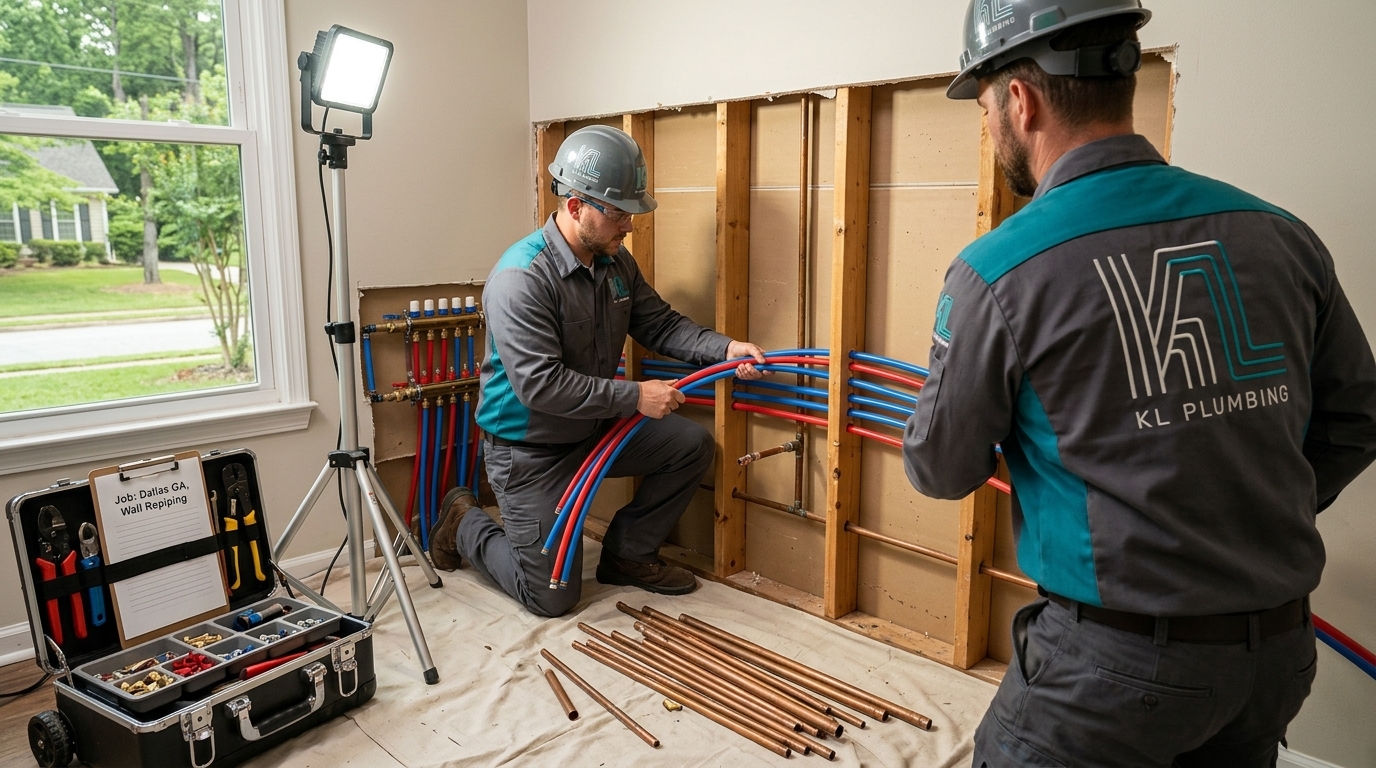
PEX is flexible, which can make it useful when routing new supply lines through an existing home.

Its flexibility may allow plumbers to reduce the number of fittings required in certain installations.

Copper

Copper is a long-established plumbing material with a lengthy history in residential water-supply systems.

Its installation characteristics differ from PEX, and the right choice depends on the specific home and plumbing design.

Rather than selecting a material based solely on a general online comparison, ask the plumber evaluating your home why a particular material makes sense for your system.

How Long Does Whole-House Repiping Take?

The project timeline varies according to the size and layout of the home, accessibility of existing pipes, scope of replacement and other site-specific conditions.

Repiping is more involved than repairing a single leaking section because new supply lines must be routed to the appropriate fixtures throughout the property.

A professional estimate should therefore explain both scope and expected timeline.

If you are considering replacement, read our detailed guide to what happens during a whole-house repipe.

Does Repiping Mean Tearing Up the Entire House?

Not necessarily.

Professional repiping requires access to plumbing routes, but the objective is to plan those routes efficiently and limit unnecessary disruption.

The amount of access required depends on where the existing plumbing runs and how the replacement system will be routed.

Before agreeing to the project, ask:

  • Where will access openings be required?
  • Which pipes are being replaced?
  • What material will be installed?
  • How will new lines be routed?
  • What parts of the house will be affected?
  • What restoration is included in the scope?
  • How long will water service be interrupted?

Those questions help you compare repiping proposals based on the actual work involved, not simply the bottom-line number.
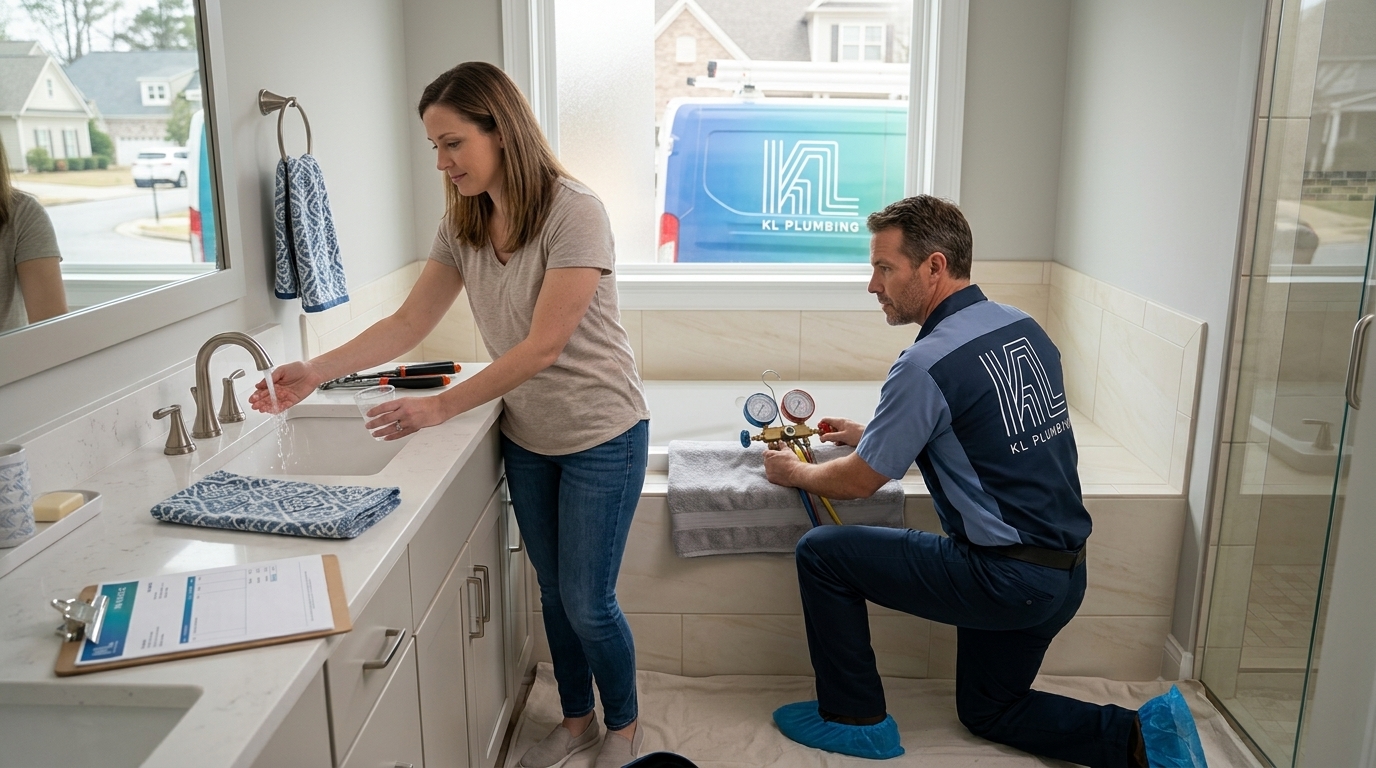
K L Contractor Plumbing Inc | Should You Repair Old Pipes or Repipe Your House?

How Much Does It Cost to Repair Pipes vs. Repipe a House?

There is no single responsible price that applies to every home.

A localized pipe repair and a whole-house repipe involve very different scopes of work. Even two repiping projects can differ substantially because of home size, pipe accessibility, material selection, plumbing layout and the amount of piping being replaced.

Instead of relying on a generic online price range, compare the long-term implications of each option.

If the plumbing system is otherwise healthy, repairing one problem may be the logical choice.

If deterioration is widespread, ask how likely you are to continue paying for individual repairs and dealing with the risk of additional leaks.

A good estimate should explain what the plumber found and why the recommended scope makes sense.

Should You Repipe Before a Pipe Bursts?

You do not have to wait for a major plumbing emergency to evaluate aging pipes.

If your home has recurring leaks, severe corrosion, widespread low water pressure or other signs of deteriorating plumbing, a proactive inspection gives you time to understand your options.

That is very different from making a major replacement decision while water is actively damaging your home.

If a pipe has already burst or water is actively leaking, shut off the water supply when it is safe to do so and contact an emergency plumber.

What Should You Ask a Plumber Before Agreeing to Repiping?

Do not focus only on “How much?”

Ask questions that reveal whether the recommendation actually fits your home:

  • What caused my current pipe problem?
  • Is the damage isolated or widespread?
  • What type of piping is currently installed?
  • What condition are the remaining pipes in?
  • Could a localized repair reasonably solve the problem?
  • If you recommend repiping, which pipes need replacement?
  • Do you recommend PEX, copper or another material for this house, and why?
  • How will the new piping be routed?
  • What areas of the home need to be accessed?
  • What is included in the estimate?
  • How long should the project take?
  • Will permits or inspections be required?

A homeowner should understand why repiping is being recommended before approving a whole-house project.

Get a Pipe Repair or Repiping Assessment in Marietta, GA

You should not have to guess whether your home needs another pipe repair or a larger plumbing solution.

K L Contractor Plumbing Inc provides pipe repair and repiping services for homeowners in Marietta and nearby Metro Atlanta communities. Our plumbers can inspect the problem, evaluate the condition of your plumbing and explain whether an isolated repair, partial replacement or broader repiping project makes sense.

If the system can reasonably be repaired, you should know that.

If repeated problems point toward deteriorating piping throughout the house, you should know that too.

Call 404-637-2796 to schedule a plumbing assessment with K L Contractor Plumbing Inc.

We serve Marietta, Kennesaw, Roswell, Sandy Springs, Smyrna, Woodstock, Acworth, Holly Springs, Milton and nearby areas.

Mastodon